

Get ready - it's time for the clocks to go back in the UK
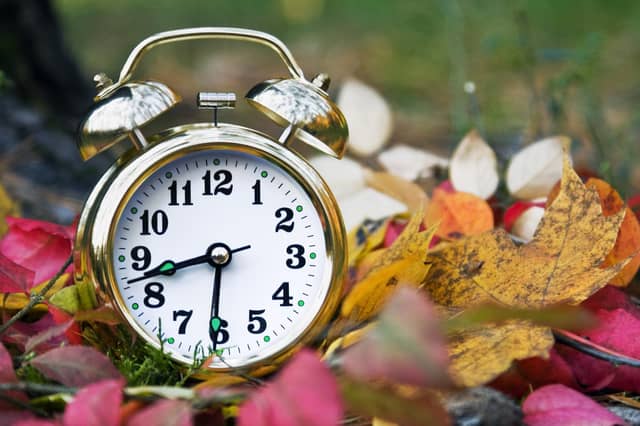

The clocks go back at 2am on Sunday, ending British Summer Time, a change that owes something to the great-great-grandfather of Coldplay singer Chris Martin, who campaigned for the clocks to move forward before each summer began.
An extra hour in bed this weekend owes something to the great-great-grandfather of Exeter-born Chris Martin.
The clocks go back at 2am on Sunday (October 25), ending British Summer Time. William Willett, the Coldplay singer’s ancestor, campaigned for the clocks to move in the first place.
He did not, however, live to see them do so.
Willett, a builder who lived in Chislehurst, a suburb of south-east London, was out riding on a summer morning in 1905 when he noticed how many curtains were still drawn against the sunlight, according to BBC Future. A lover of open spaces, he concluded that the clocks should move forward before each summer began.
In 1907, he published a pamphlet at his own expense called The Waste of Daylight, according to the BBC and Historic UK. He died in March 1915. The Summer Time Act was passed the following year.
Martin, the lead singer of Coldplay, was born in Exeter on March 2, 1977.
The idea of making more of the daylight was not Willett’s alone. In 1784, Benjamin Franklin published a satirical essay in Paris suggesting that people could save on candles by getting up with the sun. In 1895, the New Zealand entomologist George Vernon Hudson proposed a two-hour seasonal time shift to the Wellington Philosophical Society.
It took a war to make it law. Germany and Austria-Hungary became the first countries to adopt daylight saving time, on April 30, 1916, to conserve coal and fuel during the First World War. Britain followed with the Summer Time Act 1916, according to the BBC.
In the Second World War, Britain went further, moving clocks forward by two hours under British Double Summer Time to save energy and boost wartime productivity, before returning to the seasonal changes still in use today.
The clocks go forward again on the last Sunday of March.