

Storm Chandra shut the Tarka Line for 24 days. Are Network Rail and GWR ready for this winter?

Network Rail is carrying out vegetation management on the Barnstaple and Okehampton branch lines specifically, to reduce the risk of trees and branches coming down in storms, as part of its preparations for the winter ahead.
Rail bosses say they are better prepared for storms this winter, eight months after Storm Chandra cut North Devon off from Exeter by train for 24 days, and as forecasters warn of an increased risk of the wet, stormy weather that caused the chaos in the first place.
The Gazette put questions to Network Rail and Great Western Railway (GWR) about what was being done to prevent a repeat of January’s closure, after the Met Office warned that an unprecedented El Niño event could raise the likelihood of wetter, stormier weather across the UK this autumn and winter. Both organisations responded with details of drainage repairs, new flood monitoring technology and vegetation clearance under way ahead of the new season. Neither, however, named the worst affected stretch of the Tarka Line among the locations receiving that work.
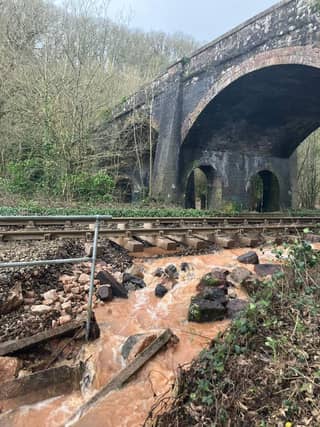
Storm Chandra, named by the Met Office, brought strong winds and prolonged heavy rain to the south west in late January, on ground already saturated by weeks of unsettled weather. Floodwater washed away stone ballast supporting the track between Exeter and Crediton and left bridges and viaducts submerged, triggering an automatic closure of the line between Exeter St David’s and Barnstaple on January 27.
Specialist inspections could not proceed until water levels fell enough for divers to safely enter the water, extending a closure that had initially been expected to last days into one that stretched to 24. The line did not fully reopen until Friday, February 20.
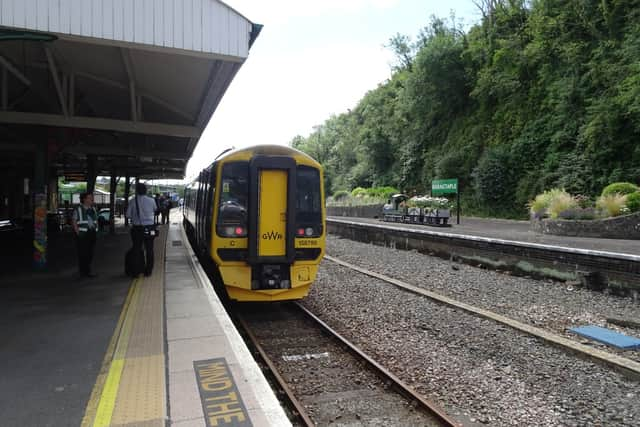
The impact fell hardest on the Taw Valley communities between Crediton and Barnstaple, who were left without rail access to Exeter for more than three weeks while a limited replacement bus and coach service ran in its place, taking passengers significantly longer to reach the city.
A spokesperson for the Exeter and North Devon Colleges Group told the Gazette earlier this year that the line had been out of service for close to ten per cent of the college year. "We share the frustrations of our learners," they said. "More must be done to ensure transport infrastructure in the South West is protected."
Independent traders counted the cost too. Mike, owner of Station Masters Café, also told the Gazette in the year that trade collapsed during the closure. "We tried to open initially, and I think one day we took about £18," he said. "That is how much of a hit we take. We could not, after the second day, afford to carry on, so we had to close for a period of time." He said the disruption to trade lasted five and a half weeks in total, with a further three to four weeks of reduced trust from customers unsure whether services would run.
The prospect of a repeat has already been flagged by forecasters. In an assessment published in August 2026, the Met Office said the El Niño event, building towards its winter peak, was expected to raise the chances of wetter, stormier conditions across North West Europe, including the UK, through autumn and into early winter.
Met Office scientist Dr Nick Dunstone said large El Niño events release significantly more heat from the ocean into the atmosphere, an effect that typically peaks the year after the winter itself, meaning 2027 is on course to overtake 2024 as the warmest year on record.
Professor Stephen Belcher, the Met Office's Chief of Science and Technology, said this summer's heatwaves across Europe were a reminder of the effects of climate change, and that the current El Niño showed “natural variations in the climate system are also at play, adding to the stresses of climate change”.
A government analysis published on September 17 offered a more cautious picture. It said the impacts of El Niño on UK weather are less certain and cannot be confidently predicted, and that because this could be the largest El Niño event to date, it may bring unforeseen effects on UK weather that differ from smaller past events.
Based on historical patterns and current computer models, it said there was a slightly increased chance of the UK experiencing stronger westerly winds and low-pressure systems between October and December, associated with increased storminess and a heightened risk of heavy rainfall and flooding, followed by a slightly increased risk of easterly and northerly winds and cold snaps in early 2027.
The analysis also cautioned that long term global warming has a bigger effect on UK temperatures than any single El Niño event, and that public communication on El Niño can sometimes mislead by conflating its effects with those of climate change more broadly.
Asked what was being done to prevent a repeat of the Chandra disruption, a spokesperson for Network Rail and GWR said: “With severe weather events becoming more frequent, our focus is on anticipating risks and improving mitigation measures so that we can keep trains running safely and minimise weather-related disruption where possible.”
It was understood preparations under way ahead of winter included vegetation management, drainage improvements, enhanced weather monitoring and the rollout of new technology to assess flooding impacts more quickly, alongside continued resilience work at Dawlish and, for the first time, specialist ‘leaf busting’ trains running to Barnstaple and Honiton to help keep services reliable during leaf fall.
These Rail Head Treatment Trains (RHTTs) to Barnstaple and Honiton for the first time. These specialist trains help to keep the rails clean of leaf fall contamination, which can create a slippery layer on the surface of the rail, much like black ice on the road. The RHTTs also apply a treatment that improves grip, helping to reduce delays and keep services running reliably during periods of leaf fall.
It is also understood that when weather does disrupt services, passengers can travel on the train immediately before or after a cancelled one, with extra flexibility offered for connecting journeys, and that contingency plans are in place to keep passengers moving where trains cannot run.
Network Rail says its preparation for extreme weather runs all year round. Forecasts are monitored continually with support from specialist meteorologists at MetDesk, and when severe weather is expected, its Extreme Weather Action Team meets regularly to assess the likely impact on the railway and plan its response.
Ahead of this winter, the organisation says it is carrying out vegetation management on the Barnstaple and Okehampton branch lines specifically, to reduce the risk of trees and branches coming down in storms. It has also repaired drainage systems at locations previously vulnerable to flooding, though the two examples it named, at Roche on the Newquay line and through Wivelscombe Tunnel between Saltash and St Germans, sit outside the Tarka Line corridor rather than on the Crediton to Barnstaple stretch that bore the brunt of Chandra’s damage.
On new technology, Network Rail will be extending flood monitoring equipment, already trialled at one Devon location, to a number of unnamed higher-risk sites across the South West.
The sensors measure water movement at the river surface and riverbed to assess the risk of scour, where fast-flowing water erodes material around bridge foundations, feeding into computer modelling that can indicate whether a bridge has been affected without always requiring a diver to check in person. This is a direct response to what extended the Chandra closure in the first place, since divers could only enter the water once river levels and velocity had dropped to a safe level, a wait that pushed the closure well past its initial estimate.
It is understood that Network Rail is doing everything it can to have the new equipment in place before the worst of winter arrives, though it is not currently clear whether any of the new sensor sites cover the Tarka Line itself.
Sonar mapping technology was also used earlier this year to help inform the safe reopening of the Barnstaple line following flooding, and is being explored further as a scour monitoring tool. Separately, Network Rail highlighted resilience works already completed at Dawlish, including a new sea wall, rockfall shelter and cliff stabilisation, though these sit on the mainline rather than the Tarka Line and do not address the specific vulnerabilities exposed by Chandra.
Chandra was not an isolated event.
In November 2025, the line was closed for six days after Network Rail detected water exceeding the safety threshold at three bridges and viaducts, prompting North Devon MP Ian Roome to launch a petition calling for the line to be made more resilient.

“Far from a sleepy little train line,” he said at the time, the Tarka Line was “bursting with passengers and vital to the economy”, carrying around 800,000 passenger journeys a year.
The petition, backed by more than 3,000 signatures, was formally presented to Parliament in February, with Mr Roome calling for structural improvements, additional carriages to tackle overcrowding, extra drainage work, longer platforms and more passing places to allow a better timetable on the single track line.
North Devon Council’s deputy leader, Peter Leaver, told the BBC at the time the council was working closely with operators to improve reliability, but that it was “increasingly clear” major investment was needed to keep pace with demand and make the line more resilient to extreme weather and climate change.
The issue was raised again in the House of Lords in March, where Rail Minister Lord Hendy pointed to Network Rail’s weather resilience and climate change adaptation plans.

These regional plans identify priority sites for maintenance and renewal over the current five-year control period to 2029, with further work to be funded beyond that.
However, peers pressed the government for a stronger commitment to funding, with Lord Berkeley (Lab) warning that extreme weather represents “our new reality” after the Tarka Line between Barnstaple and Exeter suffered a 24-day closure earlier this year due to storm damage.
Taken together, the response to the Gazette’s questions shows a rail industry actively working to reduce the risk of another prolonged closure, through better forecasting, new monitoring technology and targeted drainage and vegetation work.
What it does not yet show is firm, dated commitment to the specific stretch of line that failed worst during Chandra, or confirmation that the new scour sensors will be in place on the Tarka Line before winter sets in in earnest.
With forecasters flagging up a slightly increased risk of stormy, wet conditions this autumn, and a five-year investment plan that runs only to 2029, passengers and campaigners who fought for the resilience petition may be left waiting to see whether this winter’s preparations are enough, or whether North Devon faces another Chandra before the bigger structural questions are resolved.