

Devon’s future mayor could play key role in rail investment as MP warns rural railways must not be forgotten
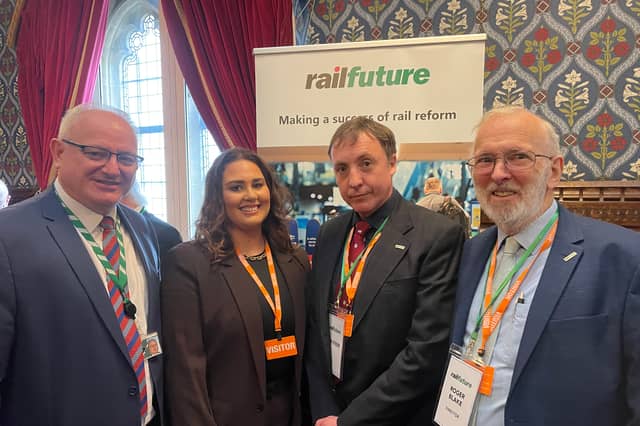

North Devon MP Ian Roome welcomed the Government's commitment to improving the railway network but warned that smaller rural routes such as the Tarka Line must not be overlooked, as the region prepares for a new era of regional decision-making.
Rail campaigners have been told that future improvements will need strong local backing and credible business cases, as North Devon's MP warns that rural railway services must not be forgotten.
Campaigners pushing for major improvements to North Devon's Tarka Line may need to win the support of Devon's future regional mayor to help secure investment, following guidance from the Government's rail minister.
Lord Hendy of Richmond Hill CBE, the Minister of State for Rail at the Department for Transport, has made clear the importance of persuading regional mayors, building local support and demonstrating how railway projects could deliver wider economic benefits.
Speaking at a parliamentary reception in Westminster on Wednesday morning, November 25, attended by the North Devon Gazette, Lord Hendy outlined what campaigners seeking new railway infrastructure and improvements to existing routes would need to do to make their case for investment.
His message was that mayors and regional leaders needed to be persuaded of the value of such schemes, with credible proposals showing how investment would support economic growth, housing and wider development.
The minister's comments reflected the principle that transport should be seen as a means to an end, helping to deliver wider benefits for communities, rather than as an objective in itself.
During his speech, Lord Hendy specifically highlighted Tavistock as an example of a proposed railway extension, stressing that such schemes needed strong local support and a credible business case demonstrating their wider economic benefits.
His comments are also relevant to North Devon, where campaigners are pushing for faster, more frequent and more reliable services on the Barnstaple to Exeter Tarka Line, alongside longer-term ambitions to restore a railway connection to Bideford.
Lord Hendy's advice to campaigners was that the best way to make progress was to recognise that, even where a railway line had previously existed and was still marked on a map, reopening it would effectively mean building a new railway.
As he put it during his speech: “You can't just say you want it back. You need a reason to do so.”
The minister also spoke about the growing impact of climate change on the railway network, stressing that it was a reality the industry needed to adapt to.
He said rail operators needed to have a “decent timetable” ready for next summer, taking into account the potential impact of extreme weather and the need for trains to travel at reduced speeds when conditions required it.
The reception was organised by Railfuture, Britain's leading independent voluntary organisation campaigning for a bigger and better railway, and hosted by Derby South MP Baggy Shanker.
Held under the theme Making our railway work for everyone, the event brought together MPs, campaigners and railway representatives to discuss the future of Britain's railways.
Its focus included the devolution of transport powers, encouraging more passengers and freight to move from road to rail, and simplifying ticketing and fares as the Government develops Great British Railways.
North Devon MP warns rural lines must not be forgotten
North Devon MP Ian Roome, who also attended the reception, welcomed the Government's stated commitment to improving the railway network but warned that smaller rural routes such as the Tarka Line must not be overlooked.
He said: “It's good to hear the government's commitment to actively trying to fix the railways, but smaller rural lines like the Tarka Line mustn't be overlooked.
“We also need real powers and fair funding for the South West, but a Mayor needs to be a means to an end, not just more window-dressing.
“People across North Devon need to feel the difference.”
His comments come amid ongoing concerns about the reliability and resilience of the Tarka Line, which provides North Devon's main railway connection to Exeter and the wider national network.
The route has suffered repeated disruption from flooding and severe weather, prompting calls for long-term investment to protect services and improve reliability.
Earlier this month, Mr Roome met Lord Hendy to press the case for improvements following disruption to the line.
The MP has also previously presented a petition to Parliament calling for action to make the railway more resilient.
Years of campaigning for a better Tarka Line
Railfuture and the Northern Devon Railway Development Alliance have been working to build the case for significant improvements to the railway between Barnstaple and Exeter.
Their ambitions include a modernised line capable of delivering faster and more frequent services, with a long-term aspiration for two trains an hour.
Campaigners are also pursuing proposals to reconnect Bideford to the national railway network, restoring a passenger rail link to a town which lost its regular passenger services decades ago.
In April 2026, Railfuture published preliminary strategic business cases on behalf of the alliance examining both improvements to the existing North Devon Line and the potential for a new railway connection serving Bideford.
The work was intended to demonstrate the wider benefits that railway investment could bring to North Devon, including better access to employment, education and services, as well as opportunities for economic development.
In July, representatives of 12 partner and stakeholder organisations met in Exeter to begin work on a Strategic Outline Business Case for improvements to the Tarka Line.
That work is particularly relevant in light of Lord Hendy's remarks at Westminster, which emphasised the need for formal business cases and evidence that railway schemes would deliver benefits beyond transport itself.
For North Devon, this could mean demonstrating how a better railway would support economic growth, housing, employment and connectivity across the district, as well as improving journeys for existing passengers.
Devon's future mayor could have a key role
Lord Hendy's comments come just weeks after the Government confirmed in October's Budget that it was minded to proceed with plans for a Mayoral Strategic Authority covering Devon, Plymouth and Torbay.
The new authority would have greater powers and funding responsibilities covering transport, housing, skills and economic development.
The directly elected mayor would lead the authority, helping to set regional priorities for transport, housing and economic development, decide how devolved funding should be spent and champion major projects with the Government. However, decisions on national railway funding would remain with central government.
The Government has indicated that it is minded to proceed with the proposals, which would build on the existing Devon and Torbay Combined County Authority and bring Plymouth into the partnership. Subject to the necessary approvals, the new authority could be established in autumn 2027, with the first mayoral election expected in May 2028.
The changes could make the support of Devon's future mayor increasingly important to campaigners seeking major railway improvements, including those pushing for investment in the Tarka Line.
Lord Hendy's guidance suggests that those promoting schemes will need to demonstrate how they fit into the region's wider ambitions for housing and growth, while securing backing from local authorities, businesses and other stakeholders.
Railfuture welcomes minister's message
Roger Blake, a director of Railfuture, said the parliamentary reception had highlighted two important outcomes for the organisation's work in Devon.
The first was a shared commitment between Railfuture, Devon MPs and their advisers to securing more and better railway services for passengers.
The second was the alignment between Lord Hendy's advice and Railfuture's approach to working collaboratively with a broad range of organisations, particularly the Combined County Authority as it develops towards a Mayoral Strategic Authority with devolved funding.
Mr Blake said the reception demonstrated an “alignment of aims and objectives” between Railfuture and Devon's parliamentary representatives.
He also highlighted the importance of collaboration with representative organisations and the emerging regional authority as it gains greater responsibilities.
Tim Steer, regional branch chair of Railfuture Devon and Cornwall, said he had been reassured by the minister's comments.
He said: “Personally, to hear the Rail Minister speak openly about our national work was quite reassuring.
“Lord Hendy of Richmond Hill provided guidance for any local Devon and Cornwall rail enhancements and extensions that we must have stakeholder support and to be going through formal Business Case development as set out by the Department for Transport.
“I am pleased to say that the Rail Minister values Railfuture’s commitment to making better railway services.”
Funding remains a challenge
Lord Hendy also acknowledged the difficulties surrounding railway funding and expressed hope that Great British Railways would be able to make a persuasive case to the Government for future investment.
He spoke positively about the commitment of people working across the railway industry while recognising the challenges facing the network.
For North Devon, the reception highlighted both the opportunities and the challenges facing campaigners who want to see a more reliable, frequent and resilient railway.
The work already being undertaken by Railfuture and the Northern Devon Railway Development Alliance to develop business cases and build partnerships reflects much of the approach outlined by the minister.
But with Devon preparing for a new era of regional decision-making, the campaign may increasingly depend on convincing a future mayor and other regional leaders that investment in the Tarka Line can deliver wider benefits for North Devon.
As Mr Roome warned, the challenge will be ensuring that rural railway services are not overlooked and that the proposed devolution of powers delivers meaningful improvements for the communities they serve.