

‘Absolute shambles’ of government bluetongue response reignites Devon support fund
.jpeg?trim=92,0,92,0&crop=&width=640&quality=70&enable=upscale)

Devon County Council has agreed to restart a farming support fund following the bluetongue virus outbreak
The ‘absolute shambles’ of the government’s response to the rampant outbreak of bluetongue virus hitting Devon’s farmers has prompted the county council to reinstate a support fund.
Councillors backed putting £180,000 aside over three years to help fund assistance for Devon’s farmers, meaning a roughly £60,000 annual pot.
The council’s cabinet, which has two members who are farmers, recently heard about the scale of the bluetongue virus across the county and how the farming community felt overwhelmed and isolated after Devon in particular was hit hard.
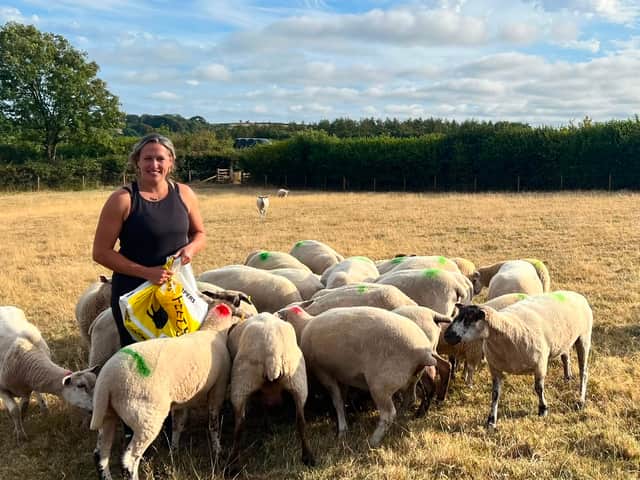
Torrington councillor and sheep farmer Cheryl Cottle-Hunkin, who is the cabinet member for rural affairs, said out of the 3,370 infected farm premises across the UK, more than a third were in Devon.
Cornwall and Somerset were ranked second and third with 363 and 346 cases, respectively, making the South West peninsula a hotbed of the virus.
Cllr Cottle-Hunkin said: “We need improved communication [from the government], subsidised or funded vaccine programs like in some European countries, increased surveillance and with climate change we need to be much better protected as this year has been an absolute shambles.”
Bluetongue is transmitted by biting midges which are blown in from the continent and the recent hot dry summer provided perfect conditions for them.
The government has said it had taken steps to speed up the diagnosis of bluetongue, allowing vets to declare clear-cut cases on site rather than requiring laboratory results, which took weeks to return at the height of the outbreak.
It also advised farmers could apply for government-funded vet visits for advice on helping to protect livestock.
Cllr Cottle-Hunkin said anything the council could do to support farmers would be welcome, especially given the pressure wrought upon many of them as a result of bluetongue.
The virus can be deadly for livestock, but can also lead to infertility, meaning a second-wave impact on farm finances later down the line if birth rates drop.
Cllr Sue Davies, who chaired a recent scrutiny committee that delved into the issue of bluetongue across Devon, said she hoped the cabinet would support the reinstatement of the resilience and wellness fund.
She said: “It shows Devon is paying attention to the really serious situation and is prepared to take early action and support farmers and families in difficult circumstances.
“Farmers really are at breaking point, and if the resilience and wellness fund helps manage a few cases and stops some tragic things happening, then it will be worth it.”
.jpeg?trim=0,0,400,0&width=640&quality=65)
The meeting, which voted unanimously to reinstate the support fund, heard that some national statistics suggested suicide rates in the agricultural sector were three times higher than in other sectors of the economy.
Devon’s trading standards team oversaw a rural support and wellbeing project, funded by Defra, between 2022 and March 2025, when the funding, and hence the project, came to an end.
This project had allowed the rural team within the trading standards division to work with support services such as Devon and Cornwall Rural Police, the fire service, Farming Community Network, Rabi, Yellow Wellies, APHA, Dartmoor Commoners, Environment Agency, Andy’s Man Club, Mind, Samaritans, Papaya, Talk Works and Public Health.
With new funding from the council to reignite it, there should be what was described as “an accessible source of advice and support” alongside “proactive wellbeing engagement.”
One of Devon’s rural trading standards team members is also a farmer, who outlined the impact bluetongue had had on him.
“As a farmer I see what people are going through,” he said.
“The different agencies we work with are incredible and we can put people in touch with them. This fund would make a real difference so that people don’t feel isolated.”
Cllr Simon Clist said the government’s response to bluetongue meant the farming community felt “let down and abandoned.”
He added: “There are a lot of lessons to be learned from this and I don’t normally make inflammatory statements, but the handling of agriculture over a number of decades has been overseen by people who couldn’t organise a good night in a brewery.”
He echoed the call for the need for subsidies for vaccines and “proper compensation packages”, adding “agriculture in the South West is pretty much on its knees.”
It is understood work will now be underway to reinstate the fund, with the costs for the current financial year likely to be taken from reserves. The cost of the fund over the next two financial years will be worked into budgets for those periods.