

Motoring with Peter Vosper: More 20mph speed limits to come
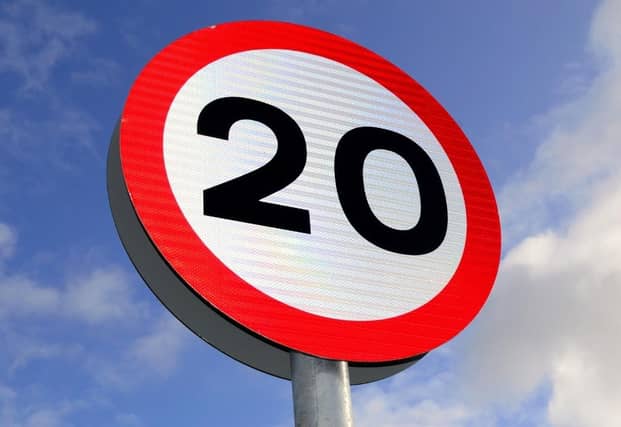

As more and more 20mph speed limits are introduced in Britain, some motorists are becoming frustrated as the number of 'notice of intended prosecution' (NIPS) grows at an alarming rate. These drivers are unhappy that in some cases these new 20mph limits
As more and more 20mph speed limits are introduced in Britain, some motorists are becoming frustrated as the number of 'notice of intended prosecution' (NIPS) grows at an alarming rate.
These drivers are unhappy that in some cases these new 20mph limits are applied in areas where there are no shops or schools and 49 per cent who admitted driving in excess of 20mph, sought to justify it by saying the limit was not appropriate to the road.
These 20mph zones are a target local authorities covering about a third of the country’s built-up areas by population, want to introduce.
In Wales, it is to become the default speed on a third of their roads by September 2023 and in Cornwall it is due to become the default speed for built-up areas.
In Plymouth, where a trial took place last spring, 1,100 drivers were caught on the first day. Within eight weeks the trial had caught 23,500 offenders.
However, in 2021, not one motorist was penalised for exceeding a 20mph speed limit in either Devon or Cornwall.
Alan Tapp, a professor at the University of the West of England and an advisor to the Welsh government on 20mph limits, said there was an inherent tension between the speed wanted in their neighbourhood and the speed they expected to travel when trying to reach their destination.
“If people look at the world through the windscreen of their car, they arrive at a certain answer,” he said.
“The argument about 20mph is fundamentally not about driving at all but about people being able to live their lives in a way that is free from danger, where they can talk to their neighbours and there is less noise.”
The Mayor of London, Transport for London and the Metropolitan Police want to eliminate all deaths and serious injuries from the transport network by 2041, under a strategy called zero vision.
The Met Police are deploying twice the number of patrols in 20mph zones year on year.
Autonomous vehicles, which are going to be controlled by speed, should achieve this.
There is a major disparity in the number of drivers penalised for speeding in 20mph zones.
In Cumbria, Humberside, Lincolnshire and the Thames Valley, police failed to issue a single prosecution notice to motorists for breaking the speed limit.
Bedfordshire issued only one, West Mercia two, Staffordshire three, Dorset five and Kent six.
However, Avon and Somerset issues 23,338 Nips, South Wales 8,372, and Cleveland 1,644.
Is it motorists are much more careful drivers in the areas with no or minimal prosecution notices, or are their 20mph limit zones in those areas where children and pedestrians are obvious?
There can be no question to remove all serious injuries and deaths is vital and irresponsible driving must not be tolerated, but these inconsistencies must be questioned, and motorists should not be penalised unreasonably.
If the wish is to reduce the number of vehicles on the road, public transport needs to be improved and available at reasonable prices and at convenient times.
This applies particularly in rural areas such as Devon and Cornwall.