

Spain showed the world that football is still beautiful
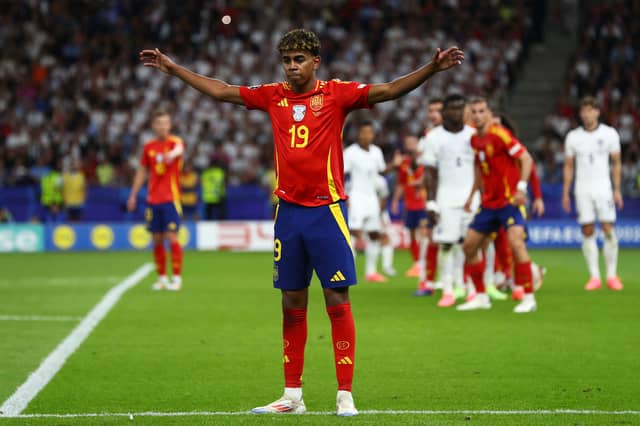

Spain keep the ball to take the World Cup
For all the goals, drama and upsets, perhaps the greatest lesson from the 2026 World Cup is that there is still no substitute for keeping the ball.
Spain's triumph was no accident. They were the outstanding team in the tournament, not because they possessed the quickest forwards or the biggest stars, but because they understood the game better than anyone else. Every movement had purpose, every pass had a destination and, perhaps most importantly, they made their opponents do the running.
It is often said that possession football is boring. Those critics could not have been watching this Spain side. Their football was intelligent, patient and devastatingly effective. Players constantly rotated positions, creating passing angles that simply did not exist seconds earlier. The ball moved quicker than defenders could react and, when Spain lost possession, they usually won it back within moments.
The statistics will tell one story, but watching them told another. Opponents spent long periods chasing shadows before eventually running out of ideas and, more importantly, energy. Spain controlled matches physically without necessarily being the strongest side because they understood a simple footballing truth: if your opponents don't have the ball, they can't hurt you.
England, unfortunately, offered the perfect contrast.
There is no doubting the talent within the squad or the progress they have made over recent years. Another run to the latter stages of a major tournament deserves credit rather than criticism. Yet once again England ultimately fell short when faced with the very best.
The reasons were familiar.
England simply do not retain possession well enough against elite opposition. Too often the ball is treated as something to be moved forward at the earliest opportunity rather than something to be treasured. There is still an obsession with playing quickly instead of playing wisely.
Against lesser nations that approach works. England have pace, power and enough attacking quality to overwhelm teams. Against teams like Spain or Argentina, however, every misplaced pass becomes another sprint to recover possession. Every hopeful ball forward hands the initiative back to technically superior opponents.
The consequence is inevitable. England work harder but not smarter.
As games enter the closing stages, fatigue begins to appear. Players who have spent an hour chasing possession naturally lose a yard of pace, concentration dips and spaces begin to open. It is not simply about fitness. No team can repeatedly defend without eventually paying the price.
Spain rarely seemed tired throughout the tournament because they rarely had to be.
There is a lesson here that English football has perhaps been reluctant to embrace. Technical security under pressure remains every bit as important as athleticism. Young players must continue to be encouraged to receive the ball in tight spaces, to recycle possession and to value control over chaos.
The modern game is often obsessed with intensity. Spain reminded us that intelligence is still the greatest weapon.
The tournament also demonstrated something else that should be celebrated — the narrowing gap between football's traditional powers and the so-called smaller nations.
Morocco once again showed they belong among the world's elite. Norway's run deep into the knockout stages was built on organisation, belief and outstanding coaching. Cape Verde continued their remarkable rise by competing fearlessly with established giants, while nations once viewed as outsiders repeatedly proved they could match anyone on their day.
The expansion of the World Cup attracted criticism before a ball was kicked. Some feared too many one-sided matches and a dilution of quality.
Instead, the opposite happened.
More nations arrived believing they could compete rather than simply participate. Coaching standards have improved across every continent, players now develop in the world's strongest leagues and tactical knowledge has become more widely shared than ever before.
The days when only half a dozen countries could realistically challenge for the latter stages appear to be disappearing.
That is good news for football.
The World Cup has always been at its best when it surprises us. Giant killings, unexpected heroes and emerging football nations are what make the tournament unique. Nobody wants predictability.
In the end, though, the best team still won.
Spain did not rely on luck, moments of magic or defensive resilience alone. They dominated games because they dominated the football. Their movement, composure and technical excellence set the benchmark for everyone else.
England have every reason to be optimistic for the future, but optimism alone will not bridge the gap. The next step is not about producing faster players or stronger athletes. It is about producing footballers who are as comfortable controlling a match as they are competing in one.
The 2026 World Cup may ultimately be remembered as Spain's tournament, but perhaps its greatest legacy will be the reminder that football is still at its most effective—and its most enjoyable—when the ball does the work.