

Remembering a North Devon Battle of Britain pilot on the eve of Armistice Day
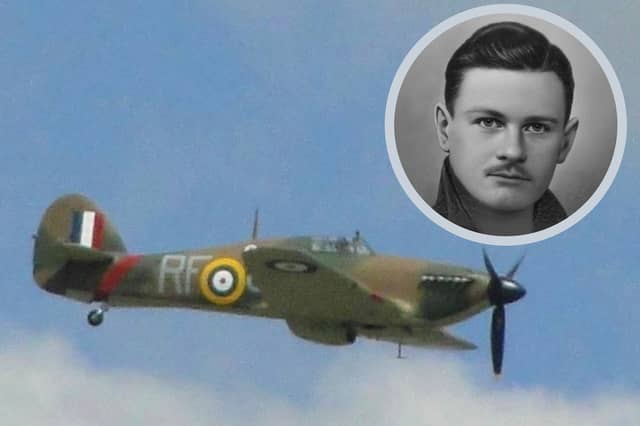

Warrant Officer Rupert Ommanney from Appledore flew Hurricanes from the outbreak of the Second World War – writer John Dekhane tells his story…
A Battle of Britain pilot from North Devon who made the ultimate sacrifice has been remembered ahead of Armistice Day this week.
Warrant Officer Rupert John Ommanney was originally from Appledore and was in the thick of the action during the Second World War.
Writer John Dekhane, who lives in France and researches tributes to fallen wartime servicemen contacted us with this article on the eve of 11/11 to help keep WO Ommanney’s memory alive in his local area.
Rupert was born on September 4, 1915, the youngest of five children of Lieutenant Colonel Francis Frederick Ommanney and Olive Caroline Ommanney.
The family home was in Appledore. His father had served with the East Surrey Regiment during the First World War, making a life of service and duty a familiar part of the household.
As a young man, Rupert initially looked towards the sea, entering the Merchant Service, but in February 1935, he joined the Royal Air Force on a short-service commission, completed his training and was posted to the Middle East.
There, during a lively mess party, came a brief moment of youthful mischief that would have lasting consequences. Rupert drew his revolver and shot out the lights. The incident meant he had to resign his commission, which he did on August 21, 1937.
Yet his desire to serve his country had not disappeared. In November 1938, Rupert returned to the RAF, joining the Volunteer Reserve as a pilot under training. He was called up on September 1, 1939, just as Britain entered the Second World War.
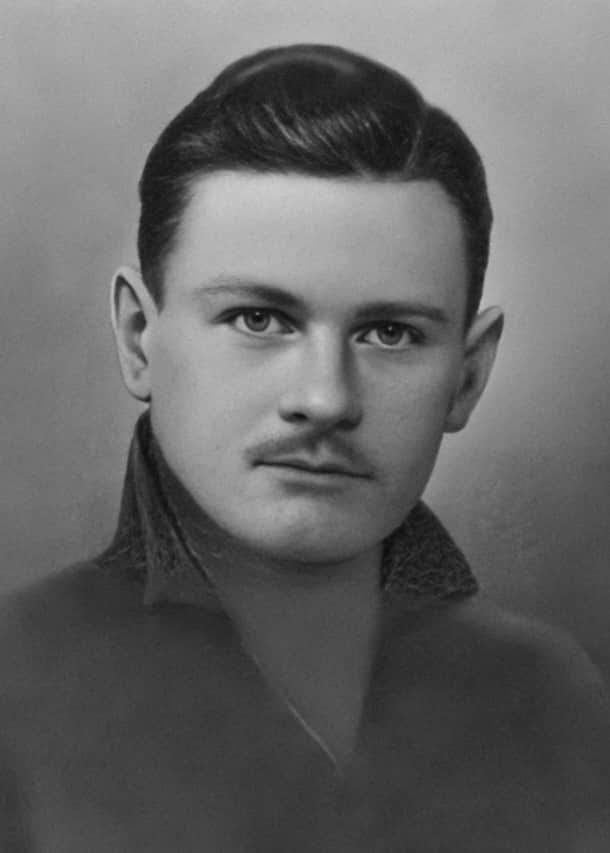
Amid the uncertainty of those days, there was also happiness - in October 1939, he married Edith Fagge and together they looked towards a promising future, unaware that what they had dreamed of would soon be taken from them.
After completing his training, Rupert became a Hurricane pilot and joined 229 Squadron as the Battle of Britain intensified. He quickly found himself in the thick of the fighting, claiming the destruction of a German fighter and bomber. On September 30, 1940, he was wounded in the foot, but the injury did not keep him away for long. Within weeks, Rupert had returned to his squadron and was back in the skies.
Only days later, Rupert found himself in another perilous encounter over the Channel. On October 26, 1940, he was one of three Hurricane pilots who attacked a German aircraft off the French coast. The enemy aircraft crashed into the sea, but the danger was far from over.
The Hurricanes were suddenly attacked from behind by German fighters. Rupert managed to escape the deadly crossfire, flying at very low level across the Channel to reach Britain.
In February 1942, the German Navy launched a daring passage through the English Channel, sending two major battleships and a heavy cruiser through its waters. The German ships were protected by destroyers, flak ships and more than 200 fighter aircraft, creating a formidable force that the RAF and Royal Navy were determined to stop.
Then serving with 607 Squadron, Rupert was among the pilots sent into the fight to defend the shores of his homeland.
As the battle unfolded, the sky and sea became a scene of intense combat. During the ordeal, four Hurricanes were shot down by German flak, including Rupert’s aircraft. On that day, February 12, 1942, Rupert lost his life at just 26-years-old.
His body was never recovered, leaving his family with no funeral to attend and no grave to visit.
News of Rupert’s death was devastating for his Edith, his parents, siblings and friends. His absence left a deep and lasting void in their lives, a pain that time could never heal. Today, Rupert is commemorated on the Runnymede Memorial, where his name stands among those who gave their lives in the defence of Britain.
It is our solemn duty to commemorate Warrant Officer Rupert John Ommanney, ensuring that his sacrifice is never forgotten. By keeping his story alive, we lay flowers where no grave exists, honouring a young man who gave his life for freedom.
Rupert was one of countless British heroes who never came home, but whose memory must endure.
Written by John Dekhane