

Hopes for reinstated Bideford rail link kept alive as new Northern Devon Local Plan takes shape
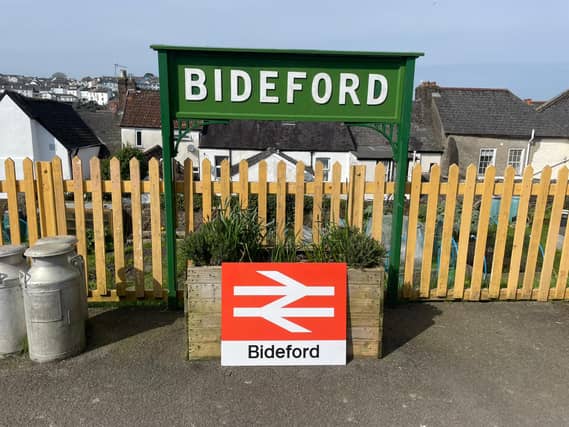

A long-standing campaign to reinstate the Bideford-Barnstaple railway has been given fresh profile in the early stages of a new Northern Devon Local Plan, as public consultation opens on how the plan should be shaped.
Ambitions to reinstate a passenger rail link between Bideford and Barnstaple have been given renewed profile in the early stages of a new Local Plan for Northern Devon, campaign group Railfuture has said, as the first of a series of public consultations on the plan gets underway.
North Devon and Torridge District Councils are jointly preparing a new Local Plan to replace the current joint Local Plan covering 2011 to 2031, which was adopted in late 2018. The first stage of consultation, known as a scoping consultation, is now open and closes on Tuesday, August 11.
A breakdown of the plan
North Devon and Torridge District Councils are jointly preparing a new Local Plan to replace the current 2011-31 plan, adopted in 2018.
The first stage of consultation - a "scoping consultation" - is open now and closes on Tuesday, August 11. This stage is about process, not specific proposals: it asks what people value about the area, what issues matter most, future opportunities, and how best to reach residents.
It is supported by an updated Baselining Evidence report, including a SWOT analysis (strengths, weaknesses, opportunities and threats). The report references ambitions to reinstate passenger rail on the Bideford-Barnstaple and Lynton-Barnstaple lines - wording carried over from the existing 2011-31 plan.
Railfuture, the rail campaign group, is focused specifically on the Bideford-Barnstaple link, citing four supporting reports: Network Rail's "Connecting Communities" assessment, a Preliminary Strategic Business Case by Peter West OBE, and two SLC Rail studies (economic appraisal and engineering feasibility).
The Joint Planning Policy Committee resolved on July, 15 2022 that the Bideford-Barnstaple link would be "considered as part of the People and Place project." The next Local Plan consultation, covering proposed content and evidence, is expected in early 2027.
The new Local Plan is intended to be adopted by April 2029. North Devon and Torridge remain the statutory planning authorities until local government reorganisation on March, 31 2028, after which a new unitary authority takes over.
Railfuture's own response to the current scoping consultation is due on or shortly before 11 August.
What the scoping consultation is for
This first consultation is not about specific proposals for new development, but about establishing the process for how the new Local Plan will be built. It asks people what they value about Northern Devon, what issues matter most to the area, what opportunities exist for the future, and how the councils can best reach people to include as many voices as possible in shaping the plan.
The consultation is supported by an updated Baselining Evidence report, which includes what is known as a SWOT analysis - a standard planning tool that sets out the strengths, weaknesses, opportunities and threats facing the area.
Railfuture Devon & Cornwall, the regional branch of the rail campaign group, said this report is intended to establish a reference point from which the new Local Plan will build, with more specific options and proposals expected to follow at a second consultation stage in early 2027.
The rail link angle
Within the updated Baselining Evidence report, a paragraph highlights how the current 2011-31 Local Plan supports opportunities for improving rail connectivity, referencing ambitions to reinstate passenger rail services on both the Bideford-Barnstaple railway line and the Lynton-Barnstaple railway line.
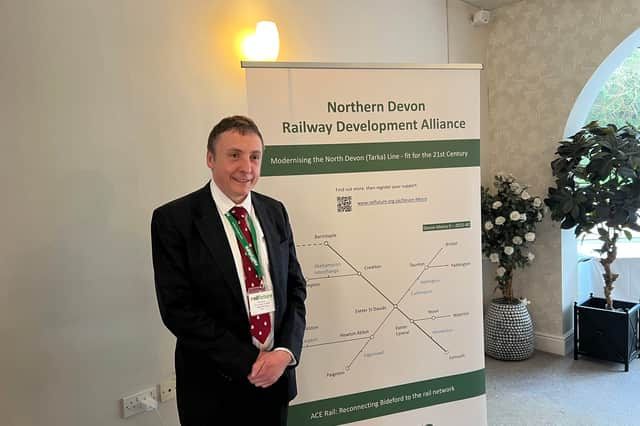
Tim Steer, chair of Railfuture Devon & Cornwall, said the wording on the two rail schemes has effectively been carried forward from the existing 2011-31 Local Plan, rather than being newly written. However, he said Railfuture was pleased to see the renewed profile this gave the schemes, given that North Devon and Torridge Councils have both committed, through their Joint Planning Policy Committee, to at least explore a potential scheme for a Bideford rail link.

Railfuture said it does not take an active interest in the Lynton-Barnstaple line, as it operates as a heritage railway disconnected from the mainline network. Its focus remains on the Bideford link, for which the group said it now has four recent reports forming its own evidence base: Network Rail's "Connecting Communities" assessment, in which Bideford scored highly enough to become the subject of a more detailed case study; a Preliminary Strategic Business Case authored pro bono by Peter West OBE; an independent economic appraisal by SLC Rail; and an initial engineering feasibility study, also by SLC Rail.
Railfuture also pointed to a formal decision taken by the Joint Planning Policy Committee at its meeting on July 15 2022, at which it was resolved that "the Bideford to Barnstaple rail link is considered as part of the People and Place project."
Mr Steer said Railfuture expects to generate further momentum behind the scheme following the second Local Plan consultation next year, and as the plan-making process continues towards its intended adoption in April 2029. The group's own response to the current scoping consultation is due to be published on or shortly before the August 11 deadline.
Wider context of the Local Plan
Mr Steer noted that the current 2011-31 Local Plan was not finally adopted until October 2018, meaning much of the evidence it was based on is now, in his words, beyond its "best before" date. The successor plan is intended to be rebased from 2026, reflecting what he described as changed circumstances since the current plan was drawn up, including increased pressure for new homes and what he called a widely perceived "infrastructure deficit" affecting public services, particularly sustainable transport capacity.
Details such as the exact baseline date and the duration of the new plan period - which could run for 15, 20 or 25 years - have not yet been finalised, and remain subject to ongoing guidance from the Ministry of Housing, Communities and Local Government.
North Devon and Torridge District Councils remain the statutory planning authorities responsible for the joint Local Plan until local government reorganisation on March 31, 2028. Devon County Council's role is limited to being consulted by the two district councils during the process. From April 1, 2028, a new unitary authority is due to take over responsibility for the Local Plan from all three existing authorities.
Mr Steer also welcomed confirmation in the scoping consultation that the councils will work with infrastructure providers to prepare an Infrastructure Delivery Plan, setting out the infrastructure needed to support planned growth in the area. He said he was encouraged that this plan would be informed by a range of separate studies, including on transport.
What happens next
The scoping consultation closes on Tuesday, August 11. According to the timetable for Local Plan preparation, the next consultation - covering the plan's proposed content and supporting evidence - is expected to take place in early 2027, ahead of the plan's intended adoption in April 2029.
Railfuture describes itself as Britain's longest-established and leading independent national voluntary organisation campaigning for improved rail services across an expanding network for passengers and freight. It represents rail users nationally through 14 branches, with around 20,000 affiliated and individual members, and says its independence is maintained through funding solely from members' subscriptions and legacies.