

Exmoor Zoo welcomes first honey badger born in the UK for 20 years - and only the second ever
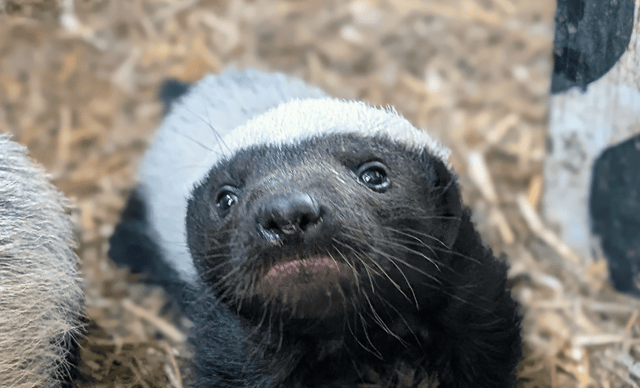

The precious arrival has been the zoo’s best kept secret for six months!
The first honey badger born in captivity in the UK for more than 20 years and only the second one ever has been revealed by Exmoor Zoo after months of secrecy.
Keeper have been tiptoeing around the honey badger enclosure after the incredibly rare birth in January this year and kept it well away from public view because the fierce and iconic animals may kill their young if they perceive any threat.
But after six months underground in their sett and with dad temporarily relocated as he wasn’t keen on his offspring, proud mum ‘Mrs Stoffel’ is now encouraging her daughter out and about to investigate the new world and begin teaching her what she needs to know.
Honey badgers prefer to come out at night, but the best times to see them at Exmoor Zoo are just after breakfast at 10am and ‘supper time’ after 3pm.
Honey badgers are renowned for being intelligent and very, very pugnacious as well as being strong for their size. In the wild in Africa and parts of Asia they use that attitude to scare other animals away from their kills – even lions know not to mess with a honey danger!
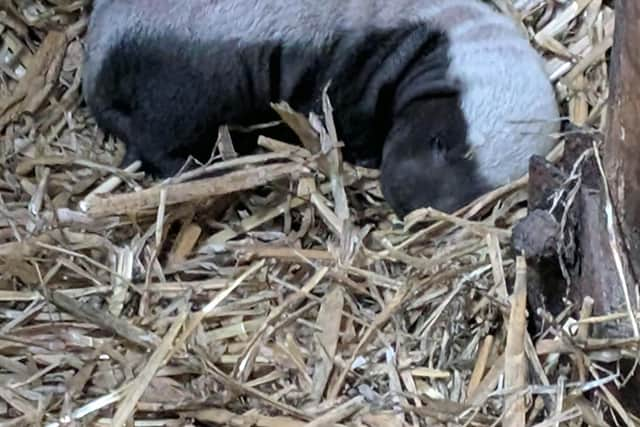
Above: The baby honey badger has been underground for six months and keepers kept all contact to an absolute minimum so mum didn’t feel threatened. Credit: Exmoor Zoo
Zoo director Danny Reynolds said: “We’ve kept her birth secret because often parents if they feel pressured by potential threats may kill their offspring.
“So, we’ve very much taken a back seat and minimised our keeper interactions with mum in their enclosure. We wanted them to feel safe and protected.
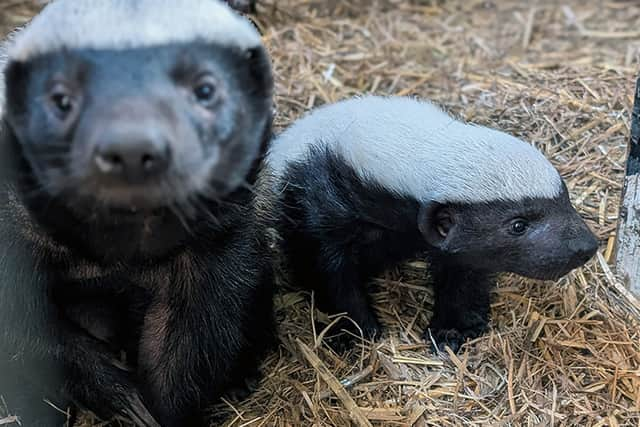
Above: Proud honey badger mum Mrs Stoffel with her daughter. Credit: Exmoor Zoo
The Exmoor Zoo pair are currently one of only two pairs in the UK and as a species they have only been bred once before at Howletts Wildlife Park, more than 20 years ago. A single youngster is looked after by just its mother for as long as 15 months.
Honey badgers have a few special features that help them survive, aside from their pugnacious nature.
When they dig up and claw open honey hives, they have long hard claws and thickened skin which prevents them from being stung.
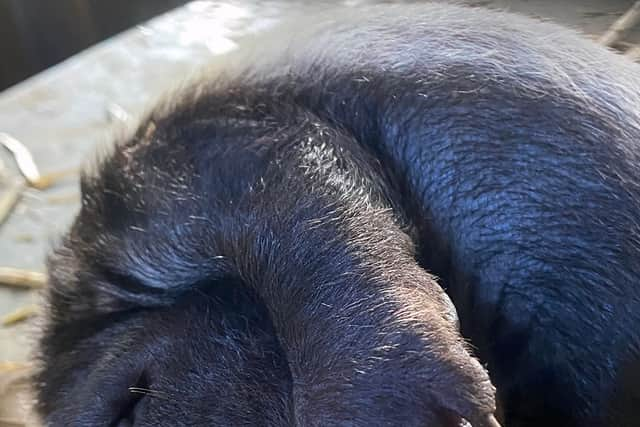
Above: Butter wouldn’t melt… but honey badgers are considered among the most ‘pugnacious’ creatures on the planet. Credit: Exmoor Zoo
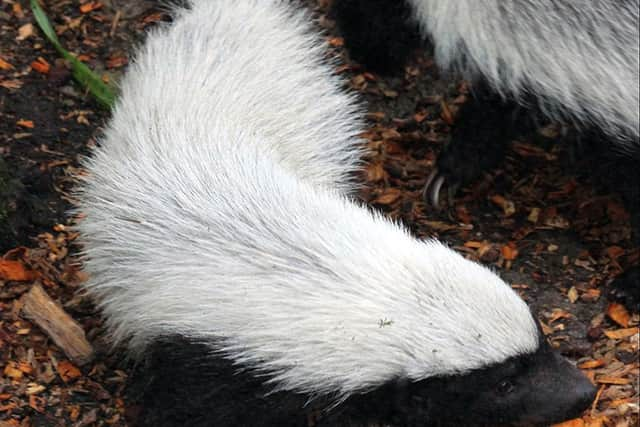
Above: The as-yet-unnamed young honey badger is now out and about exploring at Exmoor Zoo. Credit: Exmoor Zoo
But as yet she has no name. Senior carnivore keeper Tina Rowtcliff said: “We’d really love to give her a name, but we think letting the public come up with a name would be amazing. I suggested ‘Zuma’, as Disney’s Lion Guard had its own honey badger.
“The zoo will run a competition on our social media platforms to find a name for her so keep a look out or just send in your suggestion to us.”