
Human remains found at Westward Ho! have been identified as those of Ryan Miller from Barnstaple, who went missing in April 2025. Credit: Graham Hobbs
Search


26 Mar 2026

Please allow ads as they help fund our trusted local news content.
Kindly add us to your ad blocker whitelist.
If you want further access to Ireland's best local journalism, consider contributing and/or subscribing to our free daily Newsletter .
Support our mission and join our community now.
To continue reading this article, you can subscribe for as little as €0.50 per week which will also give you access to all of our premium content and archived articles!
Alternatively, you can pay €0.50 per article, capped at €1 per day.
Thank you for supporting Ireland's best local journalism!

Some of the bed frames which will form the recreation of the Pink Floyd album cover A Momentary Lapse of Reason on Saunton Sands this Sunday in protest over the White Cross decision. Credit: SOS

Disgusted campaigners will recreate an iconic Pink Floyd album shoot on Saunton Sands this Sunday in an accusation that North Devon Council and its planning committee are guilty of ‘a momentary lapse of reason’ by approving the White Cross cable plans.
Save Our Sands will create a smaller version of the famous band’s A Momentary Lapse of Reason album cover shot at Saunton 50 years ago, which depicted a sea of beds placed on the sands and one disconsolate figure sat in the middle of them.
A banner will read: ‘North Devon Council, you said YES to White Cross – was this a MOMENTARY LAPSE OF REASON?’.
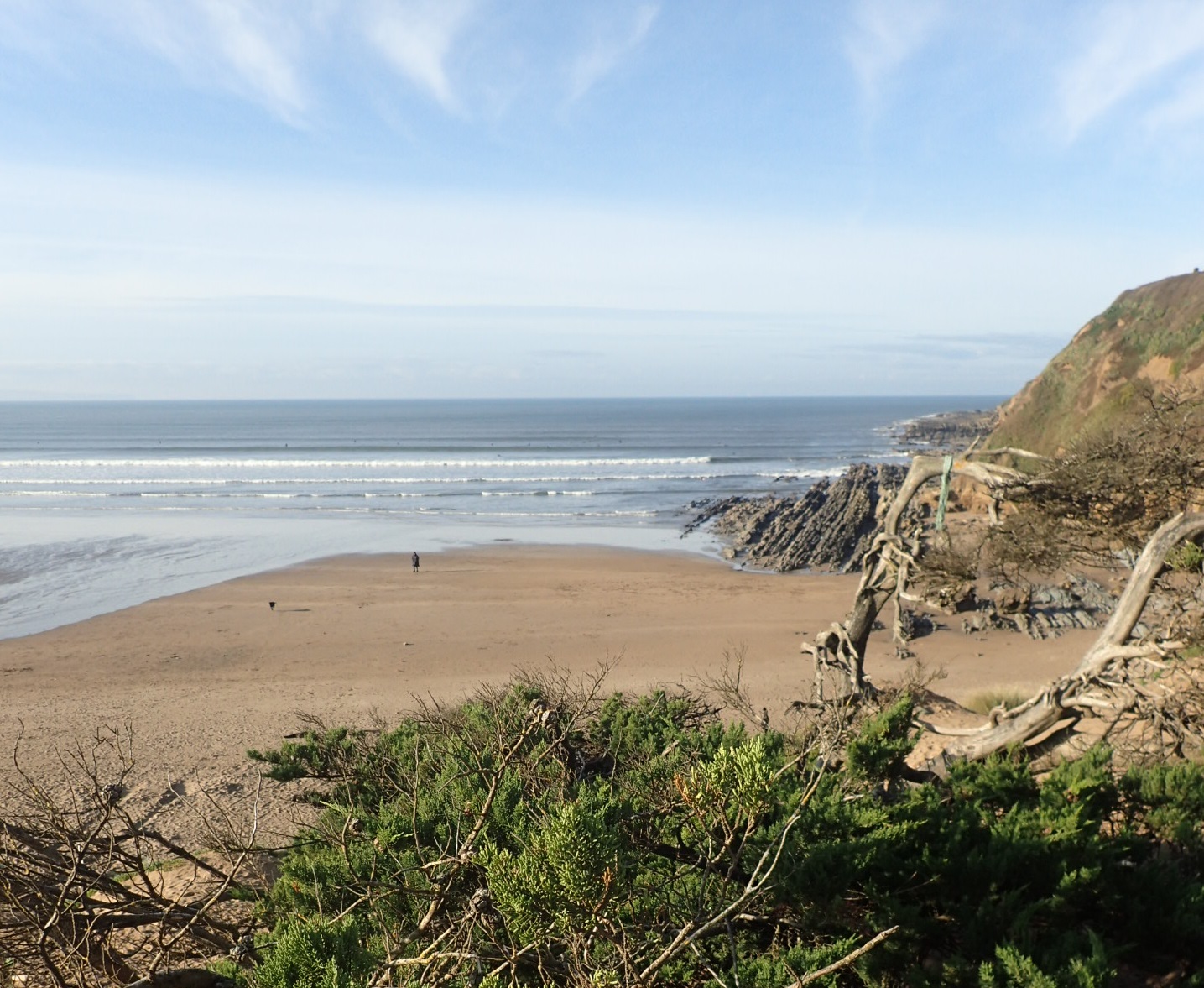
Above: The cables will be routed under Saunton Sands and near the main beach entrance. Credit: Paula Ferris
The installation this Sunday (June 1) is expected to be completed by 7.30am and will be cleared from the beach by 8.30 to allow beach goers to enjoy their day.
The group has enough helpers, but people welcome to come to view it after 7.30am. Drones are currently banned from the area due to nearby military exercises.
The new bed frames from the installation will be donated to the Forces Support charity shop in Green Lanes Shopping Centre.
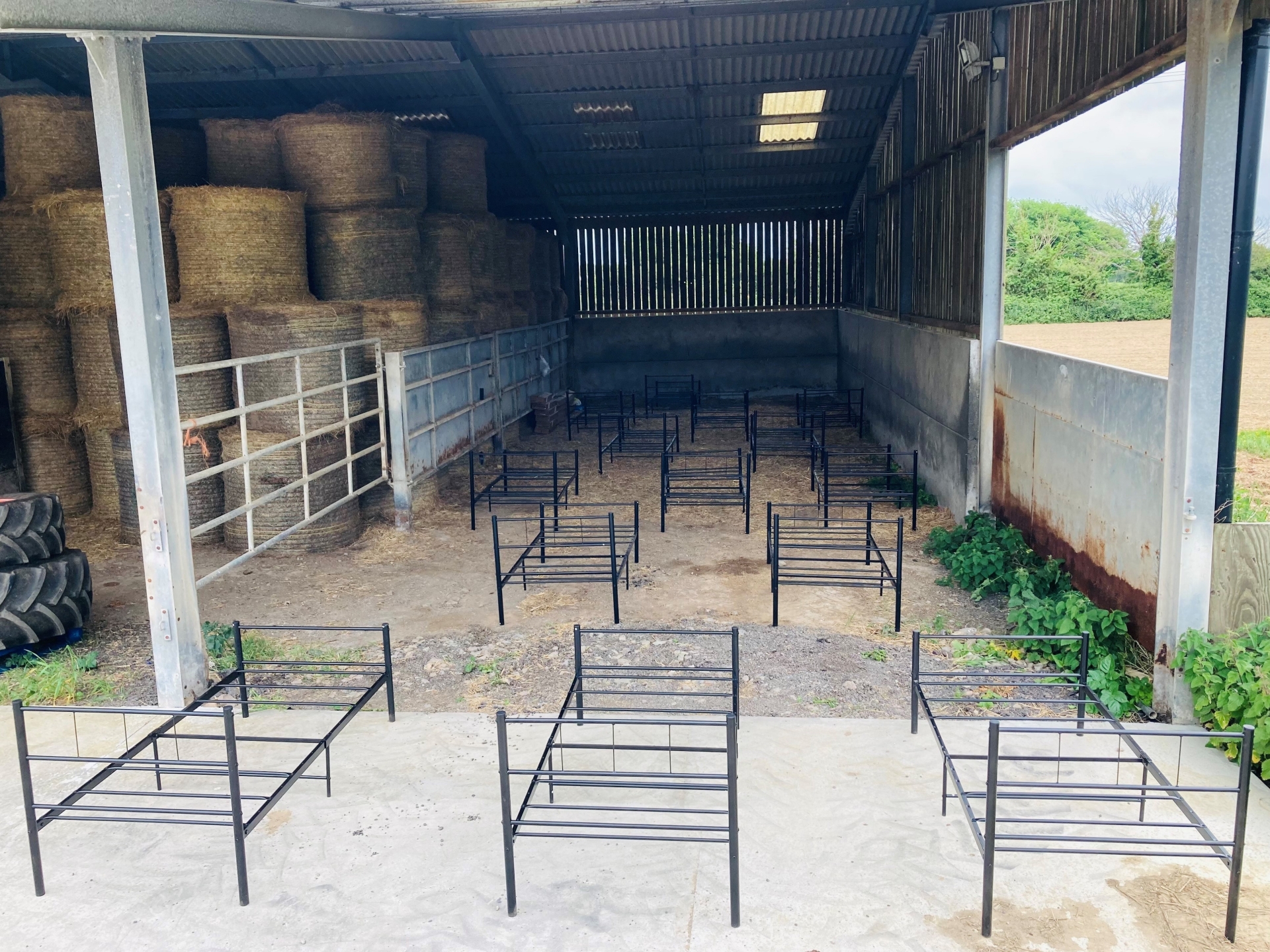
Above: Some of the bed frames which will form the recreation of the Pink Floyd album cover on Saunton Sands this Sunday in protest over the White Cross decision. Credit: SOS
The campaigners continue to object to the council’s decision to approve the controversial application to bring electricity cables serving a floating wind farm ashore at Saunton and then tunnel them under highly protected areas of the estuary and world-renowned biosphere.
Planning committee members voted by 10 to two on May 7 to pass the application, despite an online petition with 3,800 people opposing it, as well as more than 1,800 individual objections to the plans.
Officers recommended approval of the application, subject to 39 conditions. Their report said the benefits of generating renewable and low carbon energy and contributing to net zero outweighed the ‘largely short term environmental impacts’.
Campaign groups Save Our Sands and Love Braunton even raised £10,000 to recruit solicitors to challenge the plans with claims the applicant had not provided enough information to answer serious concerns about the impact on the landscape, wildlife, local tourism and the disruption to the area.
Helen Cooper of Save Our Sands said: “Our re-creation will be much humbler in scale than the original but with just as much relevance and punch we hope, as we send a clear message to our democratically elected representatives on the planning committee.
“The community feels ignored by the planning process. We can’t believe that some of our democratically elected representatives were effectively silenced during the meeting, when they raised genuine questions and concerns about the White Cross application. This is our response to that.”
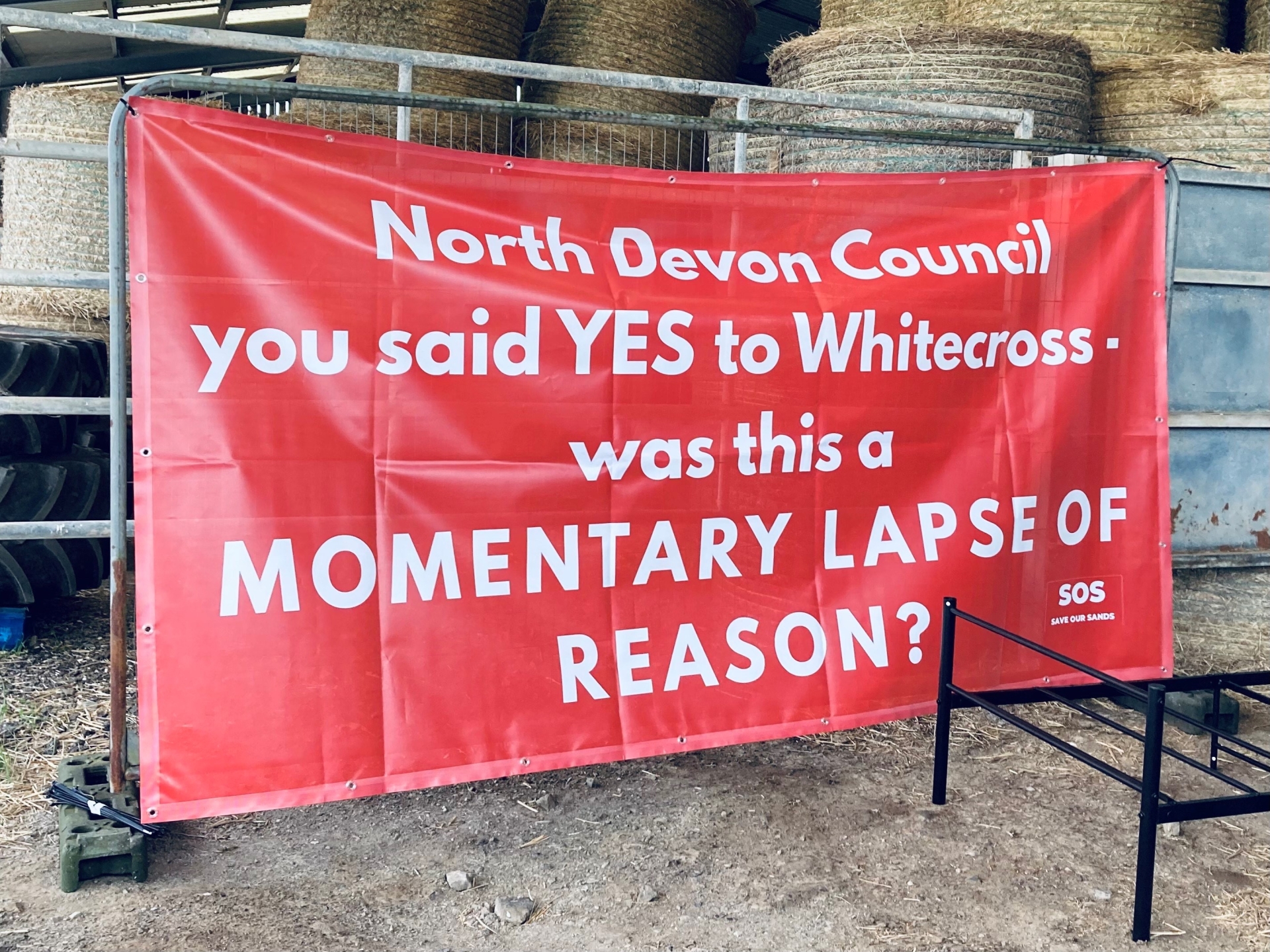
Above: The banner which will accompany the bed 'protest' installation. Credit: SOS
The cables will carry power from a ‘test and demonstration’ windfarm of up to eight turbines 31 miles offshore, which White Cross says will power up to 135,000 homes, but the route will go through a host of protected landscapes, connecting to the national grid at East Yelland, where a new substation will be built.
It will make landfall on the beach at Saunton and extend eight kilometres under Saunton Golf Course and the Taw Estuary. The area has a variety of designations and protected landscapes which include Braunton Burrows, a special area of conservation and a UNESCO biosphere reserve known for its rich habitat for birds, bats and insects and flowering plants.
The cabling work is expected to take two years, with a work hub in Saunton Sands’ beach car park, closing 40 per cent of parking for what is a popular tourist and surfing beach, plus there are expected to be up to 90 movements of heavy lorries per day through the narrow and busy streets of Braunton.
Developers have used an aspect of planning law called the ‘Rochdale Envelope’ approach, which means some details of the project do not have to be confirmed until permission was granted, giving a level of flexibility on how the works are carried out.
At the five-and-a-half hour planning meeting on May 7, White Cross project director Al Rayner said White Cross would demonstrate the viability of floating wind in the Celtic Sea, which was essential to attract future investment to the region and accelerate the UK’s transition away from fossil fuels.
He said they had worked hard to ensure the proposals were sensitive to the environment, taking steps to minimise disturbance during construction. This included avoiding any negative impact on the overwintering bird population, uninterrupted access to Saunton Sands beach, and ensuring cables would be fully hidden along the route.
It is claimed the project will bring up to 300 new jobs to the South West and unlock ‘thousands more’ jobs in the future, as well as ‘more than £500,000 in community benefit to support local and regional initiatives’ but few details have been provided at this stage as to how this will directly benefit North Devon.

Subscribe or register today to discover more from DonegalLive.ie
Buy the e-paper of the Donegal Democrat, Donegal People's Press, Donegal Post and Inish Times here for instant access to Donegal's premier news titles.
Keep up with the latest news from Donegal with our daily newsletter featuring the most important stories of the day delivered to your inbox every evening at 5pm.