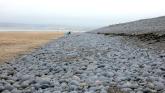
Human remains found at Westward Ho! have been identified as those of Ryan Miller from Barnstaple, who went missing in April 2025. Credit: Graham Hobbs
Search


26 Mar 2026

Please allow ads as they help fund our trusted local news content.
Kindly add us to your ad blocker whitelist.
If you want further access to Ireland's best local journalism, consider contributing and/or subscribing to our free daily Newsletter .
Support our mission and join our community now.
To continue reading this article, you can subscribe for as little as €0.50 per week which will also give you access to all of our premium content and archived articles!
Alternatively, you can pay €0.50 per article, capped at €1 per day.
Thank you for supporting Ireland's best local journalism!

The expended World War Two mortar shell discovered near South Molton by local farmer Richard Burgess. Credit: Chris Burgess

Bomb disposal experts had to be called in after a South Molton farmer unearthed an unexpected and deadly looking ‘crop’ in his field.
Richard Burgess was planting at Whitechapel Moors yesterday (Tuesday, April 22) when his machinery turned over a foot long mortar round from World War Two, bringing work to a halt.
Police were called and the specialist team of Royal Navy divers from Bravo Squadron were sent from HMNB Devonport to assess the device.
The Explosive Ordnance Disposal (EOD) experts confirmed it was a 4.2 inch illumination mortar round that had already been expended took it away with them.
For Mr Burgess, it is not the first time this particular field has yielded 80-year-old wartime fruit.
He said: “We found one about 15 years ago on the same spot. I think they said it was a phosphorus type for flares, not explosive. They were saying they find them on Saunton Sands quite regularly too.
“We were strip-tilling, which saves ploughing everything – if they are explosive, as you can imagine it’s a bit worrying for a tractor driver!
“The Home Guard did a lot of training around this area during the war.”
An MOD spokesperson said in a statement: “We can confirm that a team of Royal Navy Divers from Bravo Squadron, based in HMNB Devonport, were called out to a suspected item in South Molton in North Devon yesterday.
“The item (an expended 4.2inch illum mortar) was assessed and then moved from the site for disposal.”
-1745426961003.JPG)
Above: The illuminating mortar round had a 4.2 inch calibre and would have been used to light up a battlefield when fighting at night. Credit: Chris Burgess
Mr Burgess’s son Chris added a little more to the history of the site. He said: “The area was moorland up to the 1980s and very close by, perhaps 500 metres away, was a quarry used by Home Guard as a rifle range.
“We’re not sure if it was common for a local home guard but Bishop’s Nympton and maybe South Molton area too had a very valuable four-inch mortar tube – this shell was probably smoke or an illuminating flare due to the shape of its sides.
“Whitechapel also had a group of American soldiers here just before D-Day, I think just communications rather than infantry, so perhaps US troops stationed locally also used the home guard ranges for practice.”
-1745426994011.JPG)
Chris added that when the family moved to the farm in 1973, the old gamekeeper who still lived there, Mr Rawlings, had been a lieutenant in the Home Guard and survived the Somme during World War One. He also had two sons who both fought in and survived WW2.
Saunton Sands and the surrounding area of Braunton Burrows was used extensively to train American and other troops in the run up to D-Day, where they practised disembarking from landing craft and held live fire exercises.
The area was known as the Assault Training Center and thousands of troops moved through the region in rotation to complete the training course.

Subscribe or register today to discover more from DonegalLive.ie
Buy the e-paper of the Donegal Democrat, Donegal People's Press, Donegal Post and Inish Times here for instant access to Donegal's premier news titles.
Keep up with the latest news from Donegal with our daily newsletter featuring the most important stories of the day delivered to your inbox every evening at 5pm.