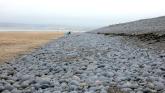
Human remains found at Westward Ho! have been identified as those of Ryan Miller from Barnstaple, who went missing in April 2025. Credit: Graham Hobbs
Search


26 Mar 2026

Please allow ads as they help fund our trusted local news content.
Kindly add us to your ad blocker whitelist.
If you want further access to Ireland's best local journalism, consider contributing and/or subscribing to our free daily Newsletter .
Support our mission and join our community now.
To continue reading this article, you can subscribe for as little as €0.50 per week which will also give you access to all of our premium content and archived articles!
Alternatively, you can pay €0.50 per article, capped at €1 per day.
Thank you for supporting Ireland's best local journalism!

A recent demonstration by opponents of the White Cross cabling route at Saunton Sands. Image courtesy: Save Our Sands

Opponents of an onshore cable route for a floating windfarm off North Devon have raised £10,000 in six days to mount a legal challenge.
Community forum Love Braunton and campaign group Save Our Sands began the CrowdJustice appeal due to concerns over the route through a number of highly designated landscapes and its impact on the environment.
The 158 donations included one of £2,500 and two of £1,000, made anonymously.
The groups say they are “astounded” by the support.
Cables for the 100-megawatt White Cross windfarm, 31 miles off the coast, are proposed to make landfall at the northern end of the popular surfing beach Saunton Sands. From there, they would run under a golf course and Taw Estuary, connecting to the national grid at East Yelland.
The rights for this test and demonstration windfarm, which will provide enough energy to power 135,000 homes, were secured from the Crown Estate in 2021. The site is expected to pave the way for future large-scale floating offshore wind developments in the region. It is part of the government’s commitment to become net zero by 2050.
But the area for the cable includes several sites of special scientific interest (SSSI), special areas of conservation (SAC), the UNESCO North Devon Biosphere Reserve, and is part of the North Devon National Landscape.
The planning application for the onshore infrastructure will be decided by North Devon Council’s planning committee, which will meet on Wednesday 7 May.
Love Braunton and Save Our Sands want White Cross Offshore Windfarm, or the company behind it, Flotation Energy, to provide “sufficient detailed information” for councillors to make “an appropriately informed decision.”
By getting legal representation, they say they are giving planners “a very clear warning about the significant environmental issues that this application raises.”
“We have instructed our legal team to write to the planning department and detail the principal planning material issues that need to be considered at this stage – short- and long-term impacts of the proposed construction activities on the landscape, its habitats, and ecology,” Love Braunton and Save Our Sands said in a joint statement.
One donor said: “Always loved my time here, a special place in real jeopardy from an ill-conceived plan that does not adequately take the area’s special characteristics and community into real consideration. Some things just can’t be undone, so this plan needs real scrutiny, not a green light.”
The controversial application, which was first submitted in 2023, provoked 1,000 letters of objection by last autumn, with many hundreds more commenting against the scheme on the council’s website.
There were around 30 letters in support.
Concerns about the potential environmental impact have been shared by groups like the Devon Wildlife Trust and Braunton Parish Council.
They are also unhappy that, during the course of the work, up to 40 per cent of the only beach car park will be taken up with construction equipment, and there could be up to 90 HGV movements a day on Braunton’s narrow roads.
The Environment Agency is opposing the plans on flood risk grounds.
The developers said that the landfall and location were identified through assessments that considered consultation feedback and balanced environmental, technical, and commercial issues.
“Our primary concern was to avoid sensitive designated sites where possible. In the two locations where we do pass under a special area of conservation, we will be using what’s known as trenchless drilling, a technique which allows us to avoid disrupting the surface.”
The cable route has been amended to avoid Braunton Burrows’ special area of conservation, the backdrop to Saunton Sands, which is one of the largest sand dune systems in Britain.
Steps are being taken to ensure the cabling work does not have any significant or long-term impact on the local environment, they said, and added that one of the legacies of the project will be an improvement in local biodiversity.
When questioned about the legal challenge, North Devon Council said: “We will consider any legal advice as and when we receive it. Our response is very much dependent on the nature of any challenge, and we would need to consider any risk associated with taking the application to committee for a decision.”
White Cross Offshore Windfarm was contacted for a comment on the legal challenge but has not responded.

Subscribe or register today to discover more from DonegalLive.ie
Buy the e-paper of the Donegal Democrat, Donegal People's Press, Donegal Post and Inish Times here for instant access to Donegal's premier news titles.
Keep up with the latest news from Donegal with our daily newsletter featuring the most important stories of the day delivered to your inbox every evening at 5pm.