

Devon councillor and farmer calls on Chancellor to back farming in Budget
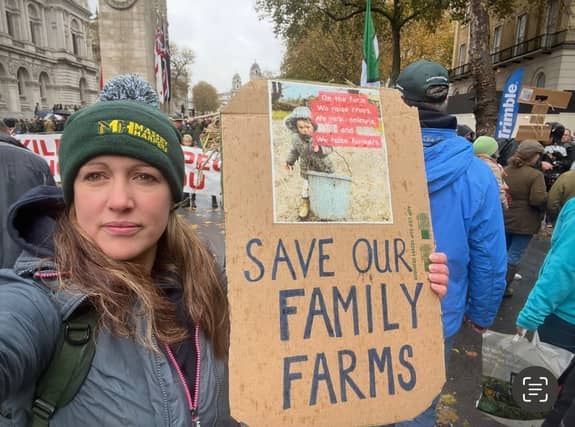

Councillor Cheryl Cottle-Hunkin, a Devon farmer and county councillor, has written to Chancellor John Healey urging him to increase the farming budget and make the Sustainable Farming Incentive fully funded and accessible to every farm in the Budget.
A Devon County Council cabinet member who is also a farmer has urged the Chancellor to use this month's Budget to back British farming, warning that farms have been “pushed to the edge.”
Councillor Cheryl Cottle-Hunkin, the council's Cabinet Member for Rural Affairs and county councillor for Torrington Rural, has written to Chancellor John Healey ahead of the Budget on Wednesday October 28. She is herself a well-known farmer in the North Devon area.
In her letter, co-signed by councillor Simon Clist, the council's Cabinet Member for Assets and Resources, she said farmers were facing unprecedented pressures. She listed rising production costs, the worst drought in 50 years, the largest ever bluetongue outbreak and the inability of many businesses to access the Sustainable Farming Incentive (SFI), which she said had pushed farms to the edge.
She wrote that if the Government truly believed "food security is national security", it must prove it by putting those words into action.
The councillor set out three things she wants from the Budget. She called for a significant increase in the farming budget, for SFI to be fully funded and made accessible to every farm, and for all changes to Agricultural Property Relief and Business Property Relief to be reversed. She said the changes, which she called the "family farm tax", were undermining investment and succession planning on family farms.
The reliefs reduce or remove inheritance tax on qualifying farmland and business assets. From April 6 this year, full relief applies only to the first £2.5 million of combined agricultural and business property, with 50 per cent relief above that level. The Government raised the threshold from an original £1 million in December after pressure from the farming sector, and says that around 185 estates claiming the relief will pay more inheritance tax in 2026-27.
She wrote that food security depends on profitable, resilient farm businesses with the confidence and ability to plan for the long term.
She sent a second letter, also co-signed by councillor Clist, to Dame Angela Eagle MP, Secretary of State for Environment, Food and Rural Affairs, and Stephen Morgan MP, Under-Secretary of State at the department. Devon MPs were copied in to both letters.
In that letter she said the way SFI26 was handled had left farmers feeling angry, frustrated and let down.
The second application window for the scheme opened at 10am on Tuesday September 22 and closed less than six hours later, at 3.48pm, after the budget was fully allocated. Defra has said about 12,200 applications were submitted. It has also said around 12,500 existing agreement holders failed to secure a new SFI26 agreement.
The councillor said those who were not quick enough, or who faced technical problems, were simply locked out.
"A scheme that was intended to support farmers in delivering environmental benefits alongside food production has now effectively become a lottery," she wrote.
She said the demand showed a huge appetite among farmers to invest in sustainable food production, protecting biodiversity and water quality, building healthier soils and adapting to climate change, but that it also exposed how significantly underfunded the scheme was.
She urged the Government to bring forward SFI27 as soon as possible, open to all farmers and permanently open for applications, so that farmers can enter when it suits their business and are not forced into a race against the clock. She also called for the current three-hectare threshold to be removed so that farms of all sizes can take part.
Defra has acknowledged that farmers who missed out will be deeply disappointed, but has defended its handling of the scheme and said it will set out next steps for SFI in 2027 soon.
The councillor said the closure of the Basic Payment Scheme had already removed an important source of income from many farm businesses. While SFI was never a direct replacement, she wrote, it was presented as a key part of the transition out of the EU, and many farmers embraced it in good faith and changed their businesses accordingly.
She wrote of how difficult the year had been, with the prolonged drought hitting production and the spread of bluetongue creating enormous stress and financial pressure for livestock farmers. She also criticised what she described as a severe lack of clear communication and support from official bodies, including Defra.
Many farm businesses had already diversified wherever possible, she said, and many farming families were working additional jobs simply to keep their farms afloat.
"Food production is not a luxury," she wrote. "It is critical national infrastructure, and it needs to be treated as such."
She added that farmers also maintain the hedgerows, meadows, woodlands and stone walls that define the countryside and attract millions of visitors, and that the country must be prepared to invest in the people who deliver food security and nature recovery.
She urged the Government to significantly increase the farming budget through a long-term funding settlement.
"British farmers are not asking for handouts," she wrote. "They are asking for the opportunity to produce food, care for the environment, support rural communities and run viable, profitable businesses."
The North Devon Gazette has contacted the Treasury and the Department for Environment, Food and Rural Affairs for comment.