

'It's not going to go away any time soon': Inside Devon's new climate reality

Devon's infrastructure "wasn't designed to cope" with its changing climate, one of the region's leading engineers warns. This investigation reveals how that warning is already playing out on farms, railways and reservoirs across the county.
On a farm in North Devon, Cheryl Cottle-Hunkin walks her ewes further each week to find a source of water that hasn’t dried up. In Exeter, engineers are trying to work out how to stop railway sleepers cracking apart in the heat. And across the region, water supplies are under such strain that South West Water has banned hosepipes for the fourth time in five years.
These are not three separate stories. Increasingly, they are the same story.
Devon has just lived through one of the driest periods in nearly two centuries of rainfall records, and Met Office data seen by this publication shows it isn’t a one-off. Four of the wettest winters recorded across South West England since 1836 have happened in the last six years alone. February 2020 was the second-wettest February in the entire 190-year series.
May 2021 was the wettest May ever recorded for Devon. For the UK as a whole, the wettest May on record was in 1967, when an average of 131.8 mm of rain fell across the country. May 2021 ranks as the second wettest May, with an average rainfall total of 131.7 mm. The region isn’t simply getting drier or wetter; it’s swinging harder between the two, and the infrastructure, farms and transport links built for a gentler climate are struggling to keep up.
The drought behind the vaccine crisis
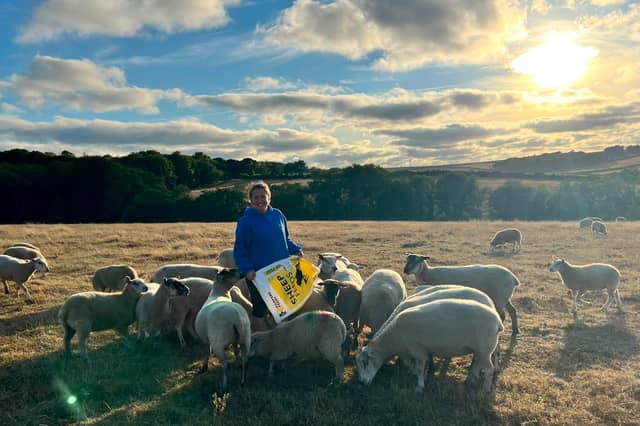
Cheryl Cottle-Hunkin farms 150 ewes and a small herd of cattle in North Devon. In July, she lost four of her six rams. A post-mortem came back inconclusive, but she now suspects the disease was the cause. Bluetongue was confirmed in Devon on July 14, but Devon Farmers had not been alerted to it. Post-mortems do not test for bluetongue.
She is also a county councillor and cabinet member for Rural Affairs for Devon County Council.
“This is a notifiable disease which has been brought here due to climate change; it's not going to go away any time soon, and it clearly has a severe impact on animal welfare,” she wrote in a letter to Defra Secretary of State Dame Angela Eagle, sent on 5 August.
Bluetongue, spread by biting midges, has surged across the South West this summer. Defra figures show cases in England passed 450 by mid-August and around 2000 are currently awaiting testing, with Devon, Cornwall and Somerset the hardest hit. The mild winter of 2025/26 is believed to have allowed the midges that carry the virus to survive year-round rather than dying off, as they typically would.
Following the exposure of the outbreak, farmers are being urged to vaccinate against the strain currently circulating, BTV-3, but a different strain, BTV-8, already established in Europe, is not covered by that vaccine. If it reaches Devon, she says, farmers will have to start over, and this would again be at their own expense.
“The outbreak must be recognised as part of a longer-term challenge. Climate change is altering the distribution of biting midges, making diseases such as bluetongue increasingly likely to become a recurring feature of UK livestock farming rather than an exceptional event. A funded national vaccination programme would encourage annual uptake, strengthen herd and flock resilience and reduce the impact of future outbreaks,” she wrote to Eagle. "France has done something similar, and it works. This could be easily administered through the existing Animal Health and Welfare pathway," she said.
She's not alone in that frustration. At a recent National Farmers' Union meeting on the outbreak, Ms Cottle-Hunkin put the question directly to NFU leadership and government representatives from Defra and the Animal and Plant Health Agency: why, given the risks were known, was there no national vaccine scheme in place before the outbreak hit? The answer from them, she said afterwards, came down to “business planning.”
The practical obstacles are stacking up. There is currently only one laboratory in the UK licensed to test for bluetongue, the Pirbright Institute in Surrey, working alongside the Animal and Plant Health Agency, and Ms Cottle-Hunkin says farmers are waiting two to three weeks for results, by which point the disease may already have spread through a flock, and farmers in the area remain unaware that the virus is present locally.
As well as the need to speed up testing, there are also requests for a map of “suspected cases” to be produced. Vaccine supplies are also running short as demand outpaces manufacturing.
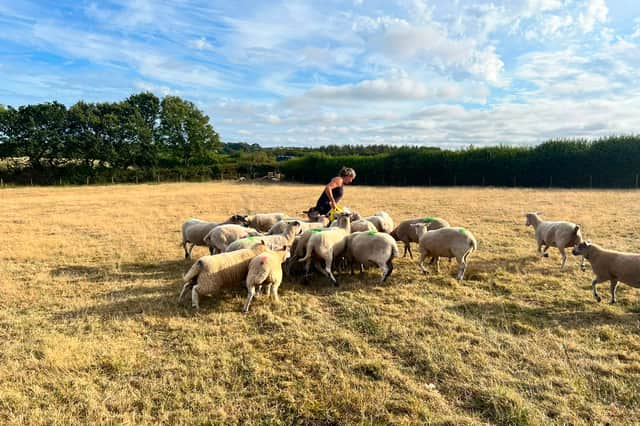
Beyond the disease itself, the drought is reshaping how Ms Cottle-Hunkin farms day to day. Natural water sources on her land are drying up, forcing animals to walk further to drink. She was physically filling buckets of water and dotting them around the fields to support the animals when they were struggling with the virus.
She had to dip into winter hay stores in the middle of summer and supplement grass and hay with ‘cake’, a concentrated energy feed, just to keep condition on her sheep, all at extra cost. Her father has been on the farm for 80 years and says this is the “worst month in farming he’s ever had”.
Rails that buckle in the heat
If drought is reshaping farming, it’s also disrupting how people move around the county. Tim Steer, regional branch chair of Railfuture for Devon and Cornwall, says extreme heat is now a routine operational hazard on the region’s railways.
The ground beneath the Salisbury to Exeter line has been monitored by Network Rail for years for ‘soil moisture deficit’, where baked, cracked earth destabilises the track bed. In periods of extreme heat, speed restrictions are imposed, and services are reduced through the summer.
The North Devon line, meanwhile, has already suffered a displaced rail this year due to extreme heat, closing the line for the rest of the day. Bridges on the route are fitted with sensors that detect dangerously high water levels; when triggered, services are suspended until divers can check for scour damage, erosion around the bridge foundations that can cause a derailment. Mr Steer is the formal signatory on a petition, brought by North Devon MP Ian Roome, calling for the Tarka Line to be made more resilient to future extreme weather.
There’s a wider funding story here too. Network Rail’s South West Rail Resilience Programme has spent four phases reinforcing the sea wall at Dawlish, made famous when the line collapsed into the sea during storms in 2014, cutting off Cornwall and Plymouth from the rail network entirely.
That work held up during Storm Chandra earlier this year. But the fifth and final phase has no confirmed government funding, which is also why Network Rail isn't backing a proposed inland alternative route between Exeter, Okehampton and Tavistock, arguing the coastal line can be made resilient enough without it.
“Extreme weather linked to climate change is making rail units break down in extreme heat,” Mr Steer says, adding that Railfuture is backing local MPs pushing the Transport Secretary for a dedicated South West resilience funding package.
Infrastructure ‘not designed’ for this
Miranda Housden, regional director for the Institution of Civil Engineers South West, says both the drought and the rail disruption point to the same underlying problem.
“In most cases, we’re reliant on infrastructure that simply wasn't designed to cope with our changing climate,” she says. “Even some new infrastructure being built today may not withstand the future impacts of climate change.”
There is no single fix, she argues. Councils, government and the infrastructure sector need to work together, including on nature-based approaches to managing water more effectively, an area ICE South West is developing with the South West Infrastructure Partnership. But she's clear that whatever is done will come with a cost and a wait.
“Solutions will take both time and investment, and may include periods of disruption and change, so keeping the public informed and engaged is essential.”
A pattern, not a one-off
Taken individually, a hosepipe ban, a rail speed restriction and a sick flock of sheep might look like bad luck in a hot summer. Put together, alongside nearly two centuries of Met Office rainfall records showing recent winters and springs repeatedly breaking records, they look more like the shape of things to come for Devon: wetter extremes bookending drier, hotter summers, each one testing infrastructure, farms and transport links that were never built to withstand either.
South West Water has said it is investing in longer-term resilience, including new reservoir capacity. Network Rail is seeking the funding to finish the Dawlish resilience programme. Ms Cottle-Hunkin is still waiting to hear back from Defra on her call for a funded vaccine scheme.
For now, the ewes still need walking to water, the trains still slow down in the heat and the wait for more rain, or too much of it, continues.