

Give Devon’s ground-nesting birds the space they need this spring

As spring arrives and Easter draws people outdoors across Devon, conservationists are urging visitors to tread carefully to protect some of the county’s most vulnerable wildlife.
The Royal Society for the Protection of Birds (RSPB) is calling on walkers, families and dog owners to be mindful of birds nesting on or near the ground during the breeding season, which runs from March to September.
More than half of England’s most threatened breeding birds fall into this category, including species such as Curlew, Nightjar, Lapwing and Little Tern. Many are already in decline due to habitat loss, climate change and reduced food availability.
These birds nest in a wide variety of landscapes, from moorland and heath to grassland and beaches. Their nests are often carefully camouflaged, making them almost impossible to spot and easy to disturb accidentally.
Even brief disturbance can have serious consequences. If a parent bird is frightened away from its nest, eggs can quickly cool and chicks may be left exposed to predators or starvation. Repeated disturbance can lead to nests being abandoned altogether.
Dr Conor Pharaoh-John, from the RSPB and National Trust’s recreational disturbance programme, said: “Being on the water offers a fantastic chance to experience wildlife from a unique perspective. Our waterways are lifelines for many species, so it’s important to think about how our presence might affect them. By keeping a steady, predictable course, and limiting viewing to just a few minutes, swimmers and paddlers can help ensure birds and wildlife aren’t disturbed or disrupted from feeding, breeding or caring for their young.”
On land, simple steps can make a significant difference. The RSPB is encouraging visitors to stick to marked paths, keep dogs under close control and give birds plenty of space - ideally at least 100 metres if nesting activity is spotted.
Signs of nesting birds can include alarm calls, swooping behaviour, or birds carrying food or nesting material into one area. Some species, such as Lapwings, may even feign injury to lure potential threats away from their young.
Dr Conor Pharaoh-John added: “The closer the bird’s nest is to the ground the more at risk it is to accidental disturbance mainly from people, who will likely be unaware the nest is there, and dogs freely roaming off lead.
“Exploring the countryside with our dogs is a great activity to get us out of the house and connecting to our local green spaces. However, whilst we mean no harm to wildlife, people and dogs appear as potential predators to a bird, especially those nesting on the ground.”
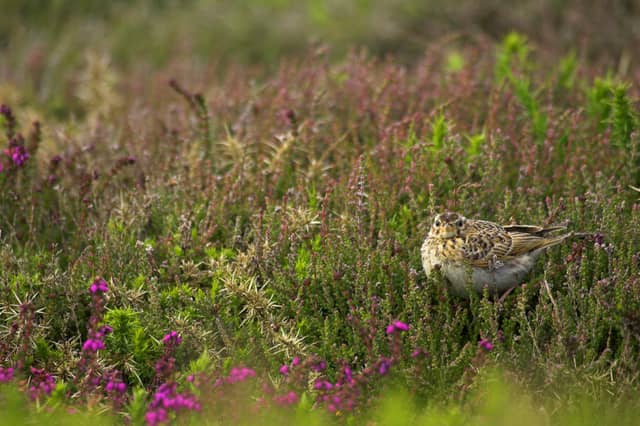
The issue is particularly pressing in Devon, where species such as Skylark and Meadow Pipit share popular walking routes with increasing numbers of visitors.
Mike Shurmer, Head of Species for RSPB England, said: “Skylark eggs, hidden in places like our Devon Countryside, can be as small as a 5p coin. When they hatch, the chicks stay perfectly camouflaged and motionless in the nest, so well hidden that people can pass by without realising they’re there, risking accidentally disturbing them.
“Other ground-nesting birds, like Curlew, Oystercatcher and Ringed Plover, have chicks that leave the nest within days of hatching, still tiny and vulnerable, moving through grassland and beaches where people and dogs are present.
“This all means that it’s all too easy to disturb them, or accidentally destroy nests and chicks, without even realising; a simple step off a path or a dog running free can have devastating consequences.”
Tony Whitehead, RSPB England Communications Manager, added: “Devon, like all places, is home to many ground nesting species. From Skylarks and Meadow Pipits to Nightjars and the last remaining breeding Lapwings and Curlews in the county. Many birds are really vulnerable to disturbance, whether you are out on the high moors, the heaths or the along the coasts. We ask that this spring and summer everyone takes care and gives Devon’s wonderful birds a bit of space.”
With more people heading outdoors during the warmer months, conservationists say awareness is key. By taking a few simple precautions, visitors can help ensure Devon’s ground-nesting birds successfully raise the next generation because, as campaigners emphasise, every chick counts.