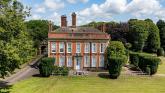
The new owners of Fremington Manor, Affinity Care Homes, hope to reopen it as a care home this summer. Credit: Christie & Co
Search


24 Mar 2026

Please allow ads as they help fund our trusted local news content.
Kindly add us to your ad blocker whitelist.
If you want further access to Ireland's best local journalism, consider contributing and/or subscribing to our free daily Newsletter .
Support our mission and join our community now.
To continue reading this article, you can subscribe for as little as €0.50 per week which will also give you access to all of our premium content and archived articles!
Alternatively, you can pay €0.50 per article, capped at €1 per day.
Thank you for supporting Ireland's best local journalism!


Read Part One HERE
While the Young Liberals were refusing to tow the party line, mainstream members were becoming disillusioned with the National Party.
Meanwhile, Jeremy married Caroline Alpass and they were honeymooning in June 1968 while the YL’s were plotting to remove him as Leader went public.
The Party Executive immediately held an emergency meeting and backed Thorpe by 48 votes to 2 while stating the YL’s coup “treachery".
When the newlyweds returned home the leadership issue seemed to have been dropped and virtually a year later the newlyweds were announcing their son Rupert had arrived in April 1969.
Later in the year, they even won Birmingham Ladywood from Labour and all seemed good news for the Liberals.
Yet Mr Thorpe remained sceptical about his party's ratings and when the General Election was called the following year Thorpe was proven right and the Liberal vote fell nationally by 7.5 per cent.
Seven seats were lost including "Ladywood" which of course had only been won the previous year. Thorpe also saw his personal vote crash in North Devon when he only achieved 369 votes and was back to the 1959 voting figure.
The following year tragically Caroline was killed in a car in Devon and yet the Liberals were experiencing a renaissance and the Party were in the ascendancy. Rochdale was won from and then Berwick-upon-Tweed was won by Labour and Isle of Ely and Ripon and Sutton fell to the Conservatives.
With his wife lost, Thorpe was eventually introduced to a concert pianist Marion Stein and by March 1973 they had married.
By now, the country was affected by industrial strife and civil unrest and this led to the Prime Minister Ted Heath being forced to call a General Election.
He went to press with the very strange headline "Who Governs Britain" and soon discovered that dissatisfaction was rife in the main parties.
This should have given the Liberals a wonderful opportunity to benefit but they did not. The first-past-the-post voting system failed them yet again and on February 28 1974 although getting six million votes (19.3 per cent of votes the highest percentage since 1929) they still failed to win sufficient numbers to make any real difference in Parliament.
Now Thorpe commenced his campaign for Electoral Reform saying the country needed a system to “bring about a centrist stability to British politics that favoured British business".
He toured all the Region’s until the era of Margaret Thatcher MP arrived. She had won the Conservative Leadership vote and now those hard won Liberal voters switched back to their traditional party
By October 1974 leading Liberals just knew that a third of their votes had been lost as Conservatives and many Labour voters switched back to their traditional party. The “golden era of new votes” for the Liberal Party was over.
It was also the era when Norman Scott chose to go public over his link to Jeremy Thorpe.
Now Thorpe’s friend Anthony Newton would be publicly accused of “attempting to silence Scott” on Dartmoor but shot his Great Dane "Rike" instead.
That incident brought about Thorpe’s immediate resignation as Leader in May 1976 and all he could now do was watch from the back-benches as new party Leader David Steel set out the future.
Steel offered Jeremy the spokesman role on Foreign Affairs although likely appreciated a High Court appearance was possible. That occurred some three years later when Thorpe appeared at the Old Bailey in 1979.
Oscar Wilde had appeared here eighty years before when he lost his freedom. Oscar believed his verbal brilliance would save him, when ultimately it did not and he went to jail.
But Thorpe kept absolutely silent throughout the Court proceedings and was eventually acquitted. Later it would be reported he only remarked on leaving court saying "the verdict was a complete vindication". In refusing to reply to any questions in Court, public perception thereafter was “he was fortunate to have got off".
With his political career over, just a few years later, Mr Thorpe was diagnosed as suffering from Parkinson's disease.
Now his only public appearance came in 2009 when unveiling a bust of himself at the Grimond Room in the House of Commons.
Diagnosed with Parkinson’s in 1985, he was cared for at home by Marion until her death on March 6, 2014. Now Jeremy survived just nine months before the official statement was issued stating simply he “died after complications on December 4, 2014 at age 85”.

Subscribe or register today to discover more from DonegalLive.ie
Buy the e-paper of the Donegal Democrat, Donegal People's Press, Donegal Post and Inish Times here for instant access to Donegal's premier news titles.
Keep up with the latest news from Donegal with our daily newsletter featuring the most important stories of the day delivered to your inbox every evening at 5pm.