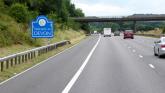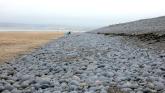
Human remains found at Westward Ho! have been identified as those of Ryan Miller from Barnstaple, who went missing in April 2025. Credit: Graham Hobbs
Search


26 Mar 2026

Please allow ads as they help fund our trusted local news content.
Kindly add us to your ad blocker whitelist.
If you want further access to Ireland's best local journalism, consider contributing and/or subscribing to our free daily Newsletter .
Support our mission and join our community now.
To continue reading this article, you can subscribe for as little as €0.50 per week which will also give you access to all of our premium content and archived articles!
Alternatively, you can pay €0.50 per article, capped at €1 per day.
Thank you for supporting Ireland's best local journalism!

Volunteers work to uncover the historic Haytor Granite Tramway. Photo: David Fitzgerald.

Ten years ago, I stood at the foot of Haytor and watched a group of volunteers begin an unending task. The regular clearing and maintenance of the Haytor Granite Tramway was officially launched that day and, a decade later, it is still a work under progress.
On that day, sector ranger Rob Steemson had brought together a group of "pick and shovel" swingers and, slowly but steadily, the old granite tracks began to appear. Ten years later, the same maintenance process was underway at the same steady pace.
"I have the honour of overseeing the Haytor 'Second Sunday' volunteers which you helped set up back in 2016," he said, laying tools on the ground. "I remember you arriving to do an outside broadcast covering our work in the same dull and damp weather we have today."
The tramway was built to convey granite from Haytor Down to Stover and finally into Teignmouth docks. It was very unusual in that the track was formed of granite sections, shaped to guide the wheels of horse-drawn wagons.
"The gorse has encroached on the original site with the grass and soil blocking the 'tram lines', covering this highly important archaeological site. I say highly important… we have had to gain permission to do this once again as this is a sensitive environment."
Rob points out that it is a little bit like painting the Forth Bridge and the team do go onto other projects, but return to start the clearance once again.
"Eighteen or nineteen have stepped forward today, some new and some old faces… a few of them have done the full ten years in service."
Is the line fully intact?
"More or less. The Dartmoor section is there and so are further bits around Stover and parts of Teignmouth. It has become a very popular attraction with those who love to walk on Dartmoor. It is part of the Dartmoor Way and there is also the Templer Way walk which leads you from the quarry right down into Stover, around the back of Newton Abbot and, depending on the tide, all the way to Shaldon. From there the granite would have been taken to London. As a walker I used to come up here years ago and wondered how far the line went, which is why I have pushed this project forward and tried to uncover as much as possible."
The original quarry project was started in 1820 when granite was in demand in the developing cities of England as blocks to construct public buildings and bridges. By 1850 the quarries were employing about 100 men but, by 1858, they had closed due to the availability of cheaper Cornish granite. Chances are, if you have stood beside some of London’s famous constructions, you have stood beside Dartmoor granite. One of the most famous was the old "New" London Bridge which now sits in Arizona spanning Lake Havasu. Yes, it is old but was given the name "new" when it was built in the 1830s… the latest spanning of the river in the spot at the time. It is believed the first bridge was constructed there in Roman times. And let me just dispel an "old" rumour of the man who bought it: Robert Paxton McCulloch did know what he was buying. The tale that he thought he was purchasing Tower Bridge was a complete fabrication.
The last quarrying at Haytor was in 1919 when it was reopened to build the Exeter War Memorial. Merrivale was the last of the larger working granite quarries on Dartmoor and the stone from here was used to construct the Falklands Memorial.
There has always been some argument over its name but the "Haytor Tramway" was constructed to carry the granite the 10 miles (16 km) to the canal, which involved a falling vertical interval of 1,300 feet (400 m) to the basin of the Stover Canal. To look at it, it resembles a standard rail line with junctions or points at various intervals to allow the passing of the wagons. The gauge of the track is 4 feet… ish… it does tend to vary by up to 3 inches. At junctions the wheels were guided by "point tongues", pivoted on the granite-block rails. There is some debate as to whether the point tongues were oak or iron; whatever was used has long since degraded and returned to the moor itself. In the upward direction, the empty tram wagons were pulled to the quarries by teams of horses; the loaded trams were simply run downhill by gravity to the Stover Canal basin at Ventiford, Teigngrace.
"It was set up by the Templer family who owned the land at the time; locals built all of this with their support. People are always surprised that there was industry on the moor but this was just one project. For example, an explosives factory was built at Postbridge in the 1840s used for the production of gunpowder which, in turn, would have been vital in the quarrying process. Ice ponds were set up at Sourton which was then transported to Plymouth to be used in the fishing industry and, of course, there is evidence of tin mining all over the place. Dartmoor has always been a very productive and important area. Archaeologists are always finding things, evidence of habitation and usage. A Bronze Age stone row has just been unearthed, a feature which may have been of some religious importance and is being analysed at the moment."
I left Rob and the team digging, scraping away and pushing back the ever-advancing moorland as the mist curled around the top of Haytor. Conditions in Victorian times would have been tough and the people operating here, I suspect, would have been as hard as the granite itself.

Subscribe or register today to discover more from DonegalLive.ie
Buy the e-paper of the Donegal Democrat, Donegal People's Press, Donegal Post and Inish Times here for instant access to Donegal's premier news titles.
Keep up with the latest news from Donegal with our daily newsletter featuring the most important stories of the day delivered to your inbox every evening at 5pm.