

Was the long-lost site of a famous Viking defeat in North Devon?
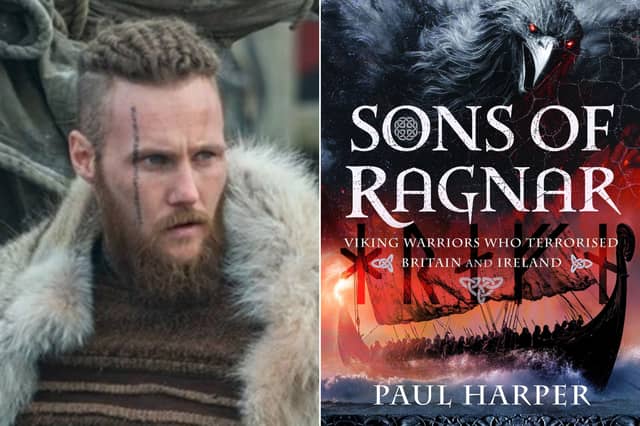

New book Sons of Ragnar claims a centuries-long search for a lost battlefield is over – and the answer is right here in North Devon
The location of a long lost battlefield where Saxon forces destroyed a Viking army and killed one of the sons of the famous Ragnar Lothbrok could finally be revealed.
In 878, the future of what would become England hung by a thread until Devonshire forces won the Battle of Cynuit, which saw the death of notorious Viking leader Ubbe Ragnarsson and marked the start of a fight back by Alfred the Great’s Wessex that eventually led to the creation of England.
At the time, Alfred had been hiding in the Somerset marshes with a handful of followers and was scolded by an old woman for burning bread, according to a later fable.
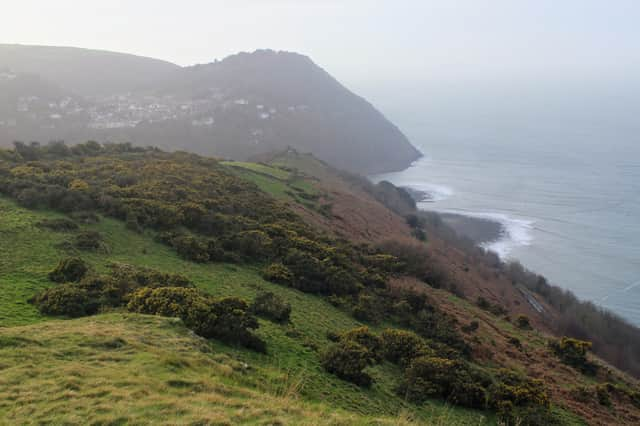
For centuries scholars and historians have been divided on where the famous Battle of Cynuit took place and where ancient sources say Ubbe was buried, with Somerset, Kenwith Castle in Bideford and even Countisbury Hill at Lynmouth put forward as candidates.
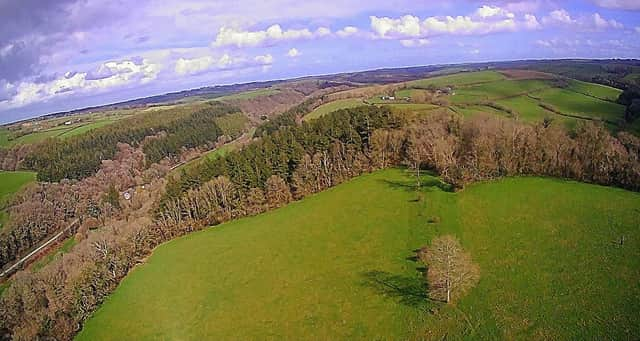
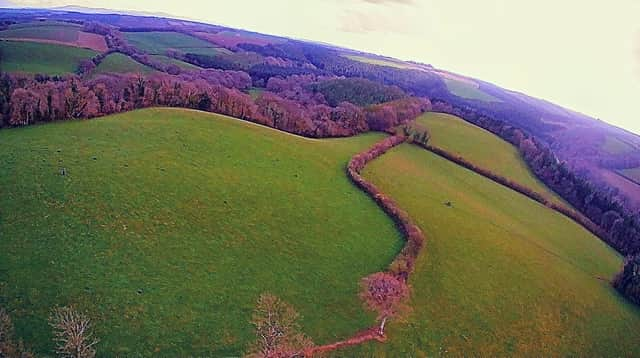
A new book by author Paul Harper – Sons of Ragnar – instead showcases research by North Devon author and historian Nick Arnold, who believes he has identified the battlefield as a former Iron Age hillfort called Castle Hill near Beaford and next to the River Torridge.
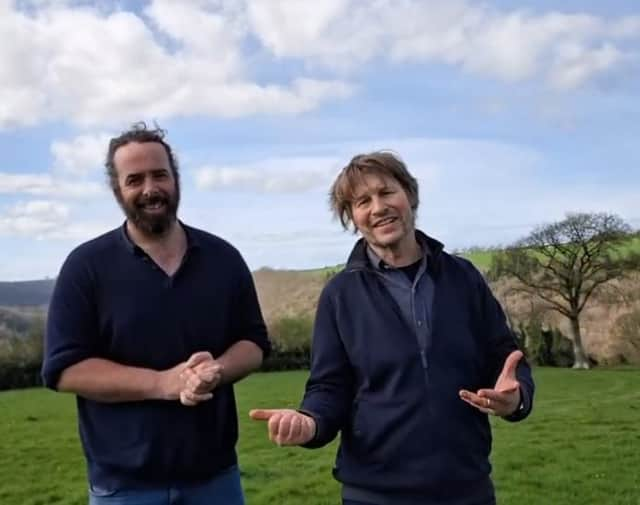
Paul will be speaking about the Battle of Cynuit and his new book at Walter Henry Bookshop in Bideford on Wednesday, September 16 - full details below.
Nick based his research on descriptions by ancient chroniclers, including King Alfred’s biographer Asser, who visited the site and described around 893 how the battlefield was in Devon, had no adjoining water supply and was weakest on its eastern side.
A later 12th century Anglo-Norman chronicler Geoffrey Gaimar called the location ‘Penwood’, meaning a headland next to woods.
Nick analysed Iron Age and Roman forts across Devon and Dartmoor using Historic Environment Records and Ordnance Survey maps and concluded: “This study demonstrated that Castle Hill is the only location in Devon that fits the description of a headland fort with comparatively weak defences, secure from all directions except the east.”
The fort has no water supply and its old earth and stone ramparts tie with Asser’s reference that they were unlike the classic Roman military stone ramparts.
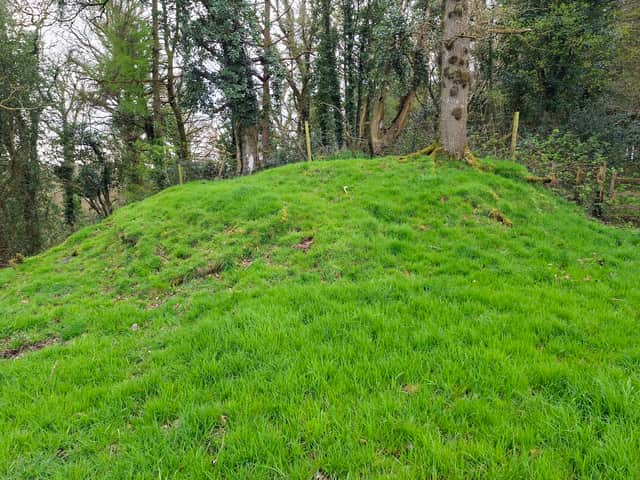
Gaimar also described how Ubbe, the brother of Ivar and Halfdan, was placed under a huge barrow by his remaining followers after being killed in the Battle of Cynuit which was called ‘Ubbelawe’ (Ubba's mound).
Near Castle Hill there is a large mound, measuring 12 metres in diameter and up to 2.5m height, that was described as a ‘tumulus’ (burial mound) in 19th century maps.
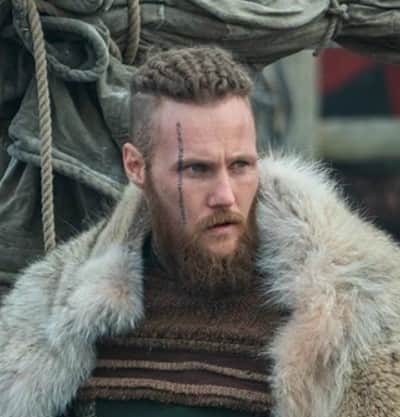
The names will be familiar with fans of the television show Vikings, which featured Ragnar, his eldest son Ubbe and his other sons, but a great deal of the show was fictitious – Ubbe was not killed at Cynuit, for example.
In the real world, a geophysical survey of the mound at Castle Hill suggests it contains stony material piled on a rocky outcrop. This could be the resting place of Ubbe, who was likely cremated according to the pagan custom.
According to Old Norse tales, Ubbe and other sons of Ragnar Lothbrok, the main character in the popular Vikings series, led a Great Heathen Army into what is now England to avenge their father's death after he was thrown into a snake pit by the Northumbrian king, Aella.
While Ragnar's death is considered legendary, Ubbe and his brothers such as Ivar the Boneless and Hvitserk (known as Halfdan in contemporary sources) did lead the Great Heathen Army that arrived in 865 and had captured most of what is now England before the Battle of Cynuit.
Nick Arnold, who wrote the Horrible Science children’s books, believes the Vikings had sailed up the River Taw and were targeting royal estates near Bishops Tawton when they became aware of the Devon thegns (king’s personal bodyguards and troops) led by Odda, the ealdorman of Devonshire, gathering at Castle Hill.
Paul Harper, who grew up in Devon, said: “People have been searching for the battle site in Devon for centuries, but Castle Hill has the most compelling claims and could finally solve this age-old mystery.
“Castle Hill matches the key descriptions of the battlefield from Gaimar and Asser and significantly features a nearby burial which is likely where the ashes of the infamous Ubbe were placed underneath.
“It is fascinating this infamous Viking Ubbe probably met his demise in this quiet corner of Devon. What is a very remote and rural part of Britain once played centre stage to a battle that had huge ramifications for the future of the island.”
Nick, who lives in Appledore, added: “If the Vikings had won at the Battle of Cynuit, King Alfred would have been dead in weeks.
“There would have been no fight-back and England would have become a patchwork of Danish states. Our language, culture and history would be drastically different.”
According to Asser, the Devon force were trapped at Castle Hill but ambushed the sleeping Northmen at dawn.
More than 800 Vikings who had arrived in Ubbe's fleet of 23 ships were killed according to the Anglo Saxon Chronicle, while Asser said some 1,200 Northmen were slain.
Victorious Anglo Saxons also captured a Viking raven war flag banner that supposedly could predict the outcome of battles.
A few weeks after Cynuit, Alfred emerged from the marshes and joined up with the militias of Somerset, Wiltshire and Hampshire and decisively defeated the Vikings at the Battle of Edington.
His treaty with the Northman Guthrum split what became England in half, with the northern and eastern side known as the Danelaw under Viking rule and the southern part ruled by Wessex.
Alfred’s descendants gradually clawed back the land from the Northmen and some 50 years later, his grandson Athelstan became the first king who ruled over all of England.
Paul Harper's book Sons of Ragnar: Viking Warriors who Terrorised Britain and Ireland, published by Pen & Sword, is out now and available at https://www.pen-and-sword.co.uk/Sons-of-Ragnar-Hardback/p/61528
Paul Harper will be discussing the Battle of Cynuit at the Walter Henry Book Shop in Bideford, North Devon, between 7pm and 9pm on Wednesday, September 16. Tickets to the event are available in store or visit https://walterhenrysbookshop.co.uk to find out more.