

Underdogs hope bite is worse than bark to prevent controversial cables plan


Dog walkers gathered at Saunton Sands on Sunday in the latest series of protests against the White Cross offshore windfarm cable route
The hounds were unleashed on Saunton Sands yesterday (Sunday, August 17) as dog walkers gathered for the latest in a series of protests against the White Cross wind farm cable route.
The event was organised by Save Our Sands (SOS) in conjunction with Love Braunton, which is continuing to fundraise to try and mount a judicial review against the plans, which now have full planning permission to go ahead.
Campaigners still hope to turn the tide of the Cobra and Flotation Energy application for electrical cabling to serve the wind farm some 30 miles off the coast, but will come ashore at Saunton and then tunnel under a host of protested areas to reach a sub station at Yelland.
There are local concerns for the environment, safety, the impact on tourism and the disruption during the two year construction phase.
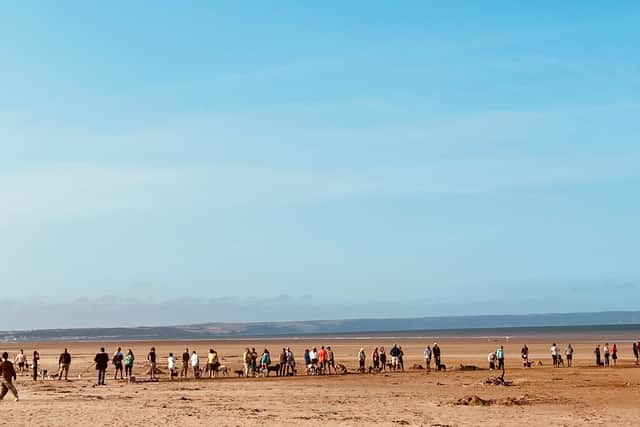
Above: Dog walkers gather at Saunton to protest on Sunday. Credit: Helen Cooper/SOS
Save Our Sands founder Helen Cooper said: “We know this is a dog eat dog world and we are the underdogs, but we really do need to challenge this project as its impact will simply be too far reaching to make any sense. There just aren’t any benefits for the local community, only drawbacks.
“It really is impossible to understate the impact this project will have on the whole area and walkers are another section of the community who stand to be significantly affected.
“The White Cross cable route traces the South West Coast path very closely and depending on who you listen to, will either be closed in parts, or kept open with interruptions and marshals in place to keep the public safe.
“Either way, users can expect a very different experience from the current tranquil and nurturing environment as portrayed in The Salt Path. This is one of the many reasons we object to this route. The impact will be enormous across all sectors of society.
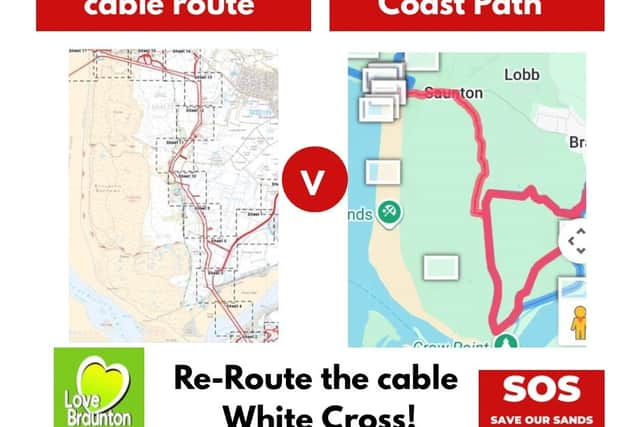
Above: Campaigners say the route of the buried cables will run roughly where the South West Coast path does, which they fear will cause disruption.
The developers say they will use ‘trenchless’ technology to bury the cables, which must be between 1.5 and three metres below ground, according to the planning conditions.
They say following public consultations they have adapted their plans to mitigate disruption to the environment and the local area.