

Thousands wait over four hours at Royal Devon A&E, figures show
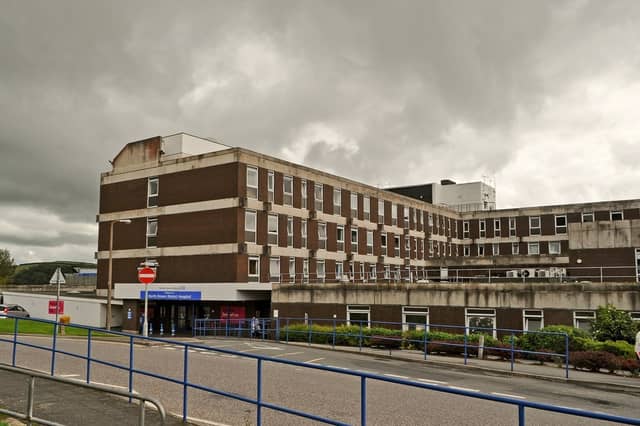

NHS England data reveals every Devon hospital missed the four-hour A&E target in early 2026, with Royal Devon seeing 17,871 patients wait longer than four hours
More than four in ten patients attending emergency departments run by Royal Devon University Healthcare NHS Foundation Trust waited longer than four hours in accident and emergency between January and March 2026, figures uncovered by the North Devon Gazette reveal.
The trust runs two major emergency departments serving a vast area of Devon and beyond, at the Royal Devon and Exeter Hospital in Exeter and at North Devon District Hospital in Barnstaple.
Data from NHS England shows that just 57.4 per cent of patients across both sites were seen within four hours during the final quarter of the 2025-26 financial year.
Of 41,972 attendances, 17,871 patients waited more than four hours.
The NHS Urgent and Emergency Care Plan for 2025-26 set a minimum target of 78 per cent of patients to be admitted, transferred or discharged within four hours, a standard Royal Devon fell well short of.
That target itself represents a significant lowering of ambition: the NHS constitutional standard set in 2010 required 95 per cent of patients to be seen within four hours, a benchmark that has not been met for a number of years.
No trust in Devon met the 78 per cent target.
University Hospitals Plymouth NHS Trust recorded the worst performance in the county.
Just 36.7 per cent of patients were seen within four hours, meaning 16,263 of 25,712 patients waited longer than that, against the 78 per cent target
Torbay and South Devon NHS Foundation Trust saw just 51.4 per cent of its 20,620 patients within four hours, against the 78 per cent target.
The hospitals and who they serve
North Devon District Hospital in Barnstaple serves a wide, rural catchment area covering a population of approximately 156,000, according to the Peninsula Trauma Network.
Its catchment takes in the whole of North Devon, the upper portion of Mid Devon and parts of North East Cornwall, an area where the population is spread sparsely, with Barnstaple and Bideford the only significant conurbations.
That population increases notably over the summer months with an influx of tourists and visitors.
The Royal Devon and Exeter Hospital serves a considerably larger catchment, covering Exeter, East Devon and Mid Devon as far as approximately Okehampton, a population of around 400,000, according to the Peninsula Trauma Network.
Exeter is the second largest city in the South West peninsula.
The geography of the region means that for many patients, particularly in North Devon, there are few realistic alternatives to the local emergency department if they need urgent care.
MP calls for urgent action
North Devon MP Ian Roome said the figures were “a sorry reflection of years of successive governments failing to plan for the future of our NHS.”
He said the pressure on A&E in North Devon could not be separated from the need for capital investment at North Devon District Hospital, which he described as the most remote acute hospital on mainland England.
“Patients face long journeys and limited transport options, with Exeter or Plymouth the next major alternatives,” he said.
Mr Roome was clear that frontline staff were not to blame, saying they “do an incredible job” but “should not be forced to treat patients in overcrowded or unsuitable environments.”
“Patients deserve safe, dignified care, and we also need better support and information so people know where to go for the right help, whether that is A&E, urgent care, their GP, pharmacy or another service,” he added.
The Liberal Democrat MP said his party had set out a plan to end what he called the “corridor care crisis” and pledged to keep pressing ministers for action.
“The Government must act, and I will keep pressing ministers to deliver the funding North Devon needs for safe, modern hospital facilities,” he said.
Trust response
Heather Brazier, Director of Operations at Royal Devon University Healthcare NHS Foundation Trust, acknowledged the pressure on its emergency departments and said staff were working hard to manage demand.
“Our emergency departments have experienced consistent and significant demand throughout winter and into spring,” she said.
“This ongoing pressure has impacted all our services, and we know this has meant people are waiting longer than we would like.”
Ms Brazier said colleagues were “working tirelessly to ensure patients receive timely and compassionate care” but called on the public to help ease the pressure by choosing the right service for their needs.
“Our EDs are here to provide urgent and emergency care, and people coming to the ED when they could receive care elsewhere leads to longer waiting times for everyone,” she said.
She urged patients to consider using their GP, pharmacy or NHS 111 before attending an emergency department.
“Choosing the most appropriate care means people get the care and advice they need in a timely way and ensures our emergency services are available to care for those who need us the most,” she added.