

The Second Pandemic spreading across the country - Tim Jones
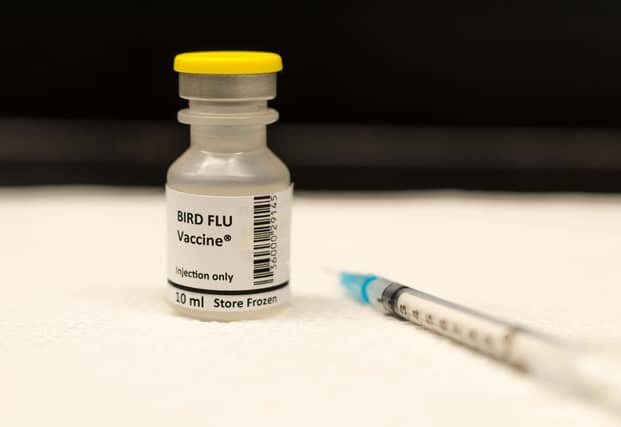

It may be a surprise to you that in addition to Covid, we have a second pandemic across the country which has a disproportionate effect on the local economy. Bird Flu or Avian Influenza is something you may or may not have heard of. The UK and Europe – i
It may be a surprise to you that in addition to Covid, we have a second pandemic across the country which has a disproportionate effect on the local economy.
Bird Flu or Avian Influenza is something you may or may not have heard of. The UK and Europe – in fact the whole of the northern hemisphere – is facing the worst outbreak it has seen.
Currently around 3.5 million chickens, ducks and turkeys have been culled on British farms and about 48 million across Europe during the last 12 months.
This month in wide parts of England poultry has been banned from being kept outside. In practice, this means that they can no longer be called Free Range eggs and have to be re-labelled as barn-laid. The impact on wild birds is even greater. Huge numbers of sea birds – seagulls, guillemots, kittiwakes and puffins – have been found dead all around the British coast from the Hebrides in the North to the Isles of Scilly in the South West.
Even some of our wildest birds of prey, such as, harriers and white-tailed eagles have been effected. Many birds which are on an endangered list are under new threat. Over the last 50 years – largely due to human interactions – we have been responsible for the extinction of too many rare breeds. Despite the intervention of some brilliant local conservation initiatives, this “thin red line” has been unable to keep pace with the devastating impact of human activity. Whatever the origins of bird flu might be, this is yet another battle between the natural environment and mankind, which nature is not winning.
Not enough is known about this disease (H5N1). We do however know that is first emerged in southern China in 1996 and presents in humans (Hong Kong) 1997. Only a few humans died as a result of this but enough to send a panic wave around the world health authorities.
Since then, H5N1 has circulate around the world every year. Occasionally it jumps the genetic chain into humans (863 cases since 2003 with 455 fatalities arising). Due to a series of factors which are not well understood, it seems that the danger to humans has decreased over the last 25 years. Much as this is a relief, it does mean that there has been a lack of focus and investment on curing this devastating illness. Simply locking up birds that are domestically/ commercially bred, is not a long term viable answer. It is also the case that many much loved birds, particularly ducks, geese and wading birds have been unduly affected by this. Clearly, the huge distances travelled by birds as part of the migratory activities is a significant factor in spreading and carrying the disease.
This year has been particularly bad and is the first time that the UK has seen the virus being perpetuated over the summer. As with Covid, the bug mutates and reforms itself causing different outcomes in different areas.
The effects on Northern Devon are very significant. Much of our domestic, commercial and wild bird life is an essential part of our natural amenities. At a commercial level this has had a huge impact upon the pheasant season. The value of shooting across the country is around £2.5 billion. Shooting supports the equivalent of around 74,000 full time jobs. There are lots of dependent businesses who survive as a result of this who are not counted in these figures. The scale of activity affected is a huge reduction across the country in the 57 million partridges and pheasants reared and released each year. For Exmoor, the value is at least £15 million a year.
So, like Covid, questions are being asked as to how we can tackle this problem. Will the existing birds who survive build up their own immunity? Will science start to focus on the problem and come up with some quick solutions? There are no answers yet to these questions but it is clear that this is increasingly becoming a major issue, both for those who love the countryside and its wildlife or for those who make a commercial living from this.