

The latest progress on Hinkley C - Tim Jones
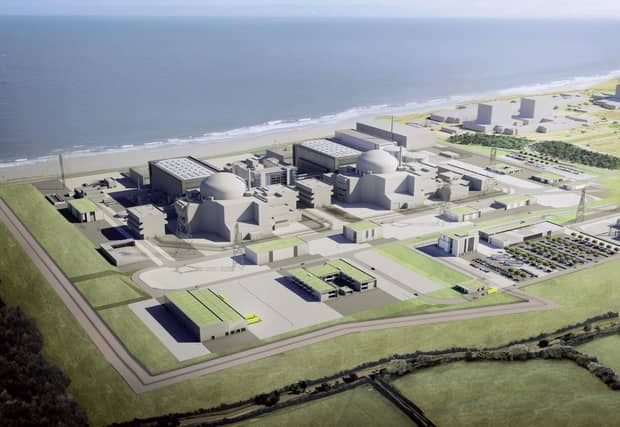

This extraordinary project continues to rumble on. It remains by far the biggest and high-profile construction project outside HS2. Much is riding on the success of this to help the Government to understand whether they can afford to risk investing in a
This extraordinary project continues to rumble on. It remains by far the biggest and high-profile construction project outside HS2.
Much is riding on the success of this to help the Government to understand whether they can afford to risk investing in a second new power station at Sizewell. There is an interesting balance currently between new energy initiatives. The government remains committed to nuclear.
Whether however they have the stomach for another project of this scale and risk is seriously open to doubt. To try and maintain a nuclear programme in the UK, they are throwing money at a far more deliverable package being small modular nuclear reactors. These have lower outputs but are far cheaper to build. They are also less likely to fall victim to construction labour and weather delays. These can be built in factory conditions and are far easier to install and commission.
Hinkley however remains a huge beneficial influence on the local economy. The workforce has now increased to nearly 10,000. It is interesting to note that one of the most recent visitors to the site was the Labour Party Leader – Sir Keir Starmer. There can be no doubt that this was a strong indication that the Labour Party, if elected, will continue to support this and similar projects.
Hinkley also has again played an important role in supporting local jobs. Toolstation has an e-commerce distribution centre in Bridgwater, this will be relocated to Northampton by August 2023, putting more than 200 jobs at risk. The Hinkley recruitment team have stepped into this and are helping many of those under risk of redundancy to find new roles. They had taken similar action when the retailer Argos closed their distribution centre in Bridgwater in 2021, affecting 230 jobs.
Even more spectacular, Hinkley recently announced the launch of 30,000 new training courses. This means that workers can upskill or embark on brand new careers.
In very crude terms, it is calculated that around 10% of the total construction cost of this scheme provides benefit in some form to the local economy.
All this is great. History however records that building nuclear reactors using the European pressurised reactor is a dodgy game. EDF are involved in a series of similar projects and have routinely gone well over time and budget in building these facilities.
Their flagship project in France is at Flamanville. This is currently running at a cost of double the original budget and delivery has yet again been delayed with an overrun of 10 years. It is already known that there is a structural fault in some of the concrete casing. Whilst not fatal to the operation, this will mean that it can only operate at around 60% of its intended output. There is a similar sad story regarding the same type of installation in Finland. The new plant at Olkiluoto is even further behind , in time, overruns and budget.
The latest announcements regarding Hinkley suggest that history is repeating itself. The original programme, when the scheme started in 2016, was that the on button would be engaged in late 2025. Quickly this slipped to June 2027. It is now the case that the probable completion date will slip at least another 15 months but almost certainly be extended up to 2030.
The budget has also dramatically changed. The original agreement was based upon a cost of £18 billion. The costs then started to ratchet up. We were advised that it had increased to somewhere between £25 - £26 billion. The latest figure is eye wateringly bad, with an estimated budget to completion of £32.7 billion. Numerous excuses have been put forward for this, including everything from a lack of suitable labour and raw materials to the impact of weather.
The truth however is that this type of reactor is almost impossible to complete because of its demanding construction specification. In the US and China, who use a different type of reactor, these projects are routinely completed on time and on budget.
It would be of some concern that these delays might cause power shortages. Whilst we wait for this facility to come online, it is the case that all but one of the UKs existing nuclear reactors will be closed by 2030. Hinkley will then provide sufficient low carbon electricity to power 6 million homes. What has saved our bacon, is that there has been a huge surge in the development of alternative energy powered sources, including wind turbines, solar panels, and a wide variety of other natural energy initiatives, such as, air and ground sourced heat pumps. It remains however the case that Hinkley is a critical part of our national infrastructure requirements and the sooner the project is finished for the benefit of the country, the better.
It would be easy to get lost in the complexity of all these issues. Northern Devon seems remote from a project of this scale and complexity. The fact, however, is that it is an important element in bringing prosperity to the local economy.
Perversely, the longer the construction takes, the longer we will benefit from its induced economic outputs. When it is finished, these benefits will drop away, the construction workers will have gone and only around 1,000 staff will be required to service the facility.
The good news, however, is that many local companies have become an important part of the Hinkley local supply chain. New skills have been learnt, existing and new companies have flourished. These skills and jobs will not disappear when Hinkley is finished.
Many are in the area of specialist construction technologies. This gives our region a leading edge. This could be all important if we finally get the nod on a new Giga factory being built at Bridgwater. We need to be very aware of both the opportunities and pitfalls surrounding Hinkley. This has already proved to be an economic boost. Over the remaining approximately five to six years there will be new opportunities which we must participate in.