

Splitting Devon into unitary councils ‘may not be financially viable’
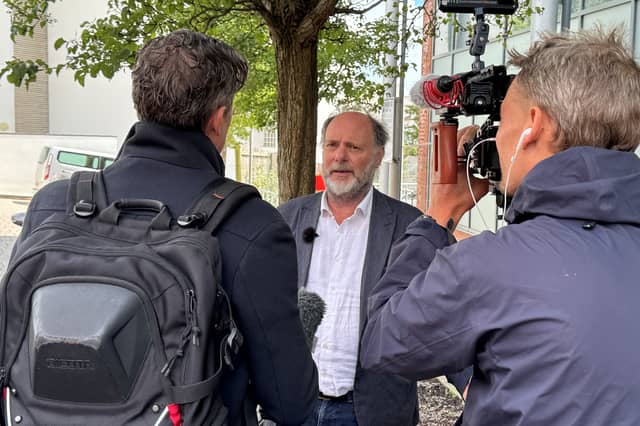

Devon County Council’s leader says Reform-run Essex County Council taking legal action shows the Government did not listen to its own officials, who warned multiple unitaries would not be sustainable
The Government has been urged to ‘listen to its own civil servants’ when deciding what councils will run Devon after the local government shake-up, amid claims multiple new councils will not be affordable or sustain able.
Devon County Council’s leader has highlighted recent events in Essex where the Reform-run council has launched a legal challenge against the Government decision to split Essex into five unitary authorities.
In a press statement on Friday, June 19, Devon County Council (DCC) said government documents and correspondence revealed that civil servants said a three council option met the Government’s own criteria “more strongly than the other proposals” and was the only model likely to be “financially viable within five years.”
Despite this, ministers chose the five council option and Essex County Council has since launched legal action calling for a judicial review, claiming the government plan could undermine services and “jeopardise the future of services to our most vulnerable adults and children.”
With Devon set to find out within weeks what option the government has chosen for the future of the county, DCC leader Councillor Julian Brazil has held up the Essex issues as a warning to what could happen in Devon.
A unitary authority is a single council that runs all services in an area, whereas currently county councils and district councils are responsible for different services, otherwise known as ‘two-tier’ local government.
Under the shake up, North Devon and Torridge district councils would cease to exist, but many of the larger Devon councils could not agree with each other and as a result a raft of options were submitted to the Government.
DCC wants a single unitary authority running everything aside from Plymouth and Torbay, the district councils want to see North Devon, Torridge, Exeter, East Devon and Mid Devon combined, with a similar set up for the south of the county and Plymouth on its own.
Plymouth, Exeter and Torbay essentially want to go it alone with larger footprints assimilating nearby districts. You can read a run down of the various proposals here.
DCC leader Councillor Brazil said: “The situation in Essex demonstrates exactly why it is vital that Government bases its decisions on robust, evidence-based advice.
“When expert recommendations are ignored by ministers, there is a real risk that the structures created are not financially sustainable and cannot deliver for the people who depend on them most.”
The council said it had consistently argued that only proposals which are “resilient, financially viable and capable of safeguarding critical services should be considered.”
He Brazil added: “We know from the evidence that smaller, fragmented authorities can struggle to remain financially viable over the long term. If Government chooses a model for Devon that does not stand up to that test, it is Devon’s residents who will pay the price.
“Breaking up vital adult and children’s services into smaller, less resilient organisations carries significant risk. If this happens in Devon, some of the most vulnerable people we care for - both adults and children - could face a much more uncertain future.
“An independent commissioner has already recognised the progress being made in Devon’s children’s services and warned against disrupting that improvement. We cannot afford to put that at risk.”
He also warned that poorly designed reorganisation could lead to reduced service quality, increased costs and instability at a time when demand for social care and support services is already rising.
Cllr Brazil went on: “We estimated the cost of restructuring Devon’s local authority structures to be between £50million and £80m, depending on which proposal the Government selects.
“With no financial support for this huge task being offered from central government, this could impact our services to local people and there is not even any guarantee the proposal selected by government will result in cost savings for the resulting councils or their residents.
“The government’s choice must be guided by what is sustainable financially, what protects vital services, and what is in the best interests of Devon’s communities - not by short-term or political considerations.
“We urge ministers to learn the lessons from Essex and to follow the clear advice of their own officials.”
If the Reform-controlled Essex County Council’s bid for a judicial review is granted permission by the High Court, the review could be heard over the summer.