

Planning and housing delivery – Tim Jones
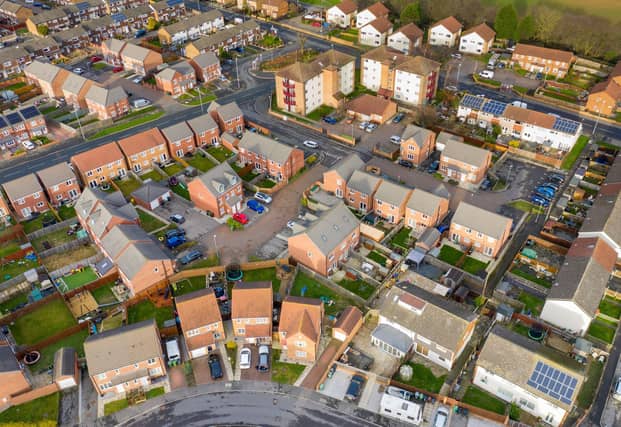

I have covered this subject on a number of occasions but yet again find it necessary to revisit this topic. Good quality housing is at the core of our economy and communities. It is essential that there is an efficient fast track system to deliver the vo
I have covered this subject on a number of occasions but yet again find it necessary to revisit this topic.
Good quality housing is at the core of our economy and communities. It is essential that there is an efficient fast track system to deliver the volumes necessary to match market demand.
When tackling this problem we should however not lose sight of the fact that new housing development is a controversial subject and that it provokes strong emotions with local communities and environmental groups.
The current problems that North Devon is experiencing are not dissimilar to those across the country. There has been an almost constant increase in house prices for nearly 15 years.
It is only very recently the case that this trend has changed with sales and demand from new buyers both declining. The principle reasons for this are cost of living pressures and rising interest rates which make mortgage repayments even more expensive.
An illustration of the problem with mortgage rates is that while three years ago it was possible to take out a mortgage at a rate fixed for two years of around 1.6 per cent. Today, this would be around 4.7 per cent. Therefore, for a previous monthly mortgage repayment of £500, this sum will increase to £1,700 per month.
While this has resulted in a modest reduction in house prices (the average value of a home in the UK is now £257,122 which is 3.1 per cent lower than 12 months ago), this is masking the real problem which is that the price of a home for a first time buyer has reached a record this month of £224,963.
These properties are typically one or two bedroom dwellings. Demand is 11 per cent higher than 12 months ago. This also is partly the result of the shrinking supply of house to rent and sharp increases in passing rents.
The Bank of England have been trying to tame inflation by squeezing our pockets. They have raised interest rates 11 times recently, bringing us to a 15 year high. This is stretching affordability of mortgages and supressing the appetite of house builders to produce new homes.
The government set a target that we need to be building 300,000 new houses per year, year-on-year for at least the next 10 years to keep up with demand. Last year only 233,000 new homes were built.
The Home Builders Federation is now warning that this year could reduce the number by half.
There are many reasons why demand and supply are out of balance, in addition to just the cost of mortgages.
It is still the case that there is an acute shortage of skilled labour. Self-evidently, this restricts even our largest builders from delivering new product.
Some new systems are being trialled to overcome this problem. Modular housing (timber and metal frame) is an emerging technology but currently it is a cottage industry and it will take a number of years before this can bring about meaningful change.
There is always a gripe about the planning system. One of our biggest house builders estimates that there are around 120,000 new homes stalled in the planning system because applications have not been resolved. Undoubtedly this is partly true, planning departments are suffering, along with the rest of business, with the recruitment of skilled staff.
There is also a growing view that the raft of new environmental regulations are simply too difficult to process resulting in criticism that currently the planning system is the worst it has been for decades and is preventing tens of thousands of homes from being built each year.
There is a popular view that house builders buy land and then sit on it (land banking). As will be revealed in a shortly-to-be published government report, this is simply not the case.
The owners of housing sites cannot afford to sit on assets they have taken months to secure at high cost, this does not give them the return on capital they need. Volume house builders are geared up to build. They do not achieve this by sitting on sites.
It is clear that the main culprits here are partly in Whitehall where the game of politics is in conflict with the need to provide new housing stock. The latest removal of statutory housing delivery numbers is purely designed to placate places like the Shire counties where there are vocal environmentalists who are also loyal government voters. It will do nothing to increase housing delivery.
An equal culprit however is one of environmental agencies – Natural England. They have come up with a new set of environmental controls, broadly speaking these are described under the heading Nutrient Neutrality.
This is designed to stop excess contaminants such as nitrates and phosphates entering the soils and water courses. New housing is seen as the bad boy in causing these problems but the reality is that new houses are a marginal contributor when compared with general agricultural practices – particularly poultry farming.
In 2021 new rules on water neutrality came into force, both to protect the impact on local water use and water habitats – the effect of these rules is that snails for example can hold up planning applications.
Major towns and cities have a variety of housing stock and therefore have to ability to convert existing buildings or develop brown field site. These do not generally get caught by these regulations. Rural economies broadly rely on green field sites in order to grow. They do get caught.
The effect on these economies and communities is therefore disproportionately higher particularly when trying to encourage young people to make their careers where they have been raised.
This type of arbitrary regulation needs to be balanced by common sense and an understanding that health economics equal healthy communities. I trust that those applying these rules will be more flexible and share in finding solutions.
If not large parts of the South West region will be sterilised against new housing schemes, as is the case in large parts of Somerset.