

Pine martens return to Exmoor for the first time in more than a century
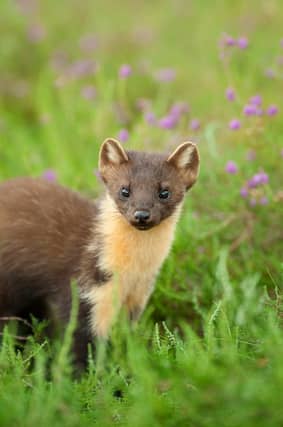

Pine martens have been released at secret Exmoor locations, marking their return to the moor for the first time in more than 100 years as part of the Two Moors Pine Marten Project
The native pine marten has been returned to Exmoor National Park for the first time in more than 100 years as part of a pioneering nature recovery project.
A total of 19 pine martens – nines females and 10 males – were released during September at secret locations owned by the National Trust and Exmoor National Park Authority.
The releases mark the return of an animal which was once common locally, but which was lost due to hunting and the decline of its favoured woodland habitat.
Watch the trail cam video of the pine martens emerging from their Exmoor pens into their new homes for the first time -
Pine martens are a native species and a woodland dwelling animal. The size of a small cat, they belong to the weasel or mustelid family. Their release is the work of the Two Moors Pine Marten Project and supported by The National Lottery Heritage Fund.
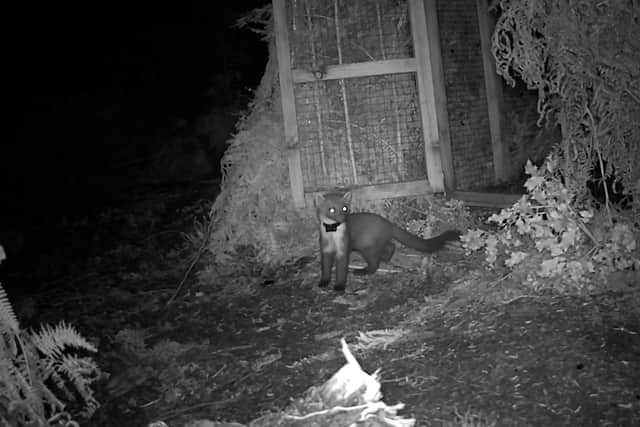
Above: One of the new Exmoor pine martens takes its first tentative steps into the wild just after leaving its pen for the first time. Credit: Devon Wildlife Trust
The pine martens were sourced from healthy wild populations in the Highlands of Scotland. The reintroduction of pine martens has been licensed by both NatureScot and Natural England.
Although sporadic sightings have been reported of pine martens in Exmoor over recent years, this reintroduction is the first to be planned and officially licensed.
The reintroduction marks the culmination of seven years of planning by the Two Moors Pine Marten Project working with local volunteers, stakeholders and communities.
After undergoing careful health checks in Scotland, the mammals were driven more than 500 miles through the night in a specially adapted, temperature-controlled vehicle. Altogether staff undertook five carefully planned journeys, each one bringing a small number of pine martens with them.
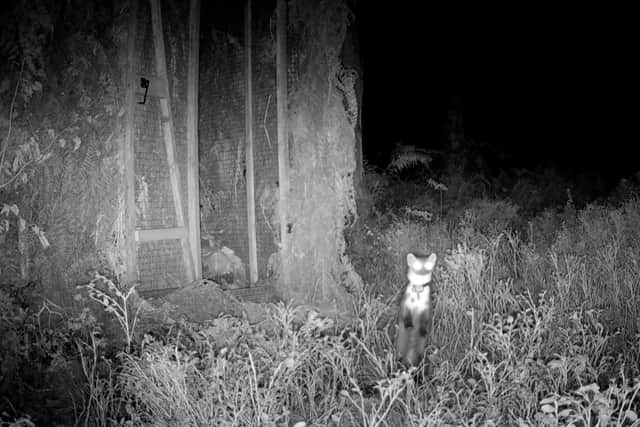
Above: Not quite sure yet – one of the newly released Exmoor pine martens surveys its new surroundings. Credit: Devon Wildlife Trust
There they were allowed to acclimatise quietly to their new surroundings while being provided with fresh food and water. After three days the door to each pen was opened and the pine martens were able to slip into their new wild surroundings in a series of magical moments that were captured on remote video cameras.
Each has been fitted with a radio collar allowing project staff to follow their fortunes in coming months. The lightweight handmade leather collars are designed to drop off the animals after six to nine months.
The release of pine martens on Exmoor follows a similar successful reintroduction of 15 animals by the Two Moors Pine Marten Project on Dartmoor in autumn 2024.
In the 12 months since, the Dartmoor population has become established, with the first births of kits being recorded in July 2025.
Pine martens are solitary animals and live at low density, preferring to form territories in and around woodlands. They are mainly nocturnal and are shy, avoiding contact with humans.
The return of pine martens to Exmoor was deliberately timed so that the animals could take advantage of the local abundance of wild autumn fruits.
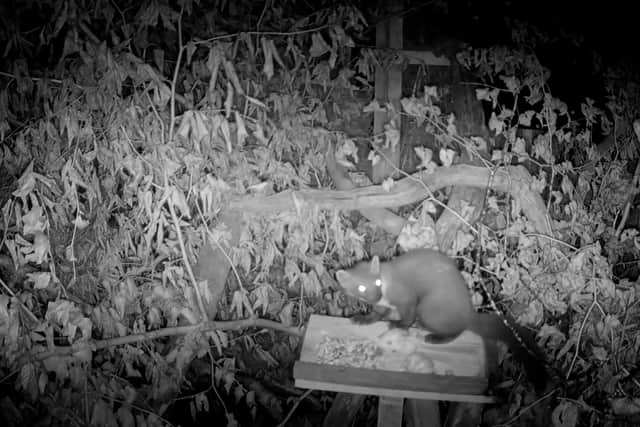
Above: One of the newly released pine martens grabs a snack before embarking on its new adventure on Exmoor. Credit: Devon Wildlife Trust
Devon Wildlife Trust’s Tracey Hamston leads the Two Moors Pine Marten Project. Tracey said: “It’s wonderful to see pine martens living wild in Exmoor again.
“These animals were once a key part of our thriving woodland wildlife, so it’s good that they are back where they belong. It’s a positive sign that nature can be restored. Our woodlands and their wildlife will benefit from their presence.”
Stuart McLeod is director of England - London & South at The National Lottery Heritage Fund. He said: “This is a landmark moment — witnessing the return of pine martens to Exmoor after more than a century is truly inspiring. Thanks to National Lottery players, we’re helping to restore a native species to the landscapes it once called home.
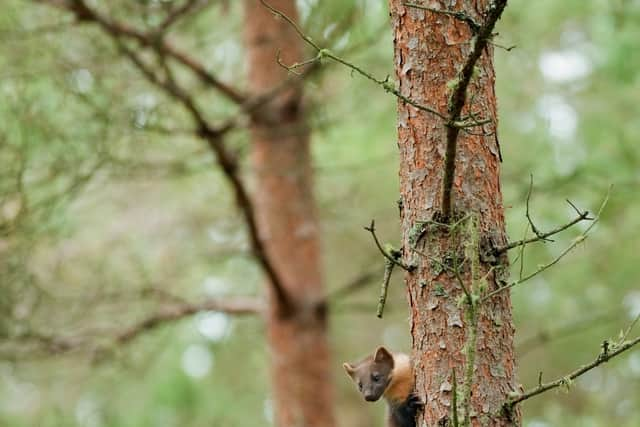
Above: The pine marten mostly lives in woodland areas. Credit: Terry Whittaker 2020Vision
Ali Hawkins is Exmoor National Park Authority’s Senior Ecologist. Ali added: “It’s just such a good news story to see pine martens back on Exmoor. Historical evidence shows that they used to be part of our woodland landscape and reintroducing them will help bring back a natural balance that will benefit many species.”
Anyone interested in finding out more about pine martens and the Two Moors Pine Marten Project is encouraged to go to https://twomoorspinemartens.org