

North Devon: A market leader in the Pharmaceutical sector - Tim Jones
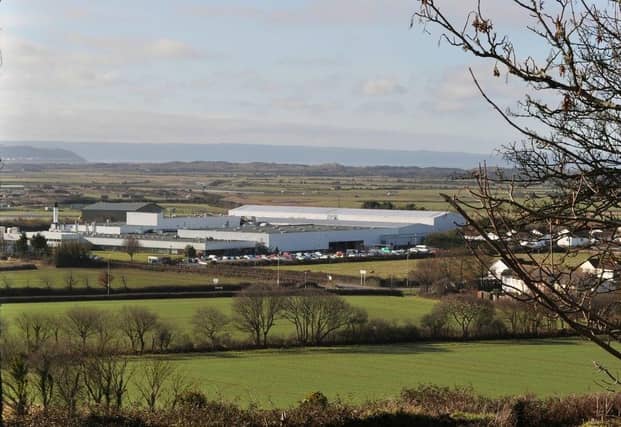

It is very easy to assume that North Devon needs help both in terms of its infrastructure, remoteness and lack of significant growth opportunities. Please however think again. On our doorstep are two of the most significant global companies, both in the
It is very easy to assume that North Devon needs help both in terms of its infrastructure, remoteness and lack of significant growth opportunities.
Please however think again. On our doorstep are two of the most significant global companies, both in the Pharmaceutical sector. These are:
- Accord UK, who are based in Whiddon Valley Barnstaple.
- Perrigo Wrafton (formerly Wrafton Laboratories) who are based in Braunton.
Both these companies are in slightly different sectors of the global pharmaceutical industry. Both have ambitious plans and we should shortly be hearing about spectacular progress with one of these, as they finalise a ground breaking deal. Many parts of the South West region would give their right arm for involvement with either one of these companies.
What is also interesting is that it is this sector which forms part of the government’s target for growth and investment. The Whitehall strategy is looking at five key areas of manufacturing business.
One of these is the life sciences sector. The vision was launched by Boris Johnson who described biotech as 'in Britain’s DNA' but recognised that it needed significant investment.
The vision is also to turn this industry into a global sector. To do this, it will need to be supported by world class science and research capabilities enabling the UK to be the best place to trial and test products at scale.
There is already a growing programme to improve health data infrastructure and genomics. The UK already has the largest pharmaceutical sector in Europe.
The country is only behind the US and China in terms of high quality research papers published. Every one of the worlds top 25 pharmaceutical firms has an operational base in this country.
The job growth opportunities are eye wateringly good. This sector already supports 260,000 jobs and is contributing more than £85 billion to our national productivity.
Despite these impressive numbers this industry is urging the government to do more to encourage investment. Most recently, a huge row surfaced when AstraZeneca decided to transfer an investment of $360 million in new manufacturing facilities in the Republic of Ireland instead of the UK. They cited the reason for this as Britain’s uncompetitive tax policies.
Competition in this sector is also increasing, putting pressure on the UK to maintain its status particularly as a world leading hub for medicines development and discovery. Both France and Germany have become very adept at attracting this type of investment.
The prize here is huge. Relatively modest estimates show that an increase in research and development funding would on its own account achieve a £68 billion boost to GDP.
The other big winner here is the NHS which, given success in this sector, could become one of the most powerful drivers of medical innovation. At the same time, its current apparent dysfunctional activities could quickly be reversed by convincing Government that further investment would be justified because of the commercial benefits arising.
There is no doubt that the NHS is currently 'in distress', this situation needs to be radically addressed and this is one of the solutions for it.
So what does this mean for the South West? These two companies have been trading on our doorstep for many years. They already make a huge impact on wealth creation.
In a sense they buck-the-trend because the national focus for pharmaceutical companies, particularly in research and development and in the provision of fit-for-purpose laboratory space, has been focused on the “golden triangle” of London, Oxford and Cambridge.
There is no specific set of actions we need to take to ensure the continuing success of both of these companies. They do however need as much support as possible when seeking to grow.
It is also a great opportunity to ensure that the skilled workforce they need and the opportunities they present to our next generation are fully recognised.
Shining a spotlight on the great work they are doing would be a boost to the profile of Northern Devon and give us confidence that, rather than needing more handouts, we already have in-hand two of the most exciting businesses in the country.