

Motoring with Peter Vosper: Driverless cars on the road by 2025 – do we really believe it?
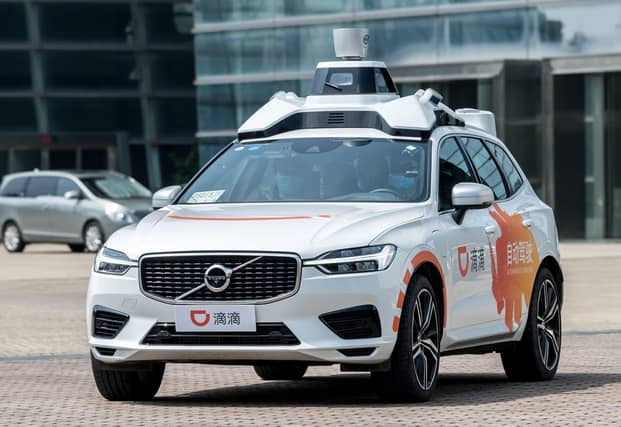

According to a new Government report, fully self-driving vehicles could be on the UK’s roads by 2025. Some cars, coaches and trucks, with self-driving features could be on our motorways in the next year, according to the Department for Transport. Self-d
According to a new Government report, fully self-driving vehicles could be on the UK’s roads by 2025.
Some cars, coaches and trucks, with self-driving features could be on our motorways in the next year, according to the Department for Transport.
Self-driving, or driverless, cars are vehicles capable of being on the road without a man or woman in control. Some current cars have automated features which can be turned on and off by the driver, but some vehicles would need no driver input at all.
Government plans include new laws to ensure these vehicles are safe. They will use a combination of lasers, cameras and radar to recognise objects such as other cars, cycles and pedestrians.
The Government has pledged £100 million committed to delivering their objectives, plus another £34 million for research to support safety developments and inform more detailed legislation.
This would include assessing the performance of self-driving vehicles in poor weather conditions.
Jonathan Hewett, chief executive of Thatcham Research, welcomed the ‘breadth of the Government’s ambition’ in positioning the UK as a centre for self-driving innovation, combined with a safety-first approach.
He added: “The cars we are driving are changing at an unprecedented rate, but the automotive industry is still at the lower end of a steep learning curve. It’s vital we balance the risk with the opportunity, gathering intelligence on the different case uses for the technology and in turn understanding what it means for all road users.
“All the ingredients are present for the UK to become a global leader in this space. However, it is paramount that we make sense of the data these vehicles will provide, to inform risk and ultimately pave the way for safe adoption.”
Ministers claim that accelerating the adoption of driverless vehicle technology will enable the UK to take advantage of the emerging market of self-driving vehicles which could create up to 38,000 jobs and be worth £42 billion.
This announcement came as the Centre for Data Ethics and Innovation (CDEI) published its Responsible Innovation in Self-Driving Vehicles report.
The report warned that it might not be enough for self-driving cars to be safer than normal cars, suggesting the public may have little tolerance for driverless cars.
In June, a survey discovered motorists were already sceptical about autonomous driving aids. Only 22 per cent were excited about the prospect of a car that offers many of the systems already available in most cars.
However, Transport Secretary, Grant Shapps said the benefits of motorists handing over would be ‘huge’. He added: “Not only can they improve people’s access to education and other vital services but the industry can create tens of thousands of job opportunities throughout the country. Most importantly, they’re expected to make our roads safer by reducing the dangers of driver error in road collisions.”
Greg Ford, general manager of Driver Risk Management, said: “While, in theory driverless vehicles could be legal on the UK’s roads by 2025, the reality is this is not going to happen.”
Keep your seatbelts tightly fastened for the time being!