

Man v Machine: How prepared are we? - Tim Jones
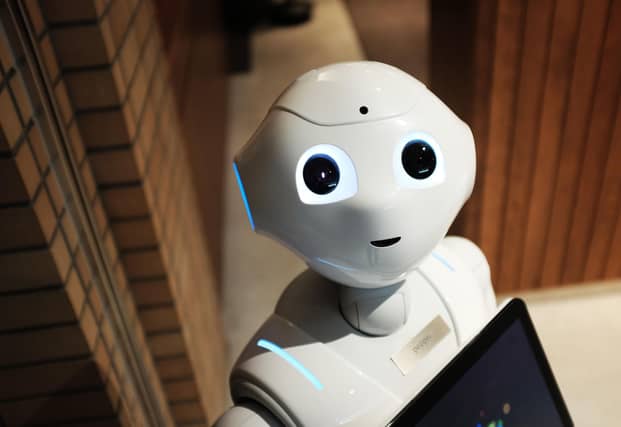

Lots of chatter and press coverage were commonplace 7/8 years ago about artificial intelligence and the march of the robots. There was even a league table drawn up as to which jobs were going to be redundant because machines could perform better. Banking,
Lots of chatter and press coverage were commonplace 7/8 years ago about artificial intelligence and the march of the robots. There was even a league table drawn up as to which jobs were going to be redundant because machines could perform better. Banking, Insurance, Legal services and many in the Medical world being good examples.
There have been some wildly differing views about where this was going. Oxford University predicted in 2014 that 47% of all jobs could be automated by 2030. Whereas the McKinsey Institute estimated only 5%. PWC were somewhere in the middle at 30%.
What of course is true is that machines can perform at unbelievable speeds and assimilate huge amounts of data. A fascinating example of this was a competition as to how quickly an approved mortgage offer could be processed to fund a house purchase. The Building Society took 27 working days. The machine took 3 mins.
Much has changed since 2014.
The advancements in the technology have continued at a frightening pace. It has however been realised that Robots and unpredictable emotional human reactions need to come together to make intuitive decisions. The concept of Co-Bots has therefore emerged, which, simply put, is a personal assistant to a human - a functional, mobile and independent version of our favourite possession our mobile phone. Fantastic examples include heath care “assistants” who can help those who are frail or elderly continue to live independently.
This was working well until 2020 when Covid forced mass workplace closures, employers suddenly had to invest in and conquer digital skills, they also had to fill gaps caused by a lack of labour and most recently have had to cut costs to survive in the middle of a fully blown recession. This has reignited the tech savvy companies and some big investors.
We have heard recently of Northern Devon farmer who could not recruit and has therefore invested in milking-machine robots who will work whenever and, as a sideshow, can both detect disease before manifesting itself in the cow and analyse the milk volumes and quality. This is apparently proving a great investment but it’s too early to know what to do if one breaks down.
If you want to see the genius of what is currently being developed then look no further than “Generative AI” where machines can produce original text and images. Chat(bot) GPT (or Generative Pretrained Transformer) is an invention created by data scientist where machines can be trained to learn on very large data sets related to language. The result is a bot which seems to have human or even super-human intelligence. It has been said that even the scientists are not sure quite how this all works - scary!
So is this technology friend or foe and will it improve the businesses and communities of Northern Devon. If so how do we get involved?
This is a huge opportunity to level the playing field. If we can develop the digital skills in order to make best value from our Co-bot then we can compete even more effectively in national and international markets. These skills must be shared across the whole workforce. This should also inspire those we have raised and trained to consider working locally because they can see that their employer is able to keep up and get ahead of the market.
We worry about being remote and largely rural - this for us is a potential game-changer.
Written by Tim Jones, Chairman of the North Devon Biosphere Foundation