

International Trade Wars: Could this effect Northern Devon? - Tim Jones

We would all be forgiven for assuming that our greatest international allies are the United States. Many decades of goodwill and collaboration through periods of war and peace have defined an enduring relationship. We have all watched with curiosity the
We would all be forgiven for assuming that our greatest international allies are the United States. Many decades of goodwill and collaboration through periods of war and peace have defined an enduring relationship.
We have all watched with curiosity the vagaries of the American presidential system. We will, I am sure, all have a view on whether Donald Trump was an amusing distraction or whether he genuinely broke the mould and started to achieve one of his stated objectives, which was to “drain the swamp” of the embedded political system in America.
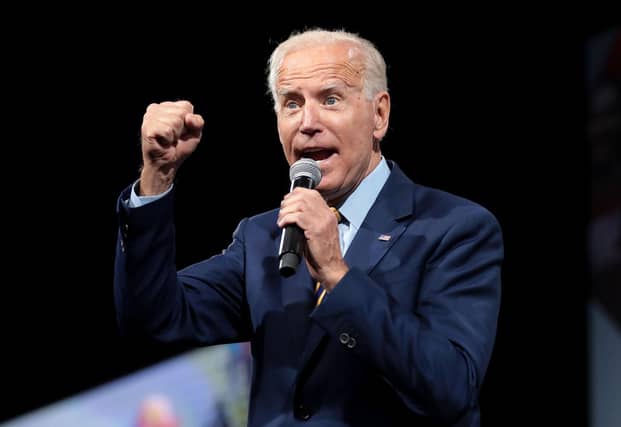
His successor, Joe Biden, sets a further series of challenges for us because of his somewhat awkward delivery style and the apparently increasing impact of ageing.
Behind all of these benign considerations, there is however a much sharper economic conflict emerging between us both, which is already having an impact on a number of our growth businesses and may well effect the future of American owned businesses in the UK regarding future investment or their willingness to remain located in the UK.
In truth, we should have anticipated these problems long ago. We saw how difficult the US can be during the sad events around Mad Cow Disease. This caused a dislocation of export trade from the UK of a wide range of meat products. It took nearly 30 years before trading in this sector was re-established.
Since Brexit, the UK Government have been striving to secure a trading agreement with the US. When Liz Truss was our Foreign Security, she spent many hours of discussion trying to achieve this. By any reasonable judgement this is an enormous and challenging task. Not only does there need to be an agreement with the national Government but then separate trading agreements need to be established with each of the 50 states. Each one of these will have their own very separate agenda as to what a successful agreement might look like. There is no doubt that even if there is broad agreement to the principle of this, that many years will transpire before a successful multi-lateral agreement can be reached. In the interim, we are left reliant upon current trading deals, the most successful of which is the American’s love of Scotch Whisky and also a big appetite for Cheddar Cheese, which is why Quicke’s Cheese in Devon have a strong export arm.
What may have escaped your notice, is the latest American action regarding protectionism. A few weeks ago, they quietly launched a programme entitled the Inflation Reduction Act. This combines a domestic American industrial policy with a Green Strategy and is intended to drive forward the US to achieve net zero emissions by 2050. To support this initiative a funding pot of $369 billion, both for investment and tax breaks to fund clean energy projects, is now fully operational.
As the realisation of the impact of this dawns upon the rest of the world, the tensions are dramatically rising as many countries see projects they have been trying to develop being lured away by this seductive funding proposal. In the last few weeks these tensions have been inflamed with traditional allies of the US in Europe, South Korea and Japan, all accusing the US of breaking fundamental trust principles around Free Trade. The UK has also now spotted the problem and has been conspicuously louder in its criticism. There are justifiable concerns that this package could risk the “Deindustrialisation” of the UK. Only last week Drax, who have a huge energy production plant in the North East and who were proposing to extend this around their existing facility, have now said that this £2 billion project to build the worlds biggest carbon-capture power station could be diverted to an investment in the US.
The UK government are now working in conjunction with the European Union to lobby Washington on this issue. Whether this will have any effect or not seems highly unlikely. The general public in America like the whole principle of repatriating American companies who have developed abroad.
If they stick to their guns, therefore, there is not very much that Whitehall can do to resist this. We certainly do not have sufficient spare cash for a 'tit-for-tat' subsidy battle. Many who are close to the Chancellor of the Exchequer, do not believe that they have yet grasped the seriousness of this. Certainly many of the UK’s trade associations are now voicing their concerns.
This seems a huge problem for us to tackle in Northern Devon. What we can however do is to ensure that all of our international owned businesses (not just those who are American owned), are given as much help and support as possible. With globalisation going in different directions at the moment, we cannot rely upon any new international investment. A policy therefore of supporting and protecting what we currently have, is now an urgent action we must all be involved in.