

Hungarian hogs helping out rare butterflies at Heddon Valley
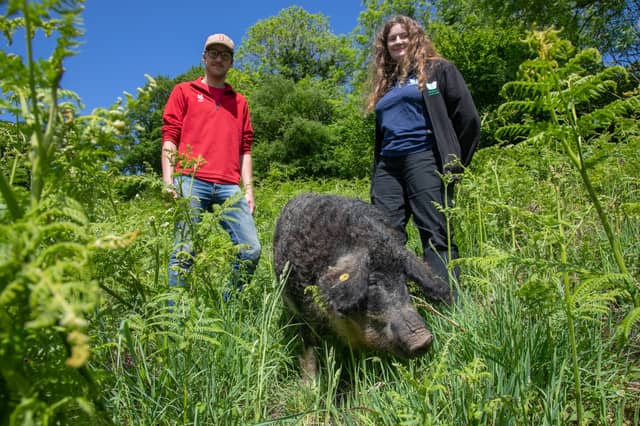

Hairy helpers are creating more habitat for the rare high brown fritillary at National Trust beauty spot
The race to save one of the UK’s most endangered butterflies has recruited some piggy volunteers to do the grunt work at North Devon’s picturesque Heddon Valley.
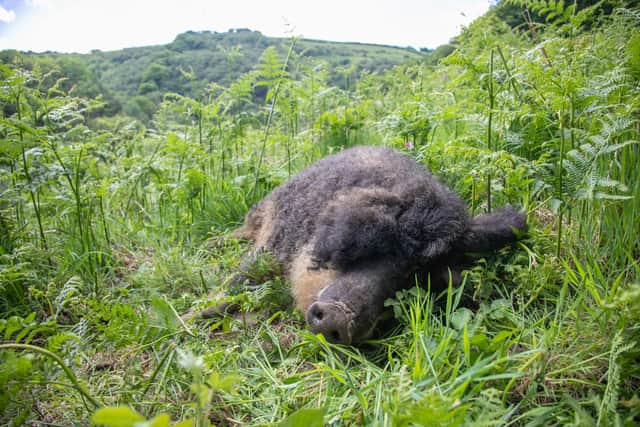
Above: Hungarian Mangalitsa pigs are living their best life and helping to clear unwanted scrub growth at Heddon Valley, to provide habitat for the endangered butterfly. Credit: Savannah Jones
The pretty orange insect with black chequered wings has declined massively over the past decades and the North Devon valley is one of only three locations in England where it can be found.
The south-facing bracken-covered slopes at Heddon Valley offer ideal breeding conditions for the high brown, but high-growing trees and shrubs quickly take over the habitat.
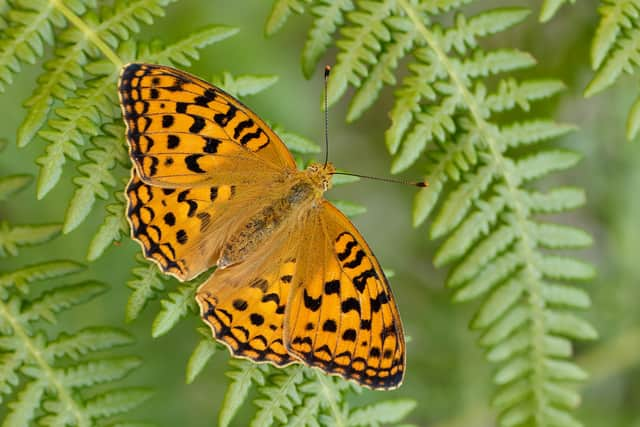
Above: The extremely rare high brown fritillary butterfly can only be found in three places in England, including Heddon Valley in North Devon. Credit: Ian H Leach
Butterfly Conservation project officer Ellie Wyatt said: “This is an incredibly exciting project and working with the National Trust is very rewarding.
“The trust has been working with the pigs for a couple of years and noticed how their rootling actions benefited the soil and encouraged violets to germinate, so it's great to continue this work to help save the high brown fritillary.
“The cattle are also gorgeous and look majestic in the landscape and I'm looking forward to seeing the trails they and the pigs make through the bracken and seeing if violets spring up in these paths.
“From the pigs to the pollarding woodland work, it’s an innovative project to be part of and I feel honoured to be working with so many passionate people to help this rare butterfly.”
The high brown fritillary has a wing span up to 67mm - among the biggest in the UK. Its distinctive caterpillars, covered in spikes, are perfectly camouflaged in dry brown leaf litter in April and May, while the adults appear in June and July and drink nectar from thistles and bramble flowers.
The species was once widespread across England and Wales, but has suffered dramatic decline since the 1960s, mainly due to destruction of its habitat for development and changes in land management practices.
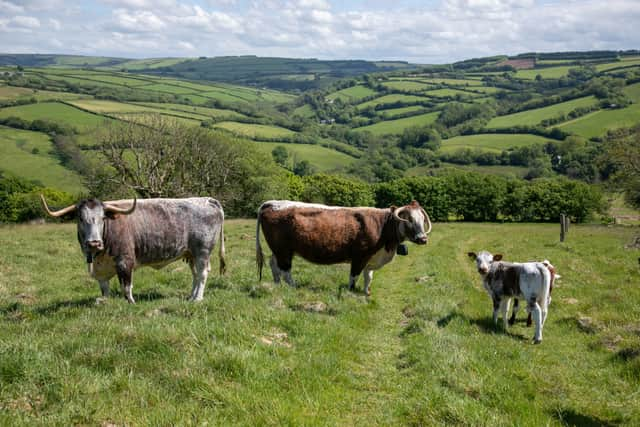
Above: English longhorn cattle at Heddon Valley are also assisting the hogs to create habitat for the high brown fritillary butterfly. Credit: Savannah Jones
They are putting up fencing around three fields to focus the pigs and cattle in specific areas, while Ellie has been working with volunteers to clear other scrub plants such as gorse that could take over the habitat.
They are even painstakingly collecting the tiny seeds from the common dog-violets and germinating new plants a nursery to plant in new locations.
Butterfly Conservation is training National Trust workers to maintain these precious habitats long into the future, but is looking for more volunteers to help.
National Trust ranger for West Exmoor Mathieu Burtschell added: “Collaborating with butterfly conservation has allowed us to do some exciting and much needed work in our woodlands that will benefit the high brown fritillary as well as many other species. Most of our wooded valleys on West Exmoor were exploited for oak timber and were cyclically clear felled.
“This industrial exploitation ended about hundred years ago, and the oak trees were allowed to get away. The issue we now have is that most of the trees are the same species, same age, and featureless.
“The woodland work we are carrying out aims to diversify the structure of this oak monoculture. We have created a series of glade by felling, pollarding (felling above the reach of browsing animals), and ringbarking (leaving trees as standing deadwood).
“These interventions will allow light in the woodland which will increase the ground flora interest of the site, and add some complexity to the structure of the woodland.”
Butterfly Conservation has identified 10 other National Trust sites where new colonies of high brown fritillary could be established, but it urgently needs to do further survey work and plan landscape restoration, so is appealing for donations to help.
If you would like to find out more about volunteering opportunities, email Ellie at [email protected].
If you are willing to make a donation, visit https://justgiving.com/campaign/heddonvalley