

Housing 'situation is only getting worse' - John Hart
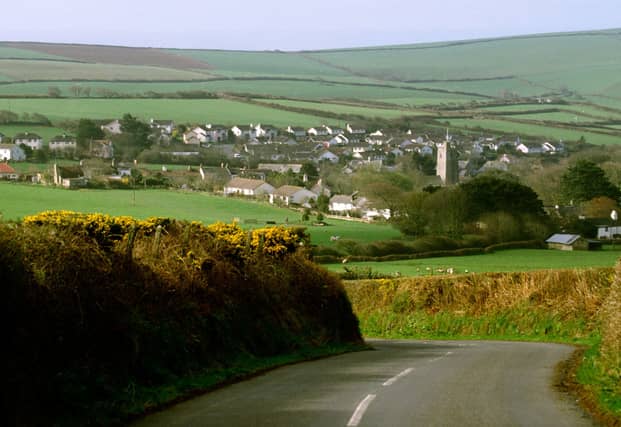

Even before the current cost of living crisis and the withdrawal of many mortgage deals by banks and building societies, for many people it's always been difficult to buy a house in Devon. The county has always been a popular place for people to retire a
Even before the current cost of living crisis and the withdrawal of many mortgage deals by banks and building societies, for many people it's always been difficult to buy a house in Devon.
The county has always been a popular place for people to retire and the pandemic has led many younger people to re-locate here and continue to do their jobs remotely. That, of course, drives up prices.
And, in the rental sector, many property owners have switched from long-term letting to holiday accommodation and AirBnB.
That's why Team Devon, which I chair, set up a Housing Task Force to try to get to grips with the scale of the problem and come up with workable solutions.
Team Devon comprises the county council, all our district councils and representatives of town and parishes. And the Housing Task Force is also very keen to work more closely with Plymouth and Torbay as this is a peninsula-wide problem.
We recently had a detailed paper on the issue and, I'm afraid, the situation is only getting worse.
That's why we will be re-doubling our efforts to engage our MPs and the new Secretary of State for Levelling-Up, Housing and Communities, Simon Clarke, and his Housing Minister Lee Rowley as well as continuing to press our case for devolution, bringing us more local powers to implement local solutions.
In 2021 the median house price in Devon increased to well over ten times the average salary. That's 20 per cent higher than the rest of the UK. At the beginning of the year, the average price of a house in Devon reached £300,000. And between 2019 and 2021, the stock of private rental property feel by half.
Across Devon over 16,000 households were on the waiting list with 4,500 requiring urgent accommodation..
We saw over 3,700 new homes built last year but fewer than 500 of those were one or two-bedroom accommodation and less than 100 were affordable. They added to a stock of 385,000 existing properties of which 11,100 are second homes. But over the same period Devon’s working age population grew by 4,000. So we are running to stand still.
We have to do more whilst recognising that none of us wants to build on the superb countryside that makes Devon such a wonderful place to live.
But it is clear the lack of affordable and suitable housing provision is having a tangible impact on the economy and Devon’s wider social fabric.
Since 2019, more than 30,000 people across Devon have either retired or left the labour market. This summer, in July, there were 21,000 job vacancies advertised every day.
That included 1,500 care workers and 1,000 nurses along with school staff and chefs and van drivers. There isn't a ready supply of local workers, however, with around 9,300 people registering for unemployment benefits and that's just two per cent of the working age population.
But even if our hospitals and care homes, our schools and our hospitality businesses can manage to recruit people keen to move to Devon, they are finding their prospective employees can't find anywhere they can afford to live.
So this crisis is not only affecting our ability to care for our sick, elderly and vulnerable residents and educate our children but it is having a very real impact on our ability to drive economic growth.
That's why in addition to the measures I listed above we want to cooperate with our colleagues in the NHS and education to try to ensure we are not competing for accommodation for key public sector workers but actually trying to find joint solutions.