

Water quality will improve by working together

Developers and consumers need to play their part
Consumers should pay extra for food so farming becomes more sustainable and better for the environment.
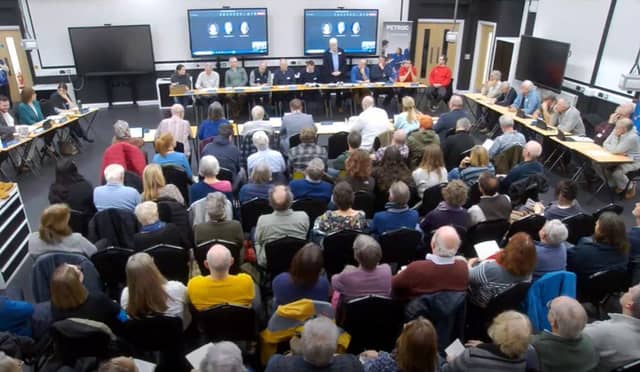
That’s just one of the ways to help improve water quality suggested at a special policy development committee of North Devon Council, where members of the public were invited to ask questions of a panel of experts.
Another suggestion is for councils to ask developers to clean up their act so that waterways don’t become polluted.
The meeting at Petroc College followed public concerns about sewage spills. Representatives attended from South West Water, the Environment Agency, North Devon Biosphere, Surfers Against Sewage, Westcountry Rivers Trust, North Devon Surfing Reserve and members of the farming and angling communities.
South West Water has committed to having no more than 10 spills from its 1,342 storm overflows a year by 2030, which is 20 years ahead of the government’s target.
The company, which reported 38,000 sewage spills in England in 2022, is investing £2.8 billion into improving water quality with a pledge to fix storm overflows at beaches and eradicate pollution.
But people from SWW told the meeting the company, which now monitors all of its storm overflows, one of the first water companies to do this, is only responsible for 30 per cent of water quality issues. Agricultural and surface water run -off from developments accounts for a large proportion of the problems.
Experts said all the data currently being collected, including from “citizen scientist” volunteers who have water testing equipment from Westcountry Rivers Trust, should not become a “data fog” but be used intelligently to inform solutions.
Exmoor farmer Robin Milton, who is also an independent North Devon councillor for Bishops Nympton, said when he was growing up he saw salmon and brown trout in the local rivers, but not any more.
He said 50 years of the government’s “cheap food policy” meant farmers had been free to do what they liked with their land, with limited regulation of chemicals which end up in the rivers.
Policies are changing to ensure farming is sustainable and protects the environment, but this means consumers having to pay more for food to make it a viable option for farmers, he said.
He said councils like North Devon would be tested on their commitment to biodiversity, which requires developers to leave the natural environmental in a better state than when they arrive. It is an opportunity to improve the environment and water quality through the planning process. Residents were asked to hold councillors to account over this.
Director of asset management at South West Water Mark Worsfold said developers should be encouraged to come up with ‘nature-based sustainable drainage solutions’ (SuDs) to reduce surface-water flooding and river pollution.
He said they work with Plymouth City Council on such projects and want more councils to come forward.
One resident said after reporting fish deaths in the River Torridge and signs of chemical pollution he was told by the Environment Agency that it was not of “major impact”.
Bruce Newport from the Environment Agency said they deal with the worst incidents first and there was are “simply not enough resource” to do any more.
The EA is investing in better technology and 500 more employees in the regulation department and would be much more effective at monitoring rivers in the future, he said.
North Devon’s beaches are currently rated excellent, with the exception of Hele Bay, Ilfracombe, but its rivers and streams are a different picture. The meeting heard that out of 98 bodies of water, 83 had failed to meet good ecological standards.
Residents asked for year-round testing of bathing waters, of which there are 151 in South West Water’s area. Right now they are tested from May to September.
Director of external liaison at South West Water Alan Burrows said wet wipes are still ending up in water courses following heavy rainfall, despite a campaign to only put “pee, poo and paper” down the loo.
“The system was not designed for this. It’s like putting diesel in a petrol car. It’s a foreign body and they are causing a significant amount of problems on our network, for homes and the environment”
Animals in rivers and seas consume wet wipes which can result in them suffocating or starving to death.