

Historic gun battery off North Devon coast to get more protection from erosion


The Lundy Island Fog Battery is to receive a Country Stewardship grant via Defra and historic England to help preserve it for the future
The historic Fog Battery at Lundy Island is set to receive grant funding to preserve it for the future thanks to a partnership dedicated to maintaining heritage sites.
The Fog Battery sits on an exposed cliff edge and was built in 1863 to warn ships away from the island during extreme foggy weather when the lighthouse was obscured.

Above: The Fob Battery at Lundy. Credit: Historic England Archive
The partnership was formed by the Department for Environment, Food and Rural Affairs (Defra) and Historic England to help protect heritage across England for future generations. In the past year it has supported more than £6million worth of heritage conservation projects.
At Lundy, the Fog Battery is a nationally significant feature that forms an integral part of Lundy's rich maritime history.
Built to warn ships of the island’s presence during foggy conditions, it was operated by Trinity House personnel who lived on-site with their families and had to fire the guns every 10 minutes. Trinity House is the national body responsible for lighthouses.
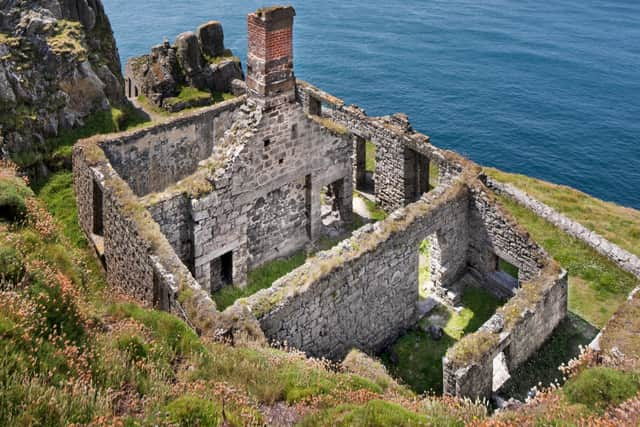
Above: The Fog Battery complex had Trinity House staff and their families living on site ready to operate the guns at a moment’s notice. Credit: Historic England Archive
Today it faces increasing threats from severe storms and prolonged wet weather, which have accelerated the erosion and loss of stone from the ruins.
Through the grant funding, essential work will be undertaken to stabilise and protect the battery, which is a scheduled monument and considered vulnerable.

Above: The Fog Battery headland has seen puffins repopulate it in recent years, but that does also mean more visitors adding to wear on the historic site. Credit: Historic England Archive

Above: Credit: Historic England Archive
The Countryside Stewardship Partnership provides specialist advice to farmers and landowners applying for grants to protect and restore historic features on their land.
While preserving the heritage it also seeks to support sustainable land management and create economic benefits.
Claudia Kenyatta CBE and Emma Squire CBE, the incoming chief executives of Historic England on a job share, said: “England's rural landscape forms a valuable part of our national heritage. It has been shaped by generations of people living and working the land over time.
“Some of our greatest heritage assets, from historic buildings to archaeological remains, are located in the countryside.
“With expert guidance from Historic England and funding from Defra, we’re thrilled that these Countryside Stewardship grants are ensuring that those that look after our land and safeguard our rural heritage are fully supported to do so.