

Devon heatwave school closures: 'The consequences of government neglect'
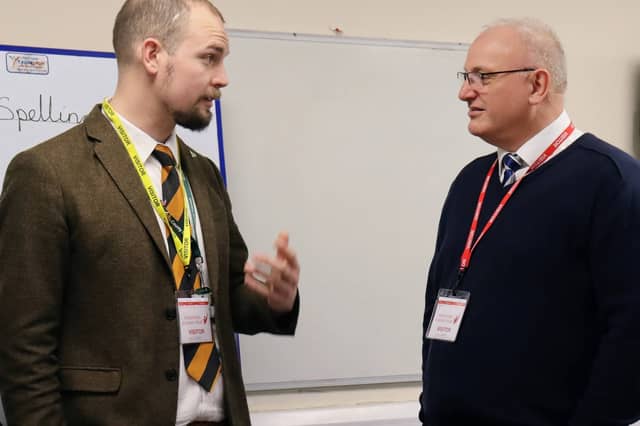

A Devon county councillor who also teaches part-time says headteachers who closed schools during this week's heatwave made the right call, but insists the responsibility lies with ministers who failed to fund buildings fit for a warming climate.
Dozens of schools across Devon have closed completely or cut short their days during this week's heatwave, leaving parents scrambling for childcare and pupils missing lessons.
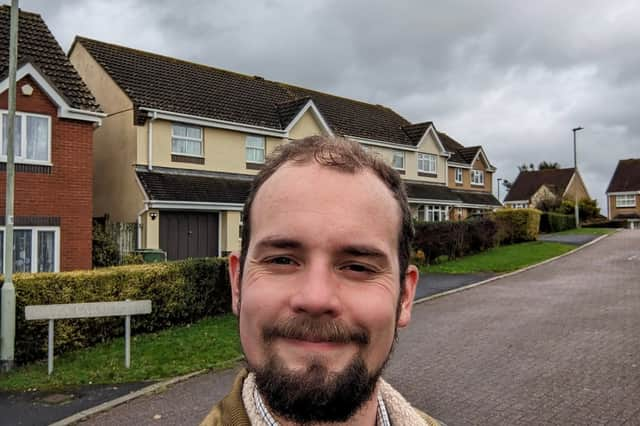
Ed Tyldesley, Devon County Councillor for Chulmleigh and Landkey, who also teaches part-time at a secondary school in North Devon, says the closures are not a sign of weak leadership; they are the consequence of decades of underinvestment in school buildings.
"The blame does not lie with school leaders. It lies with successive governments that have failed to fund and maintain the school estate or prepare it for the extreme weather we were repeatedly warned was coming," he said.
'Kitchens were becoming dangerously hot'
Mr Tyldesley said his own school, which is less than 20 years old, began preparing before the worst of the heat arrived. The headteacher consulted staff and governors as soon as the heatwave was forecast last week, relaxed uniform requirements, encouraged pupils to drink more water, halted strenuous outdoor activity and moved classes to cooler parts of the building.
"Only a small handful of pupils reported feeling unwell, and most were after the decision to close for Wednesday and Thursday had already been made," he said.
He added that the school is part of a trust with three primary schools, including large numbers of pupils receiving free school meals. The heat posed a particular risk there.
“Some relatively modern schools are reportedly coping less well than neighbouring Victorian buildings. Yet schools have been left searching for portable fans, relaxing uniform rules, moving classes around buildings and, in some cases, asking parents to help pay for cooling equipment. That should be a national embarrassment.”
"The kitchens were becoming dangerously hot. I'm very impressed by the head taking the bold and brave decision to close in the face of the rising temperature," he said.
Mr Tyldesley also said he had heard from friends and colleagues across Devon that every school still open was sending pupils home because of the heat.
Schools locked into contracts that stop them making basic changes
The councillor pointed to the legacy of Private Finance Initiative contracts as a significant part of the problem. Under PFI, schools were built using private funding in exchange for long-term contracts, often lasting 25 to 30 years, which can restrict headteachers from making even basic changes to their buildings.
"The main problem with PFI school buildings is that headteachers can't quickly adapt and install shutters, air conditioning or extra water fountains due to the PFI constraints," he said.
He cited Ted Wragg Trust schools in Exeter as an example, describing buildings with large glass atriums that, while visually striking, function like greenhouses in hot weather and have only sporadic air conditioning.
By contrast, Mr Tyldesley described how his own school's headteacher had installed handwashing sinks at every entrance during the Covid-19 pandemic and later converted them into drinking water stations, meaning pupils are now always within 10 to 15 metres of a tap.
"That agility to be able to make material changes to the school infrastructure gives heads the power to adapt to crises," he said. "In one school where I worked, replacing a battery in a wall clock required an online maintenance request and could eventually cost over £50. It sounds absurd, but it captures the loss of control experienced by many PFI schools."
The government does not normally advise schools to close in hot weather, that decision rests entirely with school leaders
The Department for Education says school attendance remains the priority during heatwaves and that hot weather "can usually be managed safely." School leaders are advised to follow Heat-Health Alerts issued by the UK Health Security Agency and the Met Office, which run from yellow through amber to red, and to take steps to keep pupils comfortable.
Guidance suggests schools should ventilate buildings, close blinds, reduce electric lighting, limit vigorous physical activity and encourage pupils to drink more water. There is no legal maximum classroom temperature at which a school must close.
Children showing signs of heat exhaustion, including dizziness, headache, nausea and vomiting, should be moved to a cool area immediately. Heatstroke, which can include confusion, seizures and loss of consciousness, is a medical emergency requiring a 999 call.
Devon's geography makes closures more likely
Mr Tyldesley said Devon already has a higher-than-average rate of school closure compared with other parts of England, in both cold and hot weather, because of the county's geography.
"We are so spread out and have such large catchment areas that school transport is tough when the weather is fine. As soon as the ageing school transport fleet overheats or the roads ice over, we struggle to get pupils to school. When pupils can't get to school, parents who are teachers or school staff can't get to work. There is a delicate domino rally set up to fall," he said.
"As the climate is getting more extreme and central government funding goes less far, we are going to see more school closures in areas like Devon, where it is exceptionally harder to operate a school."
Council role is limited as most Devon schools are academies
Mr Tyldesley noted that most schools in Devon are now academies, meaning Devon County Council has limited day-to-day oversight of them. Decisions on closures and emergency equipment lie with individual headteachers and governing bodies.
He said he had lodged a question with Devon County Council about what support was being provided to maintained schools, which remain under local authority control, but had not yet received a reply.
"I'm confident that they are closely looking after their maintained schools and keeping them open and providing emergency equipment where necessary. As a lowly backbencher, I'm rather down the priority list for replying to my emails," he said.
The cabinet member for children at Devon County Council is Councillor Julian Brazil. Devon County Council and the Department for Education have been approached for comment.
Call for long-term investment
Mr Tyldesley called for a long-term, publicly funded programme to rebuild and retrofit schools with better insulation, ventilation, shading, passive cooling, trees, flood protection and renewable energy.
He also raised concerns about teacher recruitment and retention. National figures show that only around two-thirds of teachers remain in the state sector five years after qualifying, and fewer than six in ten remain after ten years. He said Devon had also seen a continuing fall in its number of full-time-equivalent teachers.
"Government must provide safe buildings, sufficient staff and properly funded budgets, then trust trained professionals to do their jobs. Let teachers teach," he said.
Note: Mr Tyldesley said he had heard that some parent-teacher associations had been fundraising for fans and air conditioning units, but was unable to confirm specific schools or amounts.