

Devon councillor writes to Government over AI data centre plans near Great Torrington
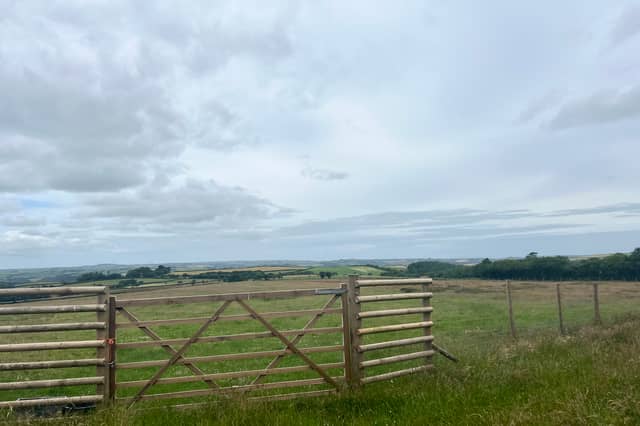

A leading Devon county councillor has launched an urgent appeal to senior government ministers, calling for a new national framework to protect rural heritage and food security against the rise of massive, hyperscale artificial intelligence data centres.
A concerned leading county councillor has written to the heart of government to raise concerns on the Xlinks proposal for a hyperscale AI data centre and battery storage site near Great Torrington, calling for a new national framework to consider the impact of large-scale artificial intelligence infrastructure on farmland, food security and rural communities.
Councillor Cheryl Cottle-Hunkin, Devon County Council's Cabinet Member for Rural Affairs, sent the letter today (July 3) to a string of senior figures including the Secretary of State for Science, Innovation and Technology, the Secretary of State for Environment, Food and Rural Affairs, the Secretary of State for Energy Security and Net Zero, Devon's MPs, the Chair of the Environment, Food and Rural Affairs Select Committee and the President of the National Farmers' Union.
It has been co-signed by Devon County Council's Cabinet Member for Assets and Resources, Councillor Simon Clist, and Cabinet Member for Climate and Biodiversity, Councillor Jacqui Hodgson.
In her letter, Cllr Cottle-Hunkin said farming communities had "felt increasingly let down by successive governments" amid rising costs and market pressures, leaving some families feeling they had little practical choice but to accept major infrastructure proposals or face the prospect of compulsory purchase. She said this had consequences for mental health and family wellbeing, and warned that the loss of productive farmland "should not be regarded as an inevitable consequence of technological progress."
The letter calls on the Government to develop a "Rural Impact Framework" for hyperscale AI infrastructure, addressing the protection of high-quality agricultural land, cumulative impacts on rural communities, the historic and cultural significance of the countryside, demands on local energy infrastructure, farmer wellbeing, community consent and fair treatment of landowners.
Cllr Cottle-Hunkin has requested a meeting with relevant ministers, the Chair of the EFRA Select Committee and the NFU President "before irreversible decisions are made."

While the letter was prompted by the Xlinks proposal for a data campus and battery energy storage system (BESS) on agricultural land near Great Torrington, Cllr Cottle-Hunkin said the issue went far beyond one scheme.
"While the proposals for a hyperscale AI data centre and battery energy storage system (BESS) in the Great Torrington area prompted me to write, this is about a much bigger national issue," she said. "Artificial intelligence may offer significant opportunities, but we must have a serious conversation about where the infrastructure needed to support it is located. Not every place is suitable for developments of this scale,” she told the Gazette.

She added: "Rural communities should not be viewed simply as available space for nationally significant infrastructure. We must properly consider the impacts on productive farmland, food security, local communities, rural heritage, landscape character and the wellbeing of farming families."
While the UK is already home to hundreds of data facilities, the vast majority are traditionally situated near major urban hubs. However, tech firms are increasingly looking toward rural locations to secure the vast plots of land and massive power grid connections required to run advanced AI systems.

Xlinks, the energy infrastructure company behind the now-stalled Morocco-UK subsea power cable project, is proposing what it calls the Devon data campus: an AI data centre and battery storage facility on an 850-acre site between Great Torrington, Weare Gifford and Huntshaw. On its website, the developer states the project is intended to serve as a "long-term anchor for digital infrastructure in the South West".
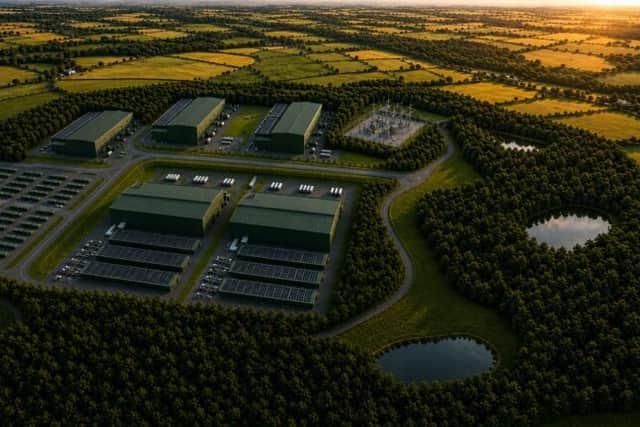
The company says the scheme, which it describes as among the largest of its kind in Europe, would represent an investment of up to £13.8bn and be worth up to £3.6bn a year to the economy, creating between 650 and 1,200 new jobs.
Addressing the mounting local scrutiny, Xlinks CEO James Humfrey welcomed the community's engagement as reported by the BBC: "We know a project of this scale will raise questions, and we'd expect nothing less from a community that cares about where they live," Humfrey said.
Two separate planning applications, one for the data centre and one for the BESS, are expected to be submitted to Torridge District Council in October, following a public consultation running from July 14 to August 11. To gather feedback, the company has scheduled a series of public information days, starting on 14 July in Weare Giffard, followed by sessions in Great Torrington on 15 July, Huntshaw on 16 July, and Bideford on 17 July.
The scheme has already prompted strong local opposition. A public meeting at Great Torrington Town Hall on Monday filled the venue to capacity, with hundreds more gathering outside. It followed an earlier meeting on 25 June, chaired by Sir Geoffrey Cox KC, MP for Torridge and Tavistock, which was also overwhelmed by attendance.
A petition against the scheme has reached more than 17,000 signatures.