

COLUMN: Offshore Wind power’s potential for North Devon – Tim Jones

This initiative has been the subject of a number of my recent articles. It is however highly topical and is becoming more so in light of the recent Government announcements. Our Local Authorities have taken a strong leadership role for this. A full worksh
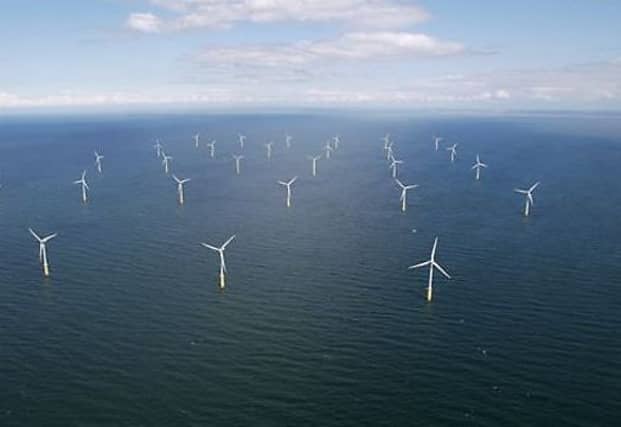
This initiative has been the subject of a number of my recent articles. It is however highly topical and is becoming more so in light of the recent Government announcements. Our Local Authorities have taken a strong leadership role for this. A full workshop session has been held at South West Institute of Technology, Petroc. This covered a wide range of topics. Transcripts and presentations are available for this and make fascinating reading. Whether you love this form of technology or not, floating offshore wind presents a huge opportunity for the South West and specifically for Northern Devon over the next 20 years. Previously the turbine structures had to be bolted to the sea bed, posing both technical and huge cost constraint issues. The new generation of floating arrays is a far cheaper alternative and can be deployed in much more challenging marine environments. This whole initiative forms part of the Celtic Sea array. Positioned approximately 60 miles to the North west of Appledore, this is now recognised as one of the most significant alternative energy opportunities in England.
Much of the evidence presented in the popular press and through Government suggests that the UK is at the worlds leading edge of this. This is probably true but there is a huge amount yet to do if we are to achieve somewhere near a target of 50% dependency. We certainly have the appetite for this. We certainly have some brilliant scientists and advanced manufacturers. As yet, however, we do not do enough to make sure that we are able to benefit from all parts of the manufacturing and delivery processes. Currently, although we make the turbines, we do not make the blades through UK owned companies. There are also some significant gaps in the capabilities of installers. That said, we are catching up rapidly. In addition to the turbines themselves, a vast investment is needed in providing a locally based supply chain. We have seen how a concerted programme can be delivered through the experience of Hinkley C, all of which has been achieved in the last 10 years.
This programme is another example of how our unique maritime natural assets can be channelled for the benefit of our local businesses and communities. The implementation of a comprehensive programme will benefit local Ports, sub-contractors, numerous direct suppliers and support both direct and indirect jobs. It is also important to ensure that we have all the requisite skills required for this industry. It needs to be embedded in all of our training curriculum from primary school level onwards.
Some of the emerging science around this is both fascinating and yet again a massive opportunity for our region. For example, some of the specialist equipment in autonomous marine robotics is being developed locally.
To ensure that we have a balanced programme, it is essential that our highly prized environment is protected. There is a role here for conservationists, ecologists, marine scientists and a range of others who can protect what is special to us.