

Climate Change: What could this mean for Northern Devon - Tim Jones

This is a difficult subject to debate, as it classifies as part of the 'too difficult box'. So huge is the problem, then what can we do about it? It is also perplexing that all the efforts made in the UK appear to be negated by the fact that certain Coun
This is a difficult subject to debate, as it classifies as part of the 'too difficult box'. So huge is the problem, then what can we do about it?
It is also perplexing that all the efforts made in the UK appear to be negated by the fact that certain Countries still continue to build coal fired power stations and to allow Fossil Fuel emissions to remain unchecked.
There is no doubt however that the UK must stick to its guns on this and support all initiatives to achieve zero carbon emissions by, at the latest, 2050.
It is a sobering thought that the vulnerability of the Devon Coast is particularly relevant across Northern Devon.
We know what the dire predictions are on this. There is a continual bombardment of doomsday scenarios through the press and from many leading academics and government sources. The simple facts are, however, that our land area is at risk from storms due to a predicted 1metre rise in sea levels by the end of this century.
New maps have recently been produced to show how key landmarks on the Devon coast face being swamped by tidal surges due to rising sea levels. The predictions include an estimate that levels will rise by 35cm by 2050. Interactive maps are available, which show the areas most at risk if no sea defences are provided.
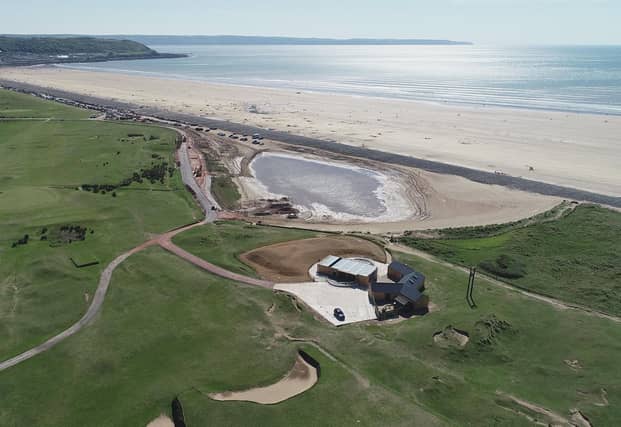
In South Devon, for example, much of the Paignton sea front area is at risk, around Exeter there would be serious impacts for Exe Estuary, particularly around Dawlish Warren. In Northern Devon, the most vulnerable areas are those low-lying land blocks on the estuaries of the River’s Taw and Torridge. This would include parts of the Braunton Burrows and Westward Ho Beach.
It is sobering to note that the rate of increase is accelerating. It is now more than double the rate in the early part of the last century. It is also the case that this acceleration is partly the result of the regularity and intensity of our weather systems. These ever increasingly powerful storm surges and winds are damaging to both our homes and our environment.
The climate scientists at the Met Office have now calculated that extreme downpours could become four times more frequent by 2080 if Greenhouse Gas Emissions remain at their current level. The calculation suggests that for every degree of regional warming the intensity of extreme downpours could also increase by 5-15%.
By the 2070s deluges of more than 20mm of rain per hour could occur four times more frequently than in the 1980s. To illustrate this point, some modelling was done in London, which typically receives about 40-50mm of rain in a month.
In July 2021, 40mm fell in London in just 3 hours flooding 31 tube stations and 2,000 properties.
The simple equation here is that higher temperatures create warmer air. Warmer air holds more moisture (7% for each degree), leading to a greater amount of water falling when clouds finally burst. We in the South West are at the frontline of much of the UK’s weather systems. The prevailing weather is from the South West. Clouds form over the Atlantic and are carried east on jet streams. The impact of this on average rainfalls is all too obvious for all of us.
So, what do we do about this huge problem because simply ignoring it will not work?
There are many brilliant programmes already running led by our Local Authorities. There are also many individual initiatives which, although small in scale, have a cumulative effect.
This work must continue. We do however need to get this whole subject out of the closet and work out three agendas – which areas we must defend at all costs, what mitigation provisions we can make which will minimise disruption and which areas might be sacrificial. This is a difficult subject, we have many great experts working on this. All those involved would, however, welcome a renewed effort from our businesses and communities to tackle this shared problem.