

Clean waters are critical to our tourism industry - Tim Jones
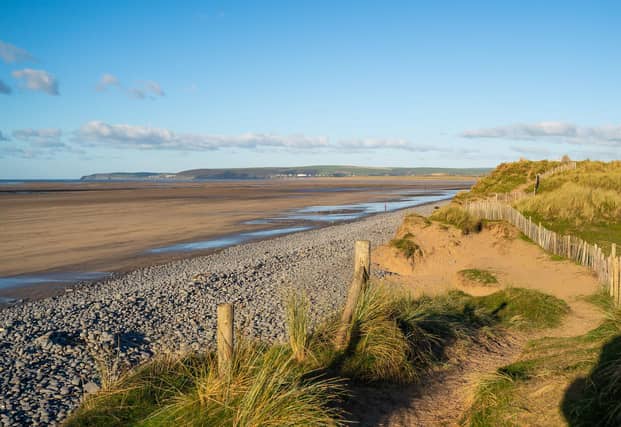

As we head towards some hopefully calmer and warmer weather and with an early Easter nearly upon us, it is timely to think ahead to the forthcoming tourism season. The expectation that we will be free of many of the restrictions which have dogged this cr
As we head towards some hopefully calmer and warmer weather and with an early Easter nearly upon us, it is timely to think ahead to the forthcoming tourism season.
The expectation that we will be free of many of the restrictions which have dogged this critical industry for the last three years is reasonable.
It looks as though we might even have an outbreak of peace on the rail network, thereby avoiding any further disruptive strikes.
Every one of us depends to a greater or lesser extent on the success of the forthcoming season. Undoubtedly, all of our visitors deserve great respect.
An important part of setting the highest visitor standards, is the quality of our rivers and bathing beaches. Our target, as ever, is to achieve gold star delivery here.
It is of course the case however that pollution is still a huge issue.
This matter is however firmly on the governments agenda and is of critical concern to all those who can assist in overcoming the problems.
It is timely therefore that the Environment Agency have just published their latest figures on pollution incidents.
This sounds quite horrifying but apparently raw sewage was dumped into rivers and coastal areas across England more than 300,000 times last year (the equivalent of 824 spills per day). This is estimated to be a 20% improvement by comparison with 2021. In some areas the improvements were up by over 30%.
These numbers need to be considered in the context of the fact that they are influenced by the amount of rainfall we have (much sewage pollution being spilt from storm water overflows). Last year was a relatively dry year with a month long drought and a rainfall average about 10% lower than in 2021.
Another area where improvements have been achieved is the monitoring of these overflows. In some parts of the UK there are still areas which are largely unmonitored, such as, the Suffolk coast.
In respect of Northern Devon, monitoring has been the subject of considerable investment. Legislation is also being brought to bear on this matter to enforce best practice. By December 31, 2023, all storm water overflows must have monitoring in place.
A number of the water companies are also taking their own action to improve performance and monitoring arrangements. They have followed the lead set by Thames Water, who have released live maps of spills from these outflows. It is the first time that this level of information has been available.
Thames Water is one of the biggest operators with over 15 million customers and has been under considerable pressure to improve its performance.
South West Water were one of the quickest to react to this by taking their lead from the Thames initiative. This triggered sewage overflow alerts at dozens of beaches last week. This also links with a programme entitled the 'Water Fit' live service.
There are very many reasons why these pollution events occur. Almost invariably, the instinct is to blame the water companies. This however is only one part of a highly complex series of inter-related reasons.
It is currently estimated that in order to overcome the whole problem, there would need to be a £55-60 billion investment over several decades. This would expand the capacity of the sewage treatment networks, thereby overcoming the need for having storm overflows.
There are so many other related issues which need to be considered. These include, how well our land managers and farmers look after their ditches and internal land drainage systems including culverts. Too often we see disappointing examples of drains being neglected, causing overflows onto highways. Who remembers the Parish Lengthsman?
They did a great job in helping to overcome problems early. We also know that rapid surface water runoff can contribute to these problems. This can be caused by heavy agricultural machinery compacting soils and therefore making existing drainage ditches unable to cope.
The underinvestment of sewage treatment works is also a difficult debate. Our water companies get regular criticism. It is also however the case that if the level of investment required was undertaken then our water bills would see a steep rise.
What we do know however is that clean water is an essential component of 21st Century living. This should not just be for the benefit of our tourists but also something we should all expect.
There is currently a danger that the great 'blame' culture we seem to enjoy focuses on only one or two culprits here.
The truth is that we all have, in some part, a way in which we can assist in overcoming these problems.
The forthcoming tourist season seems to me like a good chance to see how we can collectively work on this issue and make Northern Devon best in class.