

Celebrating World Biosphere Day - Selaine Saxby MP
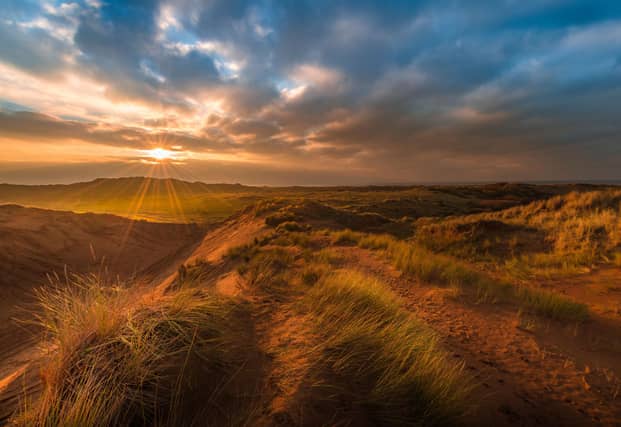

Thursday 3rd November marked the first ever World Biosphere Day. There are 738 UNESCO Biosphere Reserves in the world, with only 7 of those in the UK. We are lucky in North Devon to be home to the UK’s first ever, and one of the first in the world. This
Thursday 3rd November marked the first ever World Biosphere Day. There are 738 UNESCO Biosphere Reserves in the world, with only 7 of those in the UK. We are lucky in North Devon to be home to the UK’s first ever, and one of the first in the world.
This year we have seen 40 degree temperatures which have affected everything from our local wildlife, to farmers’ crops, to our manmade infrastructure. As the climate crisis becomes more acute we need to learn to live with and manage our environments. Our policy going forward needs to be to create a shared world, that supports us and our native wildlife.
Launched 50 years ago, these ‘living laboratories’ research the conflict between human activity and our natural environment. They now cover 5% of the of the earth’s surface, an expanse roughly the size of Australia. First designated in 1976, and then the first UK Biosphere to meet UNESCO’s new criteria in 2002, the North Devon Biosphere has driven innovative research and designed methods to protect and manage our environment.
As our government takes control of the opportunities offered by Brexit and brings in more funding and subsidies to promote environmental protection, these decades of scientific research are crucial. We all want to see our beautiful British countryside and coastlines in the best health. To protect and restore them efficiently and effectively we need to know which methods work, and how best to approach the problem.
To celebrate the incomparable contribution of our biospheres I was delighted to lead a debate in the House of Commons on World Biosphere Day. As a resident of the Biosphere myself I feel incredibly fortunate to live so close to such significant, and well protected habitats.
The success of the last 46 years’ work shows, on land and sea they have driven a local nature recovery plan; in our marine environments they have improved the levels of phosphates, this was the first work of its kind in the country. They have pioneered projects in the 25 Year Environmental Plan, as part of that they have developed natural capital strategies for the region, which are now in operation with the Community Renewal Fund.
The work of our North Devon Biosphere is not just limited to North Devon but extends abroad with partnerships in Kenya, supporting biospheres there to deliver projects. They work with European biospheres to coordinate a network of forests. Whilst in South East Asia they are working on marine planning and conservation and community health.
As UNESCO’s oldest intergovernmental scientific programme, our global biospheres are a testament to what we as a world can achieve when we work together. Working together is the only way we are going to combat the global climate crisis, and as we pass on the Presidency for COP, November 3rd should stand as a reminder of the importance of international collaboration.
The path that biospheres have carved for the last 50 years shows that we can live in a sustainable way. It is not a choice between modern life or saving our planet, both can be achieved, it is up to us to make it a reality.