

Bringing peace and space through mindfulness - North Devon Hospice

There’s a great Calvin & Hobbes cartoon in which the little 6-year-old Calvin shouts at everyone to leave him alone, that he hates them all, he’s in a very bad mood. There’s a pause, a picture of him looking a little confused, and then he just looks miser
There’s a great Calvin & Hobbes cartoon in which the little 6-year-old Calvin shouts at everyone to leave him alone, that he hates them all, he’s in a very bad mood. There’s a pause, a picture of him looking a little confused, and then he just looks miserable, saying, 'Nobody recognises my hints to smother me in affection'.
How often do we all say or do things that are really not connected to how we are feeling at all? How often do we not even really know what we are feeling, or what our needs are? Times when we feel terribly sad, overwhelmed or angry but can’t express those feelings? When we might, instead, put something down more heavily than is necessary after somebody has said something we feel hurt about. We might get cross with a person if we’ve had a hard time with our boss that day, sit there twiddling our hair when we feel utterly helpless, or act as though our cat or dog needs a lot of extra stroking when in actual fact, we do. There are a thousand different ways we use to release the tension of unexpressed feelings in ourselves, especially in a culture that values that upper lip of ours remaining stiff.
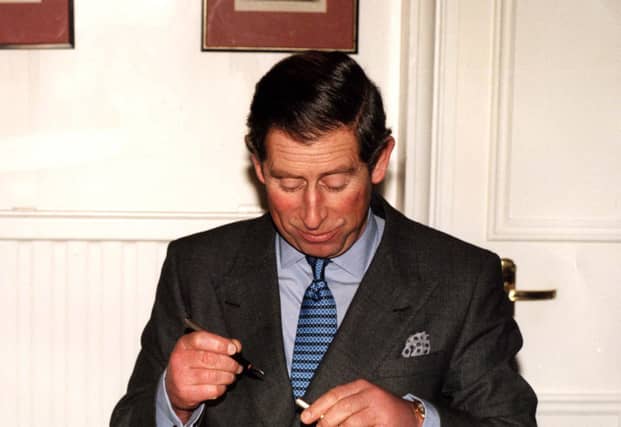
We saw King Charles do it a few weeks ago when he lost his temper over a leaking pen (“I can’t bear this bloody pen”, “Every stinking time”). Irritated, he pushed away a tray of pens getting in his way. What was he to do, though, really, considering the demands placed on him to behave in a very particular way? Start crying with the grief he was probably feeling for his mother? Collapse in a heap of exhaustion and wail he was just too tired to go on after days of travelling round the country giving talks, attending ceremonies, signing papers?
Much of the work we do at North Devon Hospice is about providing a space in which feelings, whether displaced or underlying, are recognized, allowed and accepted. Not easy when you’ve been told you are dying or that someone you love is dying and your feelings, at least initially, can range from fearful to angry, from resentful to abandoned, from anxious to disbelieving.
Our mindfulness sessions are one particular way the hospice provides this space of acceptance. Mindfulness is all about deciding to be still and quiet enough to be able to pay attention to everything we are experiencing in the present moment – whether that’s a tingling in our left foot, an ache in our hearts or thoughts about our upcoming holiday (and very likely all three together!). Very importantly, a state of mindfulness is one in which we’re not trying to change anything we’re experiencing – we’re just allowing it to be exactly as it is, with an attitude of gentleness and kindness, and not in any way judging it.
It takes a bit of perseverance and focus to do this – we’ve spent a long time learning to judge ourselves and fight our feelings, so these old habits take some time to relax their hold. What happens though is that we come to rest somehow; amidst all the noise and bustle of our thoughts and feelings, we gain a sense of just being aware of what’s going on and see that we’re much bigger than all of that, bigger than our fears and sadness and anxieties, and that the sense of being which lies behind everything, in each one of us, is peaceful and spacious.
And within that space, maybe we can also see that although there is an urge, like Calvin’s, to kick out sometimes, underneath that, what we really want is to be smothered in affection – and possibly smother others in it, too. And that’s OK.