

Where are the best spots in North Devon to see the solar eclipse?
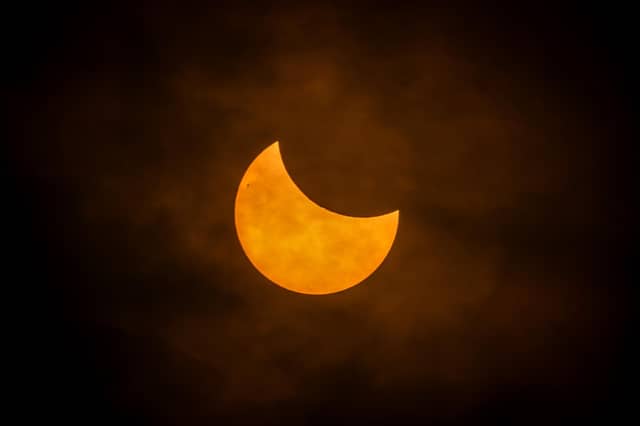

The UK will see an almost total solar eclipse on Wednesday evening (August 12) – and North Devon will have a ringside seat
North Devon looks set to be one of the best places in the country to view the partial solar eclipse this Wednesday (August 12).
It will be the deepest solar eclipse to occur since 1999 and up to 96 per cent of the sun will be covered as the moon passes between us and the sun.
The celestial phenomenon will begin at around 6.17pm BST, with the sun almost totally obscured by the moon at 7.14pm, then the moon’s disc will recede and it will be over at around 8.08pm.
Published times vary slightly but if you get yourself comfy at a suitable vantage point and ready to watch at 6.15pm, you should be on the money!
Currently, the forecast for North Devon on Wednesday evening looks perfect for eclipse viewing, with a very warm day and clear skies forecast right up to sunset.
Safety first! Do NOT look directly at the sun as it can permanently damage your eyes, even during an eclipse. Please use either ISO approved solar eclipse glasses and carefully supervise any children with you, or observe it safely via a pinhole projector – more information on these below.
Where are the best spots in North Devon to view the solar eclipse?
If you have a favourite spot for watching the sunset, go there! Because the sun will be low in the sky, you need a vantage with an unobstructed view of the western horizon as it sinks towards sunset.
We have come up with a few suggestions but you may well have your own favourite spaces where you and your family can watch the eclipse. Please be aware seasonal parking charges and restrictions will be in place at many locations.
Woolacombe Beach – with wide and unobstructed horizons and sweeping vistas, Woolacombe is a great spot to watch the eclipse.
Saunton and Westward Ho! beaches – likewise, these beaches have plenty of space and a wide horizon.
Ilfracombe Pier - you can enjoy great sunsets from the pier and the eclipse will be visible there too! Alternatively you could walk up on Hillsborough or Torrs if you fancied somewhere off the beaten track.
Morte Point and Baggy Point – if you fancy a short hike and some dramatic craggy coastal scenery to watch the eclipse, these will fit the bill!
Foreland Point – For those on the northernmost borders of North Devon, Foreland also offers uninterrupted views of the horizon with a short walk from the free parking area.
Exmoor – you may have your own favourite spots on the moor, but Holdstone Down near Combe Martin and Brendon Common would be good spots for watching, as is Dunkery Beacon in Somerset if you wished to travel a little further.
Please remember the moorland and local beauty spots are tinder dry following the hot weather, so please leave the disposable barbecues at home and take care to fully extinguish any cigarettes.
The eclipse also coincides with the height of the Perseid meteor shower, so if you have picked a good spot for an eclipse party, why not stay on into darkness to see how many meteors you can spots?
Please view the eclipse safely
Sunglasses and tanning goggles are not safe eyewear for looking at the sun and you should never look directly at it without approved protection.
Eclipse glasses may be available at independent opticians or branches of Specsavers or Boots – please enquire at your local branch to find out.
Ensure any you buy are certified with the ISO rating – it is likely too late to buy online but if you can get some delivered by Wednesday, make sure they are certified and approved to UK safety standards.
Check that there are no scratches or pinholes in the film ‘lenses’ before using them to observe the sun.
Telescopes – you can use any sort of telescope to project an image of the eclipse. The telescope should be set up by looking at the shadow of the scope and making it as small as possible. DO NOT put your eye to the eyepiece. Use a piece of card as a screen on which to project the disc of the sun. Move the card in and out to focus the image.
Make a pinhole camera – NASA has provided simple online instructions on how to make you own pinhole projector to view the eclipse.
Take a sheet of card, cut a 1-2 inch square hole in it and tape aluminium foil over the hole. Poke a small hole in the foil using a pin, pencil or paperclip.
Place a second sheet of white card on the ground or a surface, stand with the sun behind you and hold the card with the foil over it until an image of the sun is projected on the card. The further away you hold your ‘camera’, the larger the projected image will be. For a clearer image, try putting the bottom piece of card in shade while you hold the other piece in sunlight.
CLICK HERE for full instructions.
Happy eclipse hunting!