

Battery storage site in Torridge refused amid fears the countryside is being ‘swallowed up’
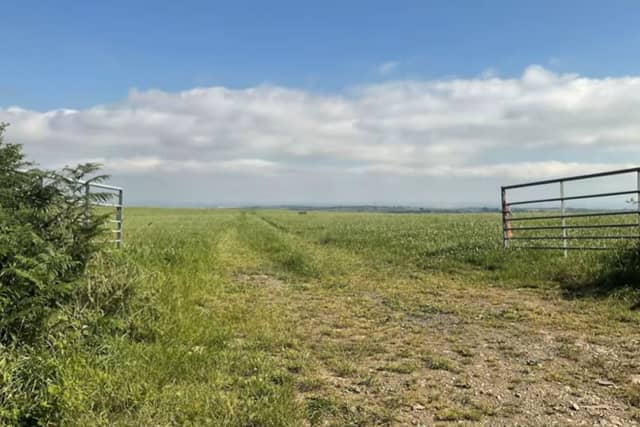

Councillors have turned down plans for a battery energy storage system near Bideford
Controversial plans for a battery energy storage system (BESS) near Alverdiscott have been turned down by planners after fears villages in North Devon and Torridge villages are being ‘swallowed up’ by industrial energy infrastructure.
Torridge District Council’s planning committee voted against their officers’ recommendation to approve the scheme on 10 acres at Woodtown.
They said the impact and harm on the landscape “outweighed” any benefits.
Sixty-four objections were received by the council and many concerned residents attended the planning meeting at Caddsdown Business Support Centre in Bideford yesterday (Thursday, July 2).
They clapped and cheered impassioned speeches by those against the scheme, who warned of the “creeping industrialisation” of the Alverdiscott and Huntshaw parish where 15 per cent of the rolling countryside would be covered in batteries in containers and solar panels if all the schemes already approved and proposed went ahead.
Plans for another much larger BESS site and an AI data centre are due to be submitted later this year for the edge of the village which would be spread across 850 acres.
The area is favoured by developers because of the good national grid connection and capacity at the Alverdiscott substation.
BESS sites contain thousands of lithium-ion batteries which store energy from renewable sources such as wind and solar and release it back into the grid when demand is high.
The government considers them ‘essential’ to reach clean power goals and ensure secure energy supplies, but they are contentious due to the potential fire risks even though incidents are rare.
Ian Ratcliffe, a dairy farmer at West Webbery Farm who was on board with the scheme, said the BESS site would occupy less than one per cent of the 615 acres he managed.
He said he took great pride in being a food producer and was passionate about farming, but markets were volatile with available support changing and he and his family were looking at how they could diversify on some of the land.
He said the proposal would deliver “compact, reversible energy infrastructure.”
He told councillors: “We are not asking you to choose energy infrastructure instead of farming, we are asking you to support a project that helps us keep farming.”
Cllr Thomas Elliot said he wasn’t against renewable energy or infrastructure but this was “a tipping point” for the community.
He said: “Alversdicott is no longer rural Devon, it’s effectively been turned into northern Devon’s industrial energy hub,” adding that the developing landscape was “alien” to the area’s “rolling hills and pastoral valleys.”
He went on: “With this proposal and further looming mega schemes nearby the parish is quite literally being swallowed by industrial utility infrastructure”.
He said officers had looked at the scheme in isolation and not the cumulative impact and they needed “to draw a line here” or the parish would become “completely industrialised.”
He accused BESS developers of “legal bribery” by trying to palm the community off with a £17,000 fund for local projects.
He said: “We must protect the integrity of our local plan now before this parish along with others ends up entirely overwhelmed and lost forever under a concrete jungle of batteries in containers and solar panels.”
Officers warned that if taken to appeal the decision to refuse could be overturned by a planning inspector and costs incurred by the council and quoted an example of this for a similar proposal in Pyworthy.
Cllr Rosemary Lock urged committee members to be “careful” and said initial objections from consultees had been withdrawn.
Cllr Chris Leather said according to the National Energy System Operator, the publicly owned, independent public body responsible for planning Britain’s electricity and gas networks, there was unlikely to be capacity for a new BESS project to connect to the national grid between now and 2035.
“There’s an oversupply of BESS provision and this application is purely speculative,” he said.
The committee refused the application by eight votes to one.