

Torquay as a health resort

From Victorian health cures to clashes over “radium water”, Beacon Cove’s forgotten spa history reveals a century-long battle between medicine and marketing
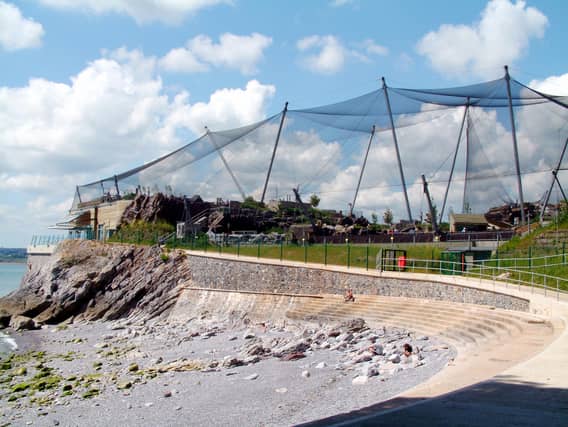
Although Beacon Cove has been looking rather sad recently after the closure of Living Coasts it has a fascinating history. It also led to several rows between the council and local doctors.
The Marine Spa was opened in 1857 with a ballroom, another large hall, a pool and a spa. Obviously, there were separate men’s and women’s spas. There was nothing as shocking as mixed bathing.
At the time Torquay was a health resort. The Household Physician (1890) wrote that Torquay “presents the invalid manifold attractions... it is a favourite place for persons suffering from general debility for whom it is eminently suited .... it is recommended in chronic bronchitis, pleurisy and asthma”. Not all their advice was accurate. They also suggested that smoking helped asthma.
The town council decided to cash in on the health benefits. In 1899 they wrote to the Torquay Medical Society asking, “how the advantages of Torquay as a health resort may be brought more prominently before the public”. They suggested that Torquay should be “eulogised by some leading London medical gentleman”. The doctors disagreed. “It is impossible to secure the services of any London medical gentleman of eminence to write an article in praise of Torquay or any other health resort.” Even then doctors needed scientific evidence.
In 1921, the town clerk wrote to the Society suggesting that the medical profession should “actively assist in popularizing the baths and sending patients for treatment”. He warned that if the medical baths were not a paying concern, they would be closed at the end of the year. There is no record of any response from the Society.
Despite the empty threats from the council the baths did not close. Instead, in 1923, the council set up a subcommittee to run the corporation baths. Still hoping for support from the local medical society they sent a letter to all doctors sending a copy on their new brochure. This extoled the amazing health benefits of the baths. Again the doctors were not supportive. They replied, “It is impossible to accept or support many of the claims .. (the doctors) do not feel that they have sufficient information to justify .. making a direct recommendation to the council.
The town clerk did not give up. On 26th March 1925 he wrote to the society asking for a medical representative on the Baths Committee. The mayor then joined the row. Why was he not receiving wholehearted support from the medical profession?
The doctors were not completely negative. They agreed the Baths were an asset but complained about the advertising. It also claimed a therapeutic value of “radium water.” This sounded impressive but was meaningless, an example of pseudoscience.
In an attempt to compromise, the Medical Society agreed to a meeting with the Bath Committee. The doctors argued they could not support many of the claims. Where was the evidence? It was the Bath Committee who had forced the society to withhold support by making dubious claims. One example was that they had arranged “electrical treatments” without medical supervision. Again this was not supported by any evidence. One hundred years later I am not sure what “radium water” or “electrical treatments” entailed. Today the name “radium” might put off most people.
Two years later the Baths Committee were still after medical approval. In November 1927 the society received a letter from the Baths Committee saying they will erect a vitaglass sun lounge the length of the ballroom facing Beacon Cove. The society replied explaining that they could not give an opinion. Vitaglass was developed in the 1920s. Unlike traditional glass it allowed the sun’s ultraviolent rays to pass through and, as the advertising claimed, “let health into the building”. It seems the Medical Society was not impressed. Today we know the risks of ultraviolent rays. They were not so much letting “health into the building” as skin cancer.
Today us doctors of the Torquay and District Medical Society have no power over the council. If the council did listen, we could repeat the complaint made by Dr Hoston. He wrote to the council in 1908 complaining about the “necessity of having the condition of the roads bettered”. One hundred and twenty-eight years later we still have potholes but no Marine Spa.