

The Devon Farm Through Women's Eyes
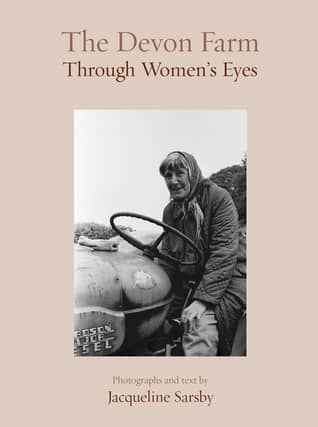

The Editor reviews Jaqueline Sarsby's new book
Dr Jacqueline Sarsby, social anthropologist, author and photographer, has published her latest book which tells the stories of women in farming, in their own words. The Devon Farm Through Women's Eye's is a wonderful step back in time, occasionally as far back as the late 1800s, when a few of the women interviewed were born.
The stories from these women are recalled in vivid detail, some of them remembering when as young girls they were sent to work on farms where they were treated like slaves, others treated like family. Many of them made their own butter every day after milking their cows, a practice that followed them into marriage and motherhood. During war times, the women would milk the cows every morning and evening, and leave the milk in big 'churns' out on the road to be collected – this way, they made a little money to supplement their rations. Tenants were rarely allowed to sell their own milk and so made butter and 'clouted' (clotted) cream to sell at local markets instead.
Tourism on Dartmoor was a good earner for the women, who would 'let' rooms out in their homes to visitors or working men. They would provide breakfast and dinner, and took great pride in making the best meals out of whatever they had to hand.
Norah Abbott, born in 1913, recalls: “We killed a pig a year, and two or three lambs when we wanted them because there were so many of us there at meals, and Mother used to cure these hams. When you come in the back kitchen, you’d see these dark black oak beams with all these hams cured and hung up to dry. You couldn’t fill the men up with buns and butter and bread, they had to have meat. And so, we all ate meat, and beetroot and onions and everything that was produced on the farm.”
Molly Moore, born in 1924, remembers being sent to work on a farm near Kingsbridge, with no electricity: “I milked that evening with the boss, and he showed me which field the cows were in. The first morning, I’d never lit a lantern in my life, having come from town. I didn’t know how to light a lantern and the farmer had forgotten to tell me the night before. He had taken the opportunity for a lie-in, because he thought he had somebody to do the work, now, and he never had a lie-in. Actually, he was a lazy so-and-so. He had been to private school and his father was a carpet manufacturer, but although he chose to be a farmer, I think he thought it was a bit beneath him. Farming was alright as long as somebody else did the work – and so he had a lie in bed until 8 o’clock, and thought that was marvellous. But the next morning, I managed to get the cows down and get them in. I couldn’t chain them up because I didn’t know how to, and I couldn’t see in the dark, couldn’t see to light the lantern, so I sat down and milked them all unchained in the complete darkness.”
Gladys Coe, born in 1925, recalls having to give up her farm for the American soldiers during the war, and Pippa Woods recounts how the introduction of battery hens and eggs wiped out her way of making a living.
The book is packed with wonderful photos, many of them taken in 1993 but you would be forgiven for thinking they were snapshots of life in the 50s and 60s. I was very pleased to attend the launch of the book, which was held in Totnes, and meet Jacqueline and some of the families whose mothers and grandmothers are included.
This book is a wonderful piece of social history, and such an important record of the lives of the women, those whose voices are so often unheard throughout the passage of time.
Available from jacquelinesarsby.com and selected bookshops, this is a must have for those interested in the lives of 'proper' Devon women and their role in shaping the rural landscape in years past.