

Kevin Dixon: Was Torquay’s Edward Bulwer-Lytton Really the World’s Worst Writer?
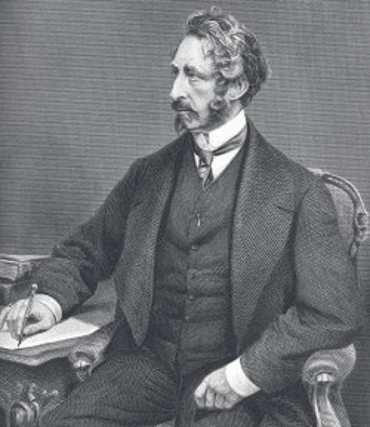

A literary figure mocked for one infamous line is re-examined as a pioneering novelist whose influence shaped genres, inspired great writers and left a lasting cultural legacy.
For over forty years a Torquay author had an international writing competition named after him. This wasn’t a compliment, however. The competition was The Bulwer-Lytton Fiction Contest, inspired by a sentence that has become a shorthand for bad writing.
When it comes to recognising good literature, there are many prizes; such as the Nobel and the Booker. But in 1982 a tongue-in-cheek contest was launched by Professor Scott E Rice of California’s San Jose State University to celebrate truly bad writing.
Each year entrants were invited "to compose the opening sentence to the worst of all possible novels”, and for over four decades they did, sending in overstuffed sentences and ridiculous metaphors, many painful or humorous.
The inspiration for the contest was the Torquay novelist and playwright Edward Bulwer-Lytton’s much-quoted first line "It was a dark and stormy night". This opening, from the 1830 novel Paul Clifford, reads in full:
“It was a dark and stormy night; the rain fell in torrents, except at occasional intervals, when it was checked by a violent gust of wind which swept up the streets (for it is in London that our scene lies), rattling along the housetops, and fiercely agitating the scanty flame of the lamps that struggled against the darkness.”
The first year of the competition had just three entries. Then it went public, received media attention, and often attracted 10,000 entries. It wasn't the prize that interested entrants. That was always "a pittance", equivalent to less than £200. By its end the reward was only "a cheap certificate and bragging rights".
So, was a Torquay resident really the world’s worst writer?
Now largely forgotten, during the late nineteenth century Edward Bulwer-Lytton was one of England’s most popular novelists. He has been called the father of genres such as: the English detective novel; science fiction; the fantasy novel; the thriller; and the domestic realistic novel.
In 1831 Torquay visitor Mary Shelley asked: “What will Bulwer become? The first author of the age? I do not doubt it. He is a magnificent writer.”
Other admirers of Edward’s work include fellow Bay residents, Aleister Crowley and two-times Nobel Prize winner George Bernard Shaw.
His work influenced, amongst others, Wilkie Collins, Thackeray and Trollope. He persuaded Charles Dickens to give ‘Great Expectations’ (1860) a more upbeat ending. Dickens, a lifelong friend, named a son after him.
His twenty-five novels Bulwer-Lytton’s works of fiction and non-fiction have been translated into many languages. In 1879, his ‘Ernest Maltravers’ was the first complete novel from the West to be translated into Japanese. Some are the source of phrases that have become clichés. These include: ‘the great unwashed’; ‘pursuit of the almighty dollar’; and ‘the pen is mightier than the sword’.
As well as being a hugely successful poet, playwright, and novelist, Edward had an impressive political career, serving twice in Parliament, first as a Whig Radical, then a Conservative MP, and going on to the House of Lords as Baron Lytton. While Secretary of State for the Colonies, towns were named after him in British Columbia and Australia.
He is, incidentally, also responsible for the fashion of black evening dress for men.
His home life attracted attention. He was married to Rosina, a famous Irish beauty who was also an author of thirteen novels. After the disintegration of their relationship, Edward had her incarcerated in a lunatic asylum, although Rosina proved that she was sane and was soon released.
She then spent forty years tormenting her husband, revealing details about his mistresses and illegitimate children. She even alleged a sexual relationship between Edward and Torquay visitor Benjamin Disraeli.
While Bulwer-Lytton may be sadly neglected today there are a couple of his works that are worth exploring.
The first is that several of Edward’s novels were made into operas. For instance, the first opera composed in the United States, Leonora by William Henry Fry, is based on his play ‘The Lady of Lyons’.
One opera became far more famous than the novel. This was ‘Rienzi, the Last of the Tribunes’ (1835). Taking Edward’s novel as a source, Richard Wagner wrote ‘Rienzi, der Letzte der Tribunen’. This became the composer’s first success.
Rienzi apparently had a particular appeal to some audience members due to its theme. The opera is set in Rome and is based on the life of a medieval hero who succeeds in raising the power of the people. An ungrateful proletariat nevertheless forces Rienzi and a few supporters to make a last stand.
One such enthusiast was Adolf Hitler who possessed the manuscript of the opera. He had requested and been given Rienzi as a fiftieth birthday present in 1939 and had it with him in his Berlin bunker at the very end of his dictatorship.
The second area in which we see Edward’s prominence is in the supernatural and science fiction genres. One of the first psychic investigators, he is often cited as the single most important occult writer of the nineteenth century.
Edward’s ‘The Haunters and the Haunted ‘(1859) is recognised as the first modern haunted house story and still appears in anthologies. The American horror author HP Lovecraft called it “one of the best short haunted-house tales ever written”. The lasting influence of this short piece of fiction can be seen in the explorations of Britain’s most haunted house, Torquay’s Castel-a-Mare, and in pretty much every haunted house movie you’ve ever seen.
Edward certainly had an in-depth knowledge of the occult, being at the centre of several esoteric circles, and he often included arcane ideas in his work. He was the author of ‘Zanoni’ (1842), the most influential occult book of the nineteenth century. This earned him the respect of the leading figures of the Victorian occult revival and, in consequence, a number of societies claiming hidden knowledge have seen him as one of their own.
One of his most popular excursions into the esoteric was ‘Vril, the Power of the Coming Race’ (1871), a novel that contributed to the birth of the science fiction genre. HG Wells was impressed and it has been quoted as the first of a dystopian tradition of oppressive future societies that led to George Orwell’s ‘1984’ and Huxley’s ‘Brave New World’.
The novel features a source of energy called ‘Vril’, a force that can be used to heal, change, and destroy. Though the novel has now largely been forgotten, there remains a reminder of how familiar it was to the Victorian public. During the late nineteenth century, the word ‘Vril’ came to be associated with ‘life-giving elixirs’. In 1886 John L Johnston was looking for a name for his ‘liquid life’ beef extract drink. He chose a blend of the words Bovine and Vril and named the new beefy beverage ‘Bovril’.
Here’s another ‘Vril, the Power of the Coming Race’ reference. David Bowie was a fan of Edward. In ‘Oh! You Pretty Things’ he sings, “You gotta make way for the Homo Superior. They’re the start of a coming race”.
Edward died on 18 January 1873 at his home Argyll Hall on Warren Road, having lived there since 1867. Built in 1849, Argyll Hall became the Roseland Hotel and is now an apartment block called Marine Palms.
In 2025 the Bulwer-Lytton Fiction Contest closed. Professor Rice had retired and found the increasing burden of running the contest too much.
Perhaps we can now move on from Edward being merely a punch line and recognise his massive contribution to literature. Indeed, if Torquay hadn’t been the home of Agatha Christie, we may well now have an alternative statue of Edward Bulwer-Lytton on the Strand today.