

2023 the year for new scientific research and commercial application - Tim Jones
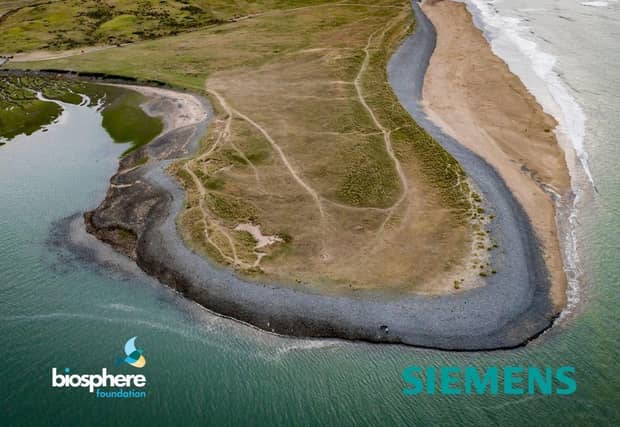

Our Biosphere has had an impressive 2022 with leading edge projects which include the Smart Biosphere. This has already commenced with a pilot programme in the River Umber (Combe Martin). In partnership with Siemens and Amazon Web Services, this is captur
Our Biosphere has had an impressive 2022 with leading edge projects which include the Smart Biosphere. This has already commenced with a pilot programme in the River Umber (Combe Martin). In partnership with Siemens and Amazon Web Services, this is capturing data over the whole of this river catchment to enable us to better monitor and manage the environmental opportunities from soil health to water quality and flood control. Other work includes modelling sea level rise and habitat change in the Taw Torridge estuary, woodland research and the completion of the £1.3m Community Renewal Fund Government scheme delivered under the management of the Biosphere team with 17 leading edge partners.
Our Chief Executive - Andy Bell - and his team continue to break new ground and will be exploring new opportunities during the year. The Biosphere provides the ability to experiment with emerging scientific research and, working in conjunction with business, to help to prove concepts and bring these to the market.
There is some exceptional work being tackled in the environment sector. Two examples may be areas which could be under our consideration.
RoboBees. There has been an alarming decline in global insect numbers. The Rothamsted Institute (a key partner of the Biosphere) has just completed a survey in Scotland which found that insects caught in traps since 1970 have declined by 66%. A 2019 UN survey estimated that half a million inspect species face extinction due to global warming and pesticides. The effect of losing bees and butterflies is huge as these are vital pollinators. In the US commercial honey bees pollinate $15bn worth of crops each year. To compensate for these declining numbers researchers at the University of Sterling are building tiny robo-buzzers which can shake plant stamens and release pollen. Harvard University has developed autonomous flying RoboBee which can land and take off thereby both pollinating and monitoring the outcomes.
Our Biosphere is a perfect place to scale-up this work and help turn it into a commercial reality.
A second challenge high on the Biosphere agenda is Plastic Pollution (Plastic Free North Devon - an inspirational programme to help clean up our rivers and seas). This is part of a global initiative and enables us to link our work with any of the 738 UNESCO Biospheres around the world.
Despite some very high profile campaigns, these plastic problems get worse. It would not be an exaggeration to say that the world is awash with plastic. Some 400mn tonnes are produced each year. Most is not recycled and ends up in landfill or the sea. As it degrades it accumulates in the food chain. Microplastics are wide spread in fish. Production (sourced from petroleum) is accelerating and is expected to grow by 50% by 2050 (to 600mn tonnes a year). Recycling, such as using industrial chemicals thereby consuming significant amounts of energy, is expensive and therefore difficult to enforce.
There is increasing confidence that natural bio-remediation may be the way forward. Researchers think that plastic-munching microbes offer a solution. These can create enzymes (proteins) that break down plastic matter into soil. This is a slow but very energy efficient solution. Therefore proof of concept work is necessary, including some serious bioengineering, to turn this into a speedy commercial process. Here again the Biosphere provides an ideal opportunity to help take the next steps.
There are many other areas where our/your Biosphere can be a valuable resource. The Biosphere team are always happy to share their work within the community. They are also keen to take on any new challenges that might be introduced.
The Biosphere is an extraordinary opportunity to place Northern Devon at the leading international edge of environmental science and to ensure that many of the concepts are beneficial to our businesses and communities.